
"The Innovation Behind The Incision" - Helping Golfers Reclaim The Game They Love
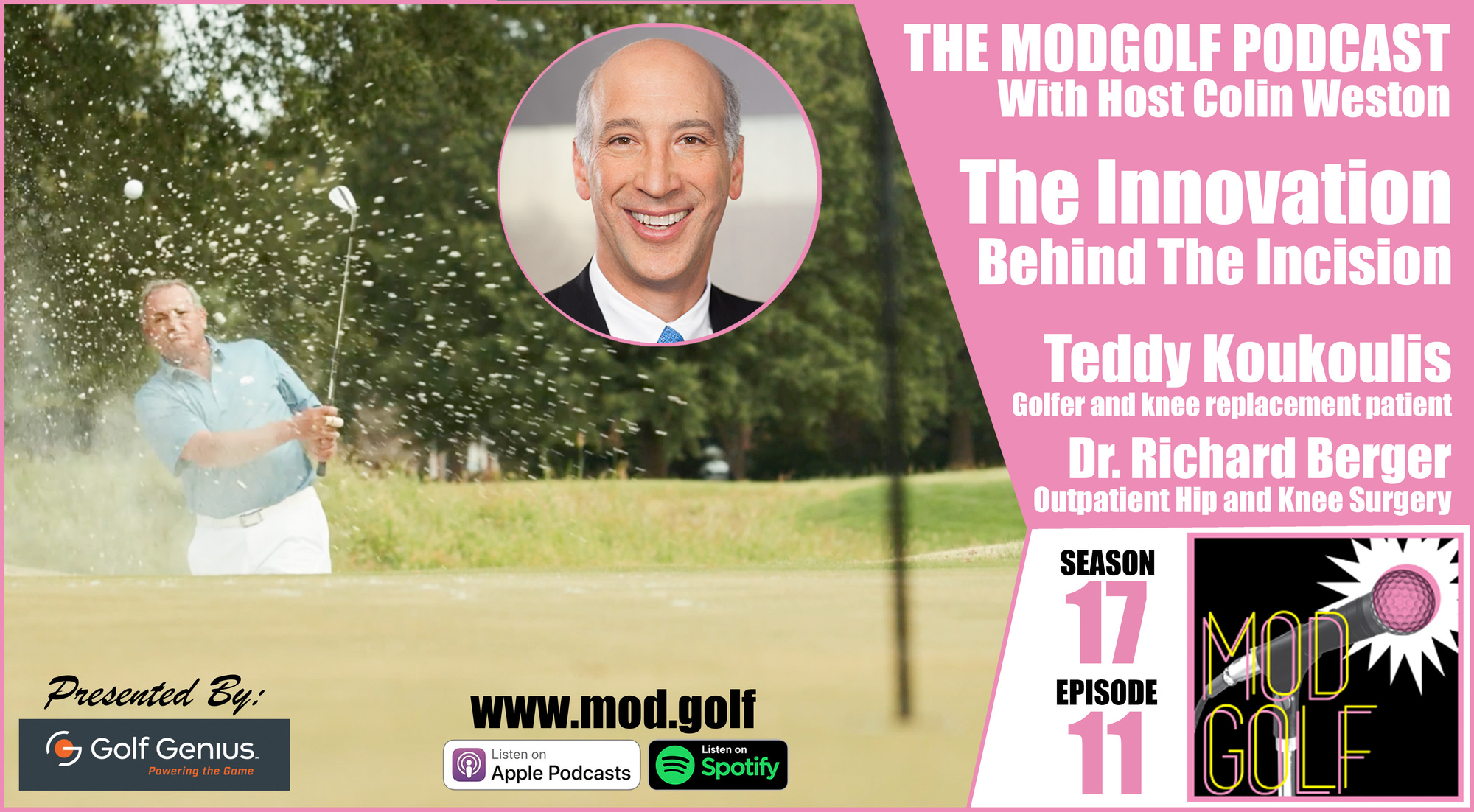
"Don't wait one minute. It is not worth giving up one minute of your quality life"... Teddy Koukoulis, avid elite level golfer and one of Dr. Richard Berger's knee replacement patients. Join us for this enlightening conversation that blends sports, science, and personal triumph, and discover how innovation in medicine is reshaping the future of golf!
In this milestone episode of The ModGolf Podcast, host Colin Weston celebrates the 200th episode with two remarkable guests: Dr. Richard Berger, a pioneering orthopedic surgeon, and his knee replacement patient Teddy Koukoulis, who is an avid golfer and PGA Teaching Pro. They discuss Dr. Berger's innovative knee and hip replacement techniques that are transforming the outcomes and recovery process for golfers, high performance athletes and everyday people wanting to reclaim their quality of life.
During this episode you will discover these inspiring takeaways:
Revolutionary Recovery: Dr. Berger's minimally invasive knee replacement technique allows patients to recover faster and more completely than traditional methods. This innovation not only reduces pain and swelling but also enables golfers like Teddy to return to the game in record time—Teddy shot a two-over-par 74 just three weeks post-surgery!
Empowerment Through Action: Both Dr. Berger and Teddy emphasize the importance of not waiting to address joint pain. Teddy's journey illustrates how taking proactive steps can lead to a significant improvement in quality of life, allowing individuals to engage in activities they love without the burden of chronic pain.
Mental, Physical and Social Transformation: This episode highlights the profound impact of physical health on mental well-being. Teddy shares how overcoming his knee pain has not only improved his golf game but has also revitalized his overall lifestyle, enabling him to participate in activities he once thought were lost to him.
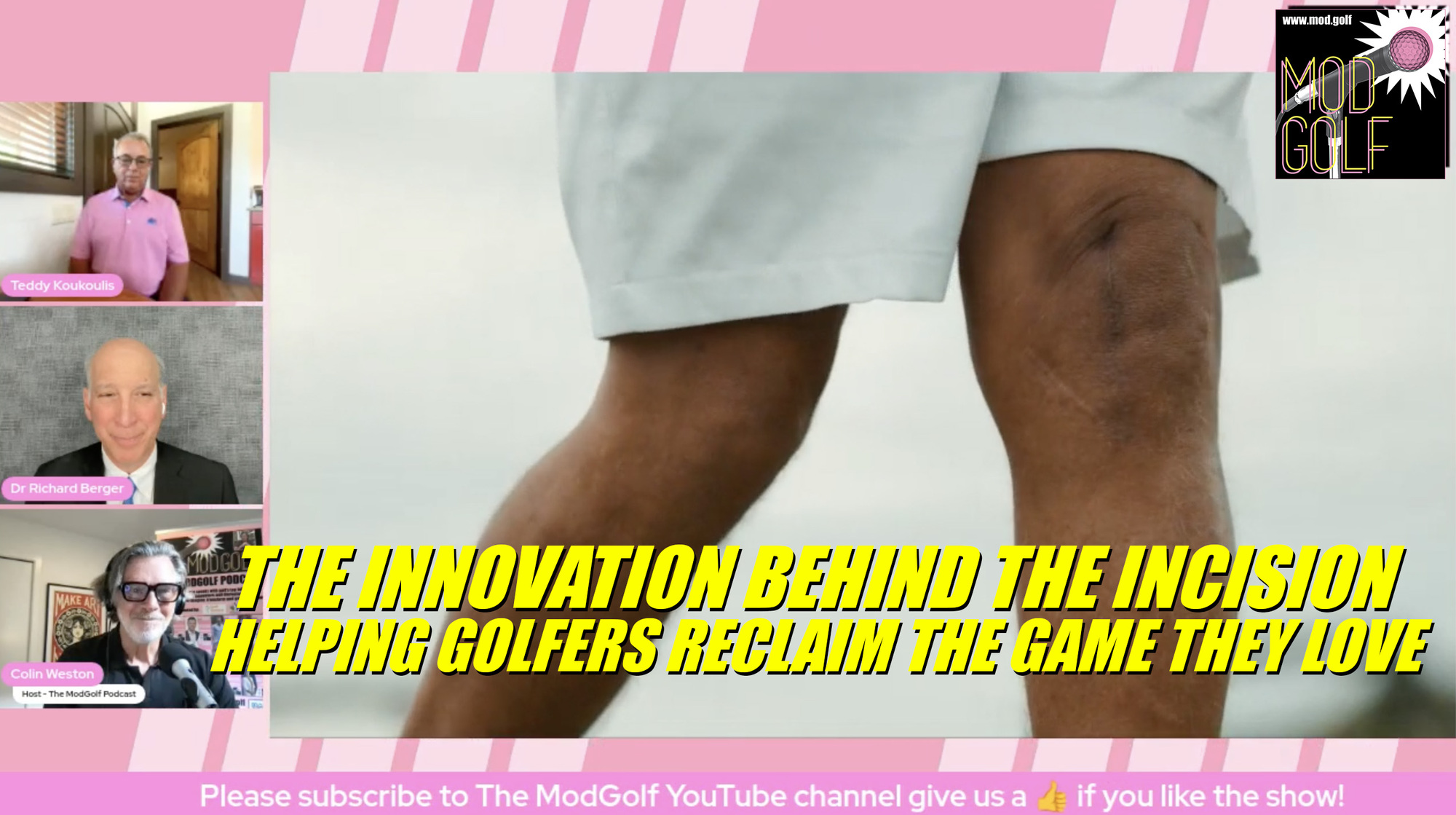
Are you more of a watcher than a listener? Then enjoy our video with Teddy and Dr. Berger on The ModGolf YouTube channel. Click on this link or the image below as they extend their podcast conversation with commentary on Teddy's post-surgery golf swing video, along with more life-changing inspirational patient success stories from Dr. Berger.
Want to connect with Teddy and/or Dr. Berger? Check out their bio pages to make that happen!
Dr. Richard Berger's bio >> https://modgolf.fireside.fm/guests/dr-richard-berger
Teddy Koukoulis' bio >> https://modgolf.fireside.fm/guests/teddy-koukoulis
Dr. Richard Berger is a renowned orthopedic surgeon at Midwest Orthopaedics at RUSH in Chicago and is a pioneer of minimally invasive knee and hip replacement surgery. His groundbreaking approach preserves muscles, ligaments, and tendons, promoting quicker recovery and less post-surgical pain.
Dr. Berger developed The BEST (Berger Elective Surgery and Telemedicine) Experience, a program designed to streamline the joint replacement process with virtual consultations, pre-surgery guidance, and a seamless recovery plan. Dr. Berger’s approach, which minimizes trauma to soft tissue, tendons and ligaments, allows for a significantly faster recovery time. “Patients experience less pain, fewer complications, and are able to return to normal activities much sooner,” says Dr. Berger.
Visit Outpatient Hip and Knee Surgery or click on the image below for more information on Dr. Berger's innovative techniques and to schedule an appointment.
And don't forget to check out Teddy's inspiring golf swing video on our YouTube channel!
---> https://youtu.be/N-l34doMpq0
Join our mission to make golf more innovative, inclusive and fun... and WIN some awesome golf gear!
As the creator and host of The ModGolf Podcast and YouTube channel I've been telling golf entrepreneurship and innovation stories since May 2017 and I love the community of ModGolfers that we are building.
I'm excited to announce that I just launched our ModGolf Patreon page to bring together our close-knit community of golf-loving people! As my Patron you will get access to exclusive live monthly interactive shows where you can participate, ask-me-anything video events, bonus content, golf product discounts and entry in members-only ModGolf Giveaway contests.
I'm offering two monthly membership tiers at $5 and $15 USD, but you can also join for free. Your subscription will ensure that The ModGolf Podcast continues to grow so that I can focus on creating unique and impactful stories that support and celebrate the future of golf.
Click to join >> https://patreon.com/Modgolf
I look forward to seeing you during an upcoming live show!... Colin

We want to thank our Episode Presenting Partner Golf Genius Software who have supported The ModGolf Podcast since 2019!
Are you a golf course owner, manager or operator looking to increase both your profit margins and on-course experience?

Golf Genius powers tournament management at over 10,000 private clubs, public courses, resorts, golf associations, and tours in over 60 countries. So if you’re a golf professional or course operator who wants to save time, deliver exceptional golfer experiences, and generate more revenue, check them out online at golfgenius.com.
Transcript
The ModGolf Podcast 00:00
Welcome to the ModGolf podcast, where we speak with the entrepreneurs, innovators, disruptors, and influencers who are shaping the future of golf. I'm your host, Colin Weston. And before we get started here, I have had an announcement to make. The ModGolf podcast has reached a milestone, and I want to share that with you. This episode is number 200, which is something I am very proud of, and i had never even imagined that we'd reach this when I launched the show back in 2017.
So whether you've been on this journey with us since the very beginning, or this the first time joining us, I want to thank you for showing so much support for the community that we continue to build. Okay, let's get to it. So today we've got a story that's part sports, part science, part medicine, and fully inspiring. We're going to talk about knees, but not just any knees. We're talking about how cutting edge knee surgery is helping golfers like me, or in this case, like today's guest, get back in the game faster than ever imagined.
Read Full Transcript Hide Full Transcript
The ModGolf Podcast
So today with me are two fantastic guests that I've had a chance to get to know over the last month or so. First is Dr. Richard Berger, an orthopaedic surgeon based in Chicago and a pioneer in minimally evasive joint replacement. He has performed over 25,000 joint replacements, which is a technique now changing how both athletes and everyday people recover and rediscover their former selves. And also joining us is Teddy Koukoulis, a PGA teaching pro who played professional golf through the 1980s and teed it up in numerous mini tour events. Teddy is one of Dr. Berger's knee replacement patients who, get this, shot a two over par 74 just three weeks after his surgery. Yep, you heard that right, three weeks.
Okay, let's get going and let's tee off this conversation. So gentlemen, welcome to the ModGolf Podcast.
Richard Berger 03:59
Colin, thank you so much for having us. And I'm a big fan. And thank you for having us on your momentous 200th episode. That's amazing.
The ModGolf Podcast 04:08
Thank you.
Teddy Koukoulis 04:08
I'm super excited, Colin.
The ModGolf Podcast 04:08
i appreciate that.
Teddy Koukoulis 04:09
Thanks for having me as well and looking forward to this interview and having some fun with you on your 200th anniversary.
The ModGolf Podcast 04:17
Thank you guys. I appreciate that so much. So this is the perfect alignment right in the wheelhouse of what I love to talk about on the ModGolf podcast. Innovation, entrepreneurship, these inspirational stories, and it's all wrapped around golf here with you, Teddy. So Berger, we're going to start with you for a few questions. So I've coined this phrase: the innovation behind the incision, That's me trying to be clever here. So we're going to start with that. So I have to start with the big question. What makes your knee replacement technique different than traditional surgery?
Richard Berger 04:49
well that's amazing place to start. So traditional surgery, we cut the muscles, ligaments, and tendons. So that opens the entire joint up and allows you to get great access to everything. And you can fix the joint and then you got to sew everything back together. So it heals, but it heals very slowly.
The ModGolf Podcast 05:06
Right.
Richard Berger 05:09
There's lots of swelling, there's lots of bleeding, lots of pain, lots of dysfunction that some of that heals and some of that stays forever. With minimally invasive surgery, we don't cut the muscles, ligaments, and tendons. We make a small incision, go in and cut out the pieces of bone, put in the new joint without disturbing anything around it so that there's less pain, less blood loss, less swelling, a much quicker recovery, which is fantastic, of course, but more importantly, a more complete recovery
The ModGolf Podcast 05:38
Mm-hmm.
Richard Berger 05:42
Because once you cut things and it heals with scar tissue, it never feels right or performed right again. And that allows patients like Teddy to get back not only so quickly, but more completely than we've ever imagined.
The ModGolf Podcast 05:59
And I've seen some of the videos, because the three of us are going to jump over for a call over on The ModGolf YouTube channel, a video call. We're going to see some of the video of Teddy's swing and it's amazing. But we're going to get into that in a few minutes with Teddy. I want to stick with you here, Dr. Berger. So always love that as entrepreneurs and startup founders, this question, that AHA Moment or that revelation or what what you learned that informed you that there was in this case, quite literally a pain point.
Richard Berger 06:25
yeah
The ModGolf Podcast 06:29
So I'd love to hear this from you. So was there a specific moment or was it over time or a patient outcome that pushed you to rethink how joint replacements could and should be done?
Richard Berger 06:45
Yeah, I think it started right when I started my practice. People say they think outside the box. I don't see the box. So we got into joint replacement to try to help people, help people regain their lives back, regain their function, get back to what they love, such as golf or any other activities. And what I found pretty quickly is that while we were able to do that, they had a lot of pain to begin with. Took months and months and months and almost a year for them to get better and they never got all the way better.
So my thought was, well, how can I make them better, not only quicker, but more back to how they were before they got arthritis? And that came to not cutting everything. You can imagine when you hurt something, you're a golfer. So if you pull a little muscle or you pull a tendon or a ligament, you're injuring 5% of that muscle, 5% of that ligament. You can imagine how much pain that is, how long that takes to recover. Now imagine cutting that muscle, ligament, or tendon in half, how long that takes to recover. In fact, it never recovers.
So that was that AHA Moment. What can we do to make this better for patients to recover faster and more importantly, more completely? And that's when I first started my practice. And I went to the lab and did a bunch of research, invented instruments and techniques and started doing this now about 25 years ago.
The ModGolf Podcast 08:11
Nice, nice. Well, I want to dive into whether it's patents, intellectual property, that piece of the business side of it too. But I want to hold off on that because I want to bring Teddy into the conversation here with what I'm going to call his "comeback swing" that you've helped manifest here. So Teddy, let's rewind this a little bit. My understanding, Teddy, is you've had at least one, if not multiple knee surgeries way back in the day, had the meniscus removed because that was the technique they removed they used back in the day here. So when did you realize that your knee was holding you back from enjoying life and golf and what made you finally decide to reach out to Dr. Berger and have this surgical technique?
Teddy Koukoulis 08:54
So for me, my first knee surgery was in 1997, high school football injury.
The ModGolf Podcast 08:58
Hmm.
Teddy Koukoulis 09:00
I jokingly say that orthopaedic surgeons back in the day said, "when in doubt, cut it out". And i have the utmost respect for doctors and technology and things have certainly evolved. And so my challenge was that, yeah, my first surgery was a meniscus removal and, you And I was athletic. I played baseball. I water skied a lot, played a lot of golf, obviously. I tore the other side water skiing in 1980 and had another surgery. And then I've had four more after that just to do, cleanups and take some spurs out and things like that. So I started to struggle with chronic pain in the eighties.
I developed some sort of a pain tolerance and just an exception or and acceptable um pain level that was okay for me.
The ModGolf Podcast 10:05
Right.
Teddy Koukoulis 10:05
You're taking ibuprofen and things like that, and drugs have gotten a little better. But you're just doing Band-Aids, and you're wearing braces, and you're spending $1,000 for a custom brace. And again, it's just a Band-Aid. But as a golfer, and a high-level golfer, even today, I'm better than probably 98% of all the golfers in the world, but golf is a sequential motion and a lot of things have to be lined up.
Your weight shift and how you load and unload is key in the golf swing. And as you develop knee pain, or it can be hip pain It can be any kind of pain so your mind figures out a way to do what's less painful. And so for me, I became a tremendously right-sided player.
The ModGolf Podcast 11:10
Oh yeah.
Teddy Koukoulis 11:10
And I hung back. And so when you hang back, now you become a golfer that is relying on timing. And when your timing is good, fantastic. But if your timing is not so good, and listen, Colin, you're a golfer. Bottom line is, you got to open club face one degree, two degrees. The ball's going right.
The ModGolf Podcast 11:35
yeah
Teddy Koukoulis 11:35
And there's not much you can do about it. And if it's closed one or two degrees, it's going left. And so you the golf swing is just all about timing. And in some days it's there, in some days it's not. Now, granted, I could mask and play what I call "smoke and mirror golf" because I could chip and putt and I figured out a way to get around the golf course and so I could always keep it respectable.
But I lost the ability to play exceptionally good golf on a consistent basis. 69 one day, 79 the next day. And it's frustrating. And the one thing that I think I've always been very adamant about was my demeanour and my temper. And they were pretty, pretty crappy.
The ModGolf Podcast 12:29
Right.
Teddy Koukoulis 12:31
Your mind remembers what you could do, but your body doesn't allow you to do. And, and that was probably the frustrating thing. I'm ashamed to say it, but John McEnroe doesn't have anything on me there for a while. So it just but it creeps in everything in your life. You're a little bit more on edge and you're making excuses not to go hiking or going on a trip somewhere. I think one of your questions early was, when did when did I realize it, that I needed it? Well, I think I realized I needed it 15 years ago.
The ModGolf Podcast 13:22
Right.
Teddy Koukoulis 13:23
But when you go to an orthopaedic who does knee replacements, and I live in a town between Orlando and Tampa. So I go to my local doctor, who's an orthopaedic. He says, "listen, I don't do any replacements, but you want to go see this person". So I did. And they say, "well, you're too young". I was 50 at the time. Okay. Well, you trust them. You trust what your physician is telling you.
The ModGolf Podcast 13:56
Yes.
Teddy Koukoulis 13:56
And it made sense. I'm too young. They're going to cut everything out and 15 years from now, I'm going to need another one and they're going to cut a little more bone. And so it's just going to be more difficult. So you just accept that answer. But the one thing I always said was there's got to be a better way.
The ModGolf Podcast 14:21
yes
Teddy Koukoulis 14:22
I jokingly say, well, there's going to be a magic pill or an injection. And I've tried them all. Trust me. I've tried them all. Then I go back again and my wife once said, "look, you've got to do something". So I go back, I'm 60 now. And same thing. Doctor says, "listen, when you can't go to the grocery store, that's when you need to get one". And I'm a little scared because I've got lots of people that I know that have knee replacements and they're not the same. And so that's in your mind as a potential knee replacement person.
I don't want to be that guy. And so I now convince myself I got to keep waiting. So my golf game struggles, everything else in my life struggles. We were talking before we started recording, that my wife's very athletic and she loves to hike and she's in great shape. And here I am, I'm 20 yards behind her and getting farther back. And I'm like, "go, go, don't worry about me". But I would just say that when I found Dr. Berger and I found the procedure, it was that was my AHA Moment that I read his story. And when he was talking a few minutes ago, I don't know Dr. Berger basically from a hole in the ground until just when I met him for the first time having surgery.
We had a little get together down at my country club in April. But he's a humble guy. And I will tell you that when I met met him for the first time and my wife was with me in the office, When we left there, my wife is in the medical profession she says, "I like this guy. He explains things". He was very, very professional, but very concise and to the point. But he talked to me not over my head. And I understood everything he was saying. And I'm sure we'll get into this. But prior to my surgery, this is the beauty of what he does. And that is they hold your hand weeks, sometimes months ahead of time.
And as I was going through this process, I had actually scheduled a knee replacement with another doctor in Tampa.
The ModGolf Podcast 17:04
okay
Teddy Koukoulis 17:06
And the funny part is I left that guy's office and he said, "go see this lady. She's gonna book your appointment". And this was a month ahead of time. I go see her and she says, "okay, we'll see you and somebody will call you the day before and give you the time". I never heard another word. It was five days before that scheduled surgery before I called and canceled. And I had my surgery with Dr. Berger already scheduled as well. They were one day apart.
And they had sent me a notebook. They sent me exercises. They sent me all the medications that I may be taking. They sent me everything. There could be side effects. There could be, this is what you feel, but this is why we're going to give you this. That process gave me so much confidence that when I got there in Chicago that day, i was ready. I mean, so ready. You take his technique and you take his ability, but his team is top notch.
And I have done my best to try to convince people that I know. I've sent a few people to him, to get his procedure done. And long story short is it's a process that, whether he invented the whole thing, as far as he did the surgeries and all that, but the process before and after, is incredible. Everybody that I've ever talked to that that I've sent there or that I've talked to prior to or after, they've all said the same thing.
The level of professionalism, the level of knowledge, and the hand-holding. And my general practitioner's wife just had her hip replaced. And they met Dr. Berger at our little get together. And she was going to do it locally. She texted me the day she had the surgery. I checked on her and her recovery has just been absolutely fantastic. And it makes me feel good. It makes me feel good that I touch somebody's life and I had nothing to do with it, with the procedure, but it makes me feel very, very good.
The ModGolf Podcast 19:36
I love that. I love that story. And talking about touching people's lives, the my motivation for having both of you on here is that we can try to amplify that message and scale this to all the golfers that are out there that are struggling with chronic pain, especially knee and hip pain also. Because the beautiful thing about golf, and Teddy, you and I are both, I'm 60 years old also, and I feel my best golf is still in front of me. I played a lot of elite level team sports growing up, basketball and baseball. I'm six foot one. I was able to dunk back in high school. I can't even touch the rim anymore. And I have two good knees. So those days are behind me, but that's the beauty of golf and why it's the most popular recreational sport in North America, as far as participation, is you do not age out.
So to be able to extend your enjoyment and ability like you have, Teddy, is so important. And also layered into another piece you touched on, that chronic pain, not just physically. That mental health piece also. And I've seen people personally, I'm sure Dr. Berger and even probably yourself, Teddy, and other friends, that is debilitating as far as that mental health piece. When you're in chronic pain every single day and you're suffering and you get into a very dark place, it affects your relationships with your friends and your family. And that's another layer too that you're helping to, Dr. Berger, to alleviate, to give people their life back and their mental health to improve. So with that, actually, Dr. Berger, why don't you jump in here and maybe kind of comment to what I just said there as far as the the benefits that you've seen with patients there of improving their lives, not only physically and actively, but also with their mental health and their ability and how that then expands with the relationships in a positive way with their but their community.
Richard Berger 21:26
You know, it's amazing to be able to help people. The most common thing that people say when I see them back after surgery a couple of weeks, a month or two, is thank you for my life back. And it's incredible. Arthritis takes away slowly, gradually, all of the things that you like. And first it's you can't go out for a run and you can't do the high competitive sports. And then you can't play golf or tennis. Then you can't walk around the block with your kid or with your dog.
And then you can't get up and down the stairs. And then finally you can't get out of the chair. and it slowly gradually takes your life away one thing at a time. And it closes you in and makes you a shut-in because you can't get out. It's just hard to get out. So if you remember during COVID, we're all stuck in our houses. That's what arthritis is like. You're stuck.
The ModGolf Podcast 22:20
Yes.
Richard Berger 22:21
And you can't get out. If you remember, and it's been a bit of while now for a few years, but when all those those restrictions got lifted, it was like you got your life back. And that's what patients feel both physically, but as you said, emotionally and mentally, they get their life back when you relieve their arthritis, you relieve their pain.
The ModGolf Podcast 22:30
yes
Richard Berger 22:41
They no longer have to be dependent upon others. They regain their independence and really they take their life back. And that's really the biggest thing that I hear after surgery again is thank you for my life back. And it's really just an amazing feeling to be able to help someone in that way.
The ModGolf Podcast 23:01
Nice, nice. Okay, Teddy, back to you. I want to hear as far as your expectations. You might have thought, "well, like a lot of things that you see, is this too good to be true?" I'm talking pre-surgery right before you had the procedure with Dr. Berger here. So what were your expectations? Were you skeptical that you were going to golf like you used to or even better than you used to or were you expecting to be back on the course in a couple weeks like we talked about within three weeks and you shot two over par so so tell us about that describe the the recovery for you what was day one like and the first week for you after the procedure?
Teddy Koukoulis 23:37
Colin, that's a fantastic question. So I happened to meet a guy that I know. I'm in agriculture. I'm a blueberry farmer. And another guy that I know, who's a golfer, who's actually in the citrus industry told me about Dr. Berger. That's how I found him. And he told me he was playing golf in four weeks and I didn't believe a word he said.
The ModGolf Podcast 24:00
Yeah.
Teddy Koukoulis 24:02
I mean, honestly, I didn't believe a word he said. And,, he told me about the technique and that's what led me to Google and to YouTube and that kind of stuff. And what's really ironic was it was three weeks to the day. I probably could have played two weeks to the day, but they didn't release me. I told everybody, my support staff around me that I was committed to the process. And that's one thing that Dr. Berger is very, very adamant about. And when I met with him face to face the day before my surgery, he talked about the process to my wife and myself.
And that included the pain medication, because if you're in severe pain and severe swelling, your rehab, you're less likely to want to do the rehab, much less, do an exceptionally difficult rehab. So, I went through his best practice where I did everything online, the x-rays and sent them to them. I did the Zoom call and they confirmed that. They showed me the x-rays and said, yes, you do need it. Here's why you need it. And so I was already, I knew I was there mentally.
And now it's surgery, it's day of. And the one thing I left out earlier was this notebook that they sent me, had hotels in it. And whether it was a two star, three star, four star, five star, didn't matter. You could pick one and we picked one and We pull up, we get in. "Oh, yes, Mr. Koukoulis, welcome!" "You're Dr. Berger's patient. You're going to love it. We're going to take good care of you". The hotel was bought in, right? And it's like everybody just got their arms around you.
The ModGolf Podcast 26:04
Yes.
Teddy Koukoulis 26:08
So you have a level of confidence. So now I'm meeting Dr. Berger. And like I said, he's very humble. He explained everything in detail, but was very adamant about, let's make sure you go through this process. So now it's day of surgery. It snows. It's on October and it's snowing outside. It's October 31st. It's like, oh my gosh, I'm from Florida.
The ModGolf Podcast 26:29
Yep.
Teddy Koukoulis 26:29
And so we get to the we get to the hospital and I had it at Rush and everybody there was fantastic. And it's time for me to get my little happy juice. And they tell me, "well, you're going to be awake". And I'm like "awake"? Now i'm really nervous, but if I was awake, I certainly don't remember it at all. My wife goes into Dr. Berger's, I'm going to call it a private waiting room. I didn't see it, but she said there was other people that were in there that were the were only Dr. Berger's patients.
They had discussions and they were familiar. One person was from Mexico. I think one person was from Atlanta. There was nobody that was local, put it that way.
The ModGolf Podcast 27:19
Right.
Teddy Koukoulis 27:20
And so I wake up, surgery's done. Three hours later, there's a physical therapist comes to my recovery room and she says, "hey, let's go for a little walk". I'm like, "a little walk"? She goes, "yeah, let's go"! I get up, I have a cane and she's holding on to me and we walk a little bit. She goes, well, you're doing really well. She goes, let's try some stairs. And I'm like, stairs? And again, i go back to an earlier comment I made. I know many people that had knee replacements. Hell, they weren't doing anything in a month.
The ModGolf Podcast 27:56
Mm-hmm.
Teddy Koukoulis 27:56
And so I go up and down the stairs and i'm like, "well, this is really cool". So we go to the hotel room and my wife says, "what do you want for dinner"? I'm like, "let's go get a steak"! So we got steak. I didn't change my life from that point on. I got in the elevator. I had a cane. And I walked to the restaurant and got back. I don't know Dr. Berger would say, but he because he did say, "listen, in the first week, try not to do that much".
The ModGolf Podcast 28:32
Right.
Teddy Koukoulis 28:33
But here I was, pushing the envelope a little bit. The hotel again. I got back to the room. There's ice waiting for me. I walk in, they say, listen, when that ice runs out, just ring this, we'll bring you some more ice. I mean, like I said, everybody was bought in. A physical therapist came to the room the next day, did some exercises. We got up, walked around and my pain level was, was minimal. I mean, minimal.
I had swelling and I probably had more discomfort from the stitch area, but I didn't really have stitches. I had tape but that was probably the only thing. And I think the other thing I felt was pressure. But I didn't feel pain, if that makes sense. I just felt pressure. And that's hard when people talk to me or ask me questions about that. That's it's a hard thing for me to explain because what I associated with pain, like pain, breaking a bone or somebody who had knee replacement and not having this surgery. I just felt pressure. And I think that was just from swelling and where the incision was.
And the hardest thing for me after the surgery was the flight home. And that was because we had turbulence the whole way. And so I wasn't allowed to get up.
Richard Berger 30:01
Mm-hmm.
The ModGolf Podcast 30:03
Right.
Teddy Koukoulis 30:04
And if I could have just got up and stretched my leg a little bit, but I couldn't. So I had to sit and they did give me an aisle seat and I sat in first class, but still my knee, my knee was bent. So that two and a half hour flight home, two hour flight home, when I stood up, it was like, holy cow, that was a tough moment, but not painful, just very stiff. I got a wheelchair, went home and did the ice thing like he said. I had an ice machine brought that did some compression. i started doing exercises right away.
And, and honestly, I never looked back. I never went to physical therapy until a week later. And picked a place called Polk Therapy and Rick Todd, our sons played baseball together.
The ModGolf Podcast 30:49
All right.
Teddy Koukoulis 30:59
He said, :Teddy, First I haven't seen incision this small. Second of all, I haven't seen anybody not walking here with a walker"! And you're walking in with nothing. And right away I went into stability, flexion and extension. And he was simply amazed how quick I was doing these things. Other people are walking in for their first evaluations or a week later and people are looking at me and, next thing you know, you're talking because you're standing next to somebody and they're like, "Oh yeah, I'm four weeks in". I'm like, "well, I'm only a weekend in" and they're looking and they're like, "this is impressive"!
I cheated a little bit because two weeks after surgery. Wasn't taking any full swings, but chipping and putting. Three weeks to the day, they said, "you're good to go. Want you to continue to go to rehab". And the one thing that I remember she said to me was, "live your life". Your body will tell you what you can and can't do. But try to pretend that you didn't have the surgery. The other thing I remember was, don't get on your knees for a while. But do anything else. I said, "so god can I go play today"? And she says, "sure".
Maybe don't walk, but get a cart. Maybe not wear spikes. So I didn't. And I went out, and there's some video of me on the driving range, and I was like, this is pretty cool. And I'm thinking, I know about 10 people that could have never, they still don't do this, years after having knee replacement.
The ModGolf Podcast 33:12
Great.
Teddy Koukoulis 33:14
And I go out, and I shoot 74. And Colin your a golfer, I have a bunch of friends and this is in November. So it's Florida season. So a lot of my friends that come from the North, we play for a little bit of money and there's a lot of trash talking and things like that. And I'm just like a new guy. It doesn't even hurt.
The ModGolf Podcast 33:38
Right, right.
Teddy Koukoulis 33:41
But mentally I was a little afraid. Don't get me wrong. I made a couple driver swings and I was waiting to flinch. I was waiting for something. It never happened. And then the funny thing was when I got done playing, It was such a habit of me grabbing an ice bag after, because I've done it for so many years that I grab an ice bag. I'm sitting up there and in the restaurant And I'm thinking, I don't need this ice bag. There's nothing there. And so I never looked back.
I did go to rehab for another three weeks because I chose to. I was very adamant about scar tissue and things like that. And Dr. Berger told me when I met with him, he said, "do the rehab, push yourself, because scar tissue is a real thing. And if you don't, what you don't want to be is back here and happen to make me fix what you can't do". And so Dr. Berger doing his procedure is amazing. But a lot is still on the patient. He can do what he does and his staff can do what they do, but you still have to be committed too. But what they do is they give you so much confidence and belief in yourself that you can live your life.
And I mentioned my primary care's wife who just had her hip replaced And she had gone to another doctor and he said to her, :well, you probably won't be doing Pilates and things like that". And she's doing it, yeah she's doing it!
The ModGolf Podcast 35:45
Right, right.
Teddy Koukoulis 35:48
And that's the amazing thing, Colin. You just don't feel like there's nothing you can't do. So you saw me rappelling down a mountain in Utah. I'm out here in Denver hiking and there's nothing I haven't been able to do.
The ModGolf Podcast 36:08
I love this. And sounds like, Dr. Berger, your team motivating and inspiring your patients is just another piece of that patient experience on the back end that's part of your secret sauce and you're authentically committed to that. So yeah, Teddy, I do want to dive deeper into that first round of golf in a little bit, but Dr. Berger, I do want to turn it back over to you and I'm going to put on my entrepreneurship hat here for a few minutes, because that's another piece, a layer we love to talk about on ModGolf.
So from that innovation and entrepreneurship standpoint, as far as the technique that you developed and the instruments and the tools and When you brought this to market, do you have patents or intellectual property around that? Or is this something that you're more than happy to share with the medical community? So surgeons all over the country can then scale this. And because you there's only one of you, unless you have a cloning machine, you don't scale. So, and I'm also curious to hear, was there any resistance in the medical field while you were transforming the nature of knee and hip replacements?
Richard Berger 37:18
Well, that's a complicated question. I'll answer the second part first.
The ModGolf Podcast 37:20
Okay.
Richard Berger 37:21
Medicine is ah big machine and like big machines, it works real well, but really resistant to change. So anytime you want to change things, it takes a while. There was no real marketing other than word of mouth. And I have people coming from you know, first all over the state, then all over the country, now all over the world coming to see me. So the word is out. I do have a bunch of patents on these things, but I've released all the patents. I haven't made any money from the patents or from the technique or the hundreds and hundreds of instruments I developed that allow you to do this surgery.
I give those away for anyone who wants to do it. As you said, i want to help as many people as I can. I do 1,400 or 1,500 surgeries a year and I'll be able to help 1,400 or 1,500 people, but I can't scale that anymore. So my way of scaling that is to give this to anyone who wants to do it. Help train anyone who wants to do it so that they then can go out and help more people to have a quicker and more complete recovery the way Teddy does. And I can tell you dozens and hundreds of stories of people doing incredible things just after surgery. It's really the person who comes back two weeks later and just says, :thank you, I was able to get down and play with my grandchild for the first time ever".
I was able to take my dog for a walk around the block for the first time ever. And again, I have people who run marathons and do triathlons. I have a patient who is a world record holder in triathlons. I have a patient who ran the Chicago Marathon six weeks after her joint replacement. I've have professional golfers getting back playing on the tour and winning tournaments. But again, it's the teacher who can now go back and teach, who can't couldn't walk up the staircase to their class and was going to have to retire and now can go back and teach kids that he couldn't before. Those to me are the most compelling stories for me.
The ModGolf Podcast 39:36
Wow. Wow. I love this. All right. So, so Teddy, I want to hear about this first round of golf. You did touch on it with some buddies talking trash and laying down some bets. Just so everyone understands our listeners here, it's my understanding that your knee replacement is your left knee and you play right-handed. So that is your forward knee. So the one that you post up and you turn and crank on the most, and I've seen the video of your golf swing, which I will include in the show notes. So people can watch that and I also encourage them to jump on the YouTube channel. I'll have a link there so they can see that conversation that we're going to follow up with.
And it's absolutely amazing. The fact that you can put that much stress and ground force on that knee as you do. So want to ask you this. So what were you feeling as you stood over the ball for the first time in that first tee, and then four hours later, your final putt on the 18th green? So what were those emotions like at but both of those shots?
Teddy Koukoulis 40:39
I had hit some balls on the driving range, so I did have a level of apprehension. I was a little bit nervous because I'm just thinking there's something that's artificial in there. It's going to feel different. But as I was hitting balls on the range, I didn't and didn't have that feeling. I got to the first tee. Again, we were talking about my buddies and you know we're playing for a few dollars and I just remember we're all really good golfers. And I said, "you know, gosh, I just had my knee replaced. Can I get a couple of shots"?
And I remember the one guy said, okay, I'll give you a couple of shots. So i'm thinking, "okay, well, I got a chance". I get up on the first tee and it's a par four and I hit the ball right down the middle.
The ModGolf Podcast 41:24
Right.
Teddy Koukoulis 41:31
I'm like, bam, this is easy. And I'm sure my swing was very similar to the my pre-surgery swing. But as I got through the round, second shot, second hole, third hole, I developed confidence where I wasn't even thinking about it. That's what I remember the most was by the time I got done with my round of golf, I wasn't thinking about my knee. That probably was my AHA Moment that when you're out there and you're saying to yourself, I had to consciously say, my knee is fine.
I never looked back. But I do remember I had one apprehensive moment. Our golf course is fairly flat, but for a couple of hills and stuff around bunkers. I remember I was on the side of a bunker. And it was an awkward stance for me. I go back and thought, "well, this, I might want to be careful". In fact, I even said to my playing partners, I may pick this up and put it in a better lie for me. And they said, go ahead.
And then I said, "nah, what the heck"? And I just went ahead and ripped it and it didn't hurt. I didn't fall down. I didn't buckle. I didn't have anything that I used to have. And so, again, that was like my second AHA Moment was I remember when thee PA, she said in my call that was at 10 o'clock, "just go live your life and your body will tell you".
The ModGolf Podcast 43:24
Mm-hmm.
Teddy Koukoulis 43:27
And that's when it hit me again. What she said was true. Just do it. And so I did. When I got done, I remember shaking everybody's hands and this one gentleman who's 82, tremendous golfer. I've been playing golf with him for 40 years. He put his arm around me and he's like, "you know, that's really impressive"! And he says, "we know you worked hard and we know you've gone through a lot of pain, but I've never been so impressed with anything in my life".
And congratulations to you. So yeah I had a big head. I was like, this is really cool. And I had no pain, no apprehension. I couldn't wait to tell people. In fact, I was so excited about it. And this is how we got started doing some of these things with Dr. Berger was I sent my video on the driving range to them.
Richard Berger 44:25
Thank you.
Teddy Koukoulis 44:29
Because I wanted them to know that all the work they put in paid off. And so yeah it literally changed my life. And it changed it for the better. So I'm in agriculture. I own a couple of farms. I walk blueberry farms a lot. Things are things I couldn't do. I'd rather get in a golf cart or what we call a gator and you drive around. Now I walk. I walk playing golf. I enjoy it. It's a feeling that when you suffered for as long as i did it's like a switch. You don't suffer and you don't feel like there's anything you can't do. I've water skied, I've been snow skiing, I'm a terrible snow skier, but I'm looking forward to that. I really am because I do want to push myself a little bit. And I'm able to lose a little bit of weight now because before I couldn't run, I couldn't really hardly do any cardio.
Now I can. And so I think when Dr. Berger's staff came to me and said, "hey, would you be interested in doing some fun things"? I didn't even hesitate. If I could help anybody, if I could just help one person and And I think I've helped four or five now and hopefully there's more and we've done some of these podcasts, we've done some interviews with Golf Digest. And the one thing that I've said, Colin, and then I will always say, "don't wait one minute".
It is not worth giving up one minute of your quality life.
The ModGolf Podcast 46:24
Yeah.
Teddy Koukoulis 46:25
And I relay this to some other things that I've known about. So, I was talking to my mother-in-law and she had a sister who worked hard her whole life and had managed to build some wealth in her life and then passed away. She never got to enjoy it.
The ModGolf Podcast 46:46
yeah
Teddy Koukoulis 46:46
And I was thinking to myself, this is the same thing. And it's just a different category, meaning I could have done this at 50. I'd have known this, I could have done so much more and enjoyed so much more. But I didn't. And I gave up so many years of that quality life. And the one thing that we haven't talked about that Dr. Berger said, "if and when you do need a second replacement, if you need one, and he can speak to the longevity and but I'm just simply going to make another incision. I'm going to pull that that insert out, I'm going to put another one in. Okay"?
And that's not what I heard in the past. We're going to do a whole other knee replacement. And I'm like, okay, great. I mean, this is great. So go live your life. I really will push in any avenue where I'm talking, speaking, friends, family, if I'm just out about and we talk about it, the bottom line is don't give up a minute of your life. It's not worth it
The ModGolf Podcast 48:07
Wow. So I've had the opportunity to do some charity and volunteer work in the men's mental health space. And this recurring theme, and Dr. Berger, you talked about this, and I'm sure you see it every single day, multiple times a day, is the resistance, especially from men. Compared to women, we don't take care of ourselves or push things off both physically and in and mentally. And Teddy, you touched on this too, not to wait.
So I really encourage anyone, both men and women out there, you're listening, if you're suffering from knee or hip pain, reach out to Dr. Berger. And we will give him the chance to let you know how he you can easily reach him. And we'll include that in the show notes. But before I go back to Dr. Berger here, and we finish up here on the show before we jump over onto the video. Teddy, I want to ask you this. I believe you were pleasantly surprised with some improvements and gains in your game post knee replacement surgery as far as distance, accuracy, swing speed, all these other things, durability. So very quickly, give us a snapshot there. What puts a smile on your face there, how your game has improved since you had the surgery.
Teddy Koukoulis 49:28
So I would say first and foremost, I have a very good, friend of mine, we worked together years ago. His name's Joe Hallett. He was a 2024 PGA teacher of the year. And he teaches at a club in Nashville and I had been working with him and there's things that he would try to and show me. And I just physically couldn't do them. Of course, a quality teacher like that, they're going to try to give you some Band-Aids. What I thought was pretty cool was when we decided to do some of this stuff for Dr. Berger, I said, "I want to incorporate Joe Hallett in this because golf is a sequential activity".
A game that you start with a grip setup your stance your takeaway you know you get to come to the top and the centrifugal force takes over after that and so you have about two seconds where you're just taking it back and you're going down and even though two seconds isn't very long there's a lot of things that can happen in two seconds that can go wrong. So I remember sending Joe my video of me playing golf and he's like, his comment was, "that's tour quality". Now I think he overshot his mark with that comment, but I took the compliment and ran with it. So we go see Joe and we got a film crew and long story short, he's like, "Teddy, this is amazing!"
He goes, you're getting on your left side. Now we've still got some work to do, but you're getting on your left side. There's no flinch anymore. There's just not a hang back. And then he started giving me a couple of drills that I could have never done and just never done.
The ModGolf Podcast 51:28
Right.
Teddy Koukoulis 51:37
And what I found out was I started hitting the ball little more flusher. I started picking up some distance again. I'm telling you I picked up a club in my irons just because transferring my weight, getting on my left side and hitting the ball flush. And i think as a golfer, Colin, you know this, there's not a feeling in the world like hitting the ball flush.
The ModGolf Podcast 52:04
it's magical yep
Teddy Koukoulis 52:05
It is. And Ben Hogan says it's a feeling that runs up you and it's a feeling that you don't even feel. And so, yes, the answer to your question is getting the ball much better, much crisper. I've gained some distance and it's all because that I'm allowed to get on my left side.
Richard Berger 52:29
So Colin, i'm going to piggyback on a little bit of what Teddy said, and he's mentioned a couple times about waiting for surgery.
The ModGolf Podcast 52:34
Please.
Richard Berger 52:40
I think the medical community has done a little bit of a disservice telling people to wait as long as they do.
The ModGolf Podcast 52:40
Mm-hmm.
Richard Berger 52:47
I think Teddy started by saying, the first doctor he went to said, "when you can't go to the grocery store anymore, it's time to get your joint replacement." That's just dead wrong.
The ModGolf Podcast 52:56
Yeah.
Richard Berger 52:56
By the time you can't go to the grocery store anymore, you've ruined years of your life. Your muscles have been atrophied to the point that they probably can never, ever regain the strength that they did before. And you're miserable. So instead, I like to say is that when you stop running your life and your joint starts running your life, so you're having pain, you can't do the things you love to do, golf or whatever is that passion you have.
You're having pain or more importantly, you're worried about having pain. You're worried about, I've got two plans for the weekend. What if my joint hurts, what if my joint doesn't hurt. I don't want to take that trip because I'm worried about my joint hurting. I would love to take a walk on the beach, but I know if I do, I'm going to pay for it the next day. That's the time to get your joint replaced while you're still young, while you're still active, while you're still healthy and your muscles are strong enough to recover.
and get back the life that you want to have. If you wait too long, you just can't. Now I've operated on old patients. My yeah oldest knee replacement patient was 103.
The ModGolf Podcast 54:13
Wow.
Richard Berger 54:14
She was a wonderful lady. She was lived with her sister who was 20 years younger, who literally couldn't take care of her anymore. And she was going to have to go to nursing home. She saw about a dozen other doctors, of which all of them said, you're too old to have surgery. I did a surgery on her. She lived for another five years. But she lived at home with her sister, not in a nursing home.
The ModGolf Podcast 54:32
Wow.
Richard Berger 54:36
And she could take care of herself by getting around. The youngest patient I've done is 16. um But the average age is 52, much younger than you think. That's the average age of 52. People who are young and healthy and they come see me to get their life back.
The ModGolf Podcast 54:54
So guess that old adage that an ounce of prevention is worth a pound of cure is something that you certainly embrace without question. Don't wait. Do not wait.
Richard Berger 55:06
Don't wait. You know, the second most common thing that I hear, the first most common is thank you for my life back. The second one is why did I wait so long?
The ModGolf Podcast 55:14
Hmm.
Richard Berger 55:15
Why did I miss out? Like Teddy said, why did I miss out on all of those opportunities I could have had had I had this done a year before, five years before, 10 years before?
Teddy Koukoulis 55:17
Bingo. You know, Colin, one thing, and Dr. Berger can and certainly speak to this way better than I can, but I remember one thing that he said to me because I was bone on bone by the time I got there, I had ground off my my ACL.
Richard Berger 55:38
Yep.
Teddy Koukoulis 55:43
OK, and so where his procedure is so good is that if I had my ACL, that part about dunking a basketball.
The ModGolf Podcast 55:57
Mm-hmm.
Teddy Koukoulis 55:58
You know, that explosiveness you feel. So that's probably the only thing that if I had to sprint, I can sprint, but I'm certainly not as fast. And I think my ACL has something to do with that. So I don't want to put words in Dr. Berger's mouth, but I do remember him telling me, you don't have an ACL there. And if I'd have done it prior, i would still have that ACL. And I may have a little bit more explosion. But anyway, I just thought I'd throw that in there because I did wait so long that I didn't give him a lot to work with.
Richard Berger 56:39
Thank you.
The ModGolf Podcast 56:40
So I can keep going on here, but we do want to jump over for our video where we're going to expand this conversation. There's lots of other themes and questions that I do have for both of you gentlemen. So I'm going to show some restraint and hold off here, but to finish up here, Dr. Berger why don't you let our listeners know now that they're curious, they're inspired, they want to reach out to you. How can they best get in touch with you with your outpatient hip and knee surgery clinic?
Richard Berger 57:26
Colin, thank you so much for having me. I think the best way is just like you said, we have a website. It's all one word, outpatienthipandknee.com. And we have a bunch of videos. We have a bunch of information. You can even make an appointment to come see us. um You know, we have a tagline which is "Great outcomes for active lifestyles which is called GOALS and we allow you to reach your goals and as Teddy said we developed this best practice which stands for a "Berger Elective Surgery with Telemedicine" where we see patients on the computer and if you live in a different part of the country different part of the world We can see you on the computer first, go over everything, make sure you need the surgery, make sure I can help you.
We do everything remotely. Yes, you still have to come to Chicago, hopefully it won't snow, um to come see me to get the surgery. But then we do all the follow-ups remotely as well. So we make it as easy as possible not just the surgery easy as possible and the recovery, but every aspect of that as easy and as seamless as possible. So you get a great experience from start to finish. So thanks again.
The ModGolf Podcast 58:38
You are welcome. So as I always do in the show notes for this episode, I will include the links that Dr. Berger just mentioned to make it nice and easy for all of you listeners to find out more and also a couple of videos there, especially with ah Teddy's golf swing, which is way better than mine will ever be. So on that note, gentlemen, thank you so much for joining me today on the ModGolf Podcast.
Teddy Koukoulis 59:00
Thank you. Thank you, Colin, for having me and letting me share my story.
Richard Berger 59:05
Thank you, Colin. And again, congratulations on number 200.
The ModGolf Podcast 59:08
I appreciate that.
 Colin Weston, Founder and Owner of ModSport Media
 Dr. Richard Berger, Founder of Outpatient Hip and Knee Surgery
 Teddy Koukoulis, elite level golfer and Dr. Berger knee replacement recipient