
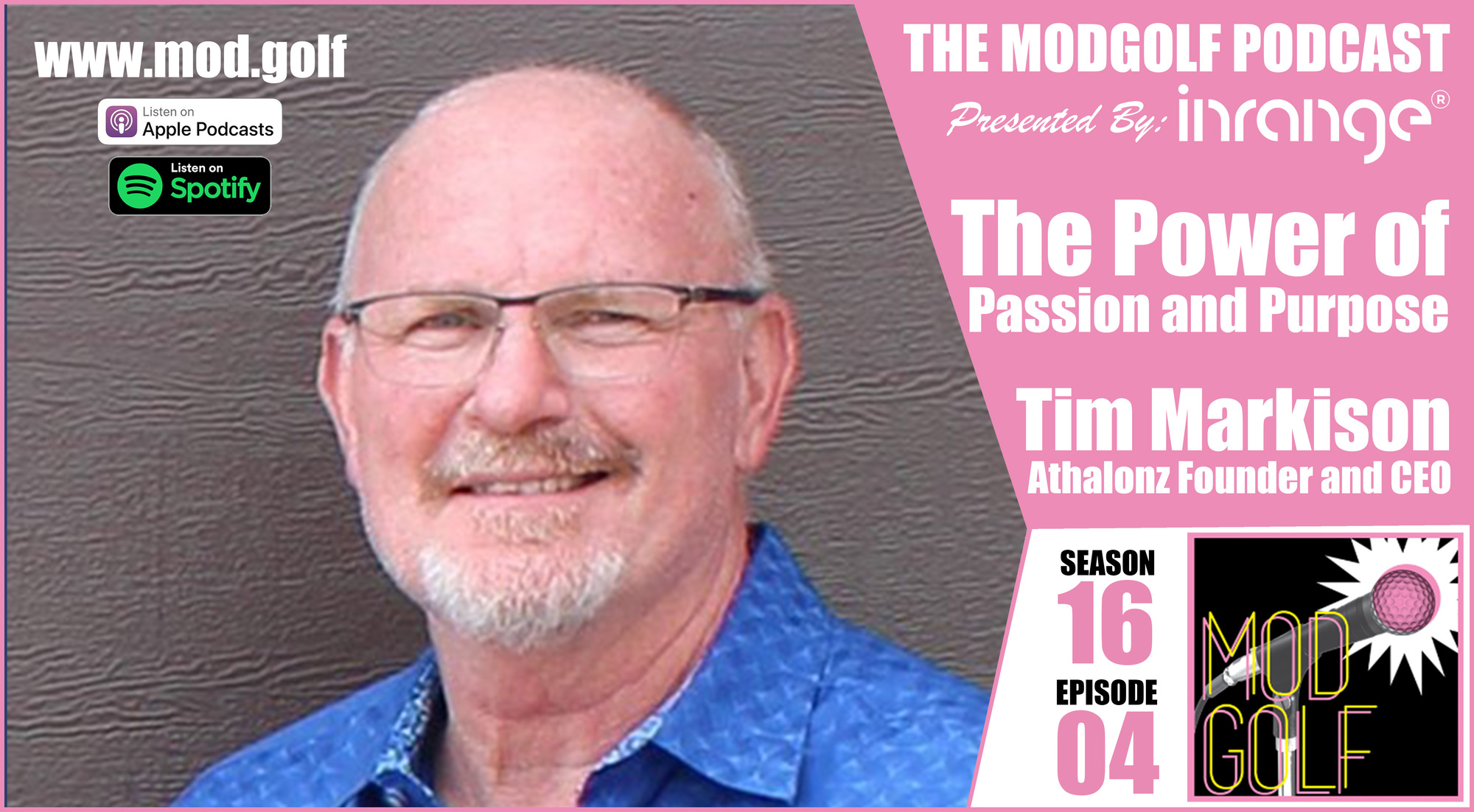
The Power of Passion and Purpose - Tim Markison, Founder and CEO at Athalonz
Here are three key takeaways from Tim Markison's episode on The ModGolf Podcast that will benefit you:
1. Embracing Challenges and Learning from Failure: Tim emphasizes the importance of facing obstacles head-on in entrepreneurship. He shares that his journey with Athalonz has been filled with challenges, particularly in transitioning from a business-to-business model to a direct-to-consumer approach. He learned that understanding the market and effectively communicating with consumers is crucial for success. This experience highlights the necessity of resilience and adaptability in the entrepreneurial landscape.
2. The Power of Passion and Purpose: Tim's story illustrates how personal experiences can fuel entrepreneurial endeavors. His background, including overcoming childhood trauma and his daughter's health challenges, inspired him to create Athalonz and engage in philanthropy. He encourages aspiring entrepreneurs to pursue their passions and ensure that their ideas align with a meaningful purpose, as this can sustain motivation through the inevitable ups and downs of business.
3. The Importance of Intellectual Property: As a patent attorney, Tim underscores the significance of protecting innovations through patents. He advises entrepreneurs to file for patents early, especially before publicly disclosing their ideas, to safeguard their intellectual property. This proactive approach not only protects their inventions but also adds value to their business, making it more attractive to investors and partners.
These takeaways reflect Tim's journey and insights, offering valuable lessons for anyone looking to navigate the entrepreneurial world, particularly in the sport and athletic product industries.
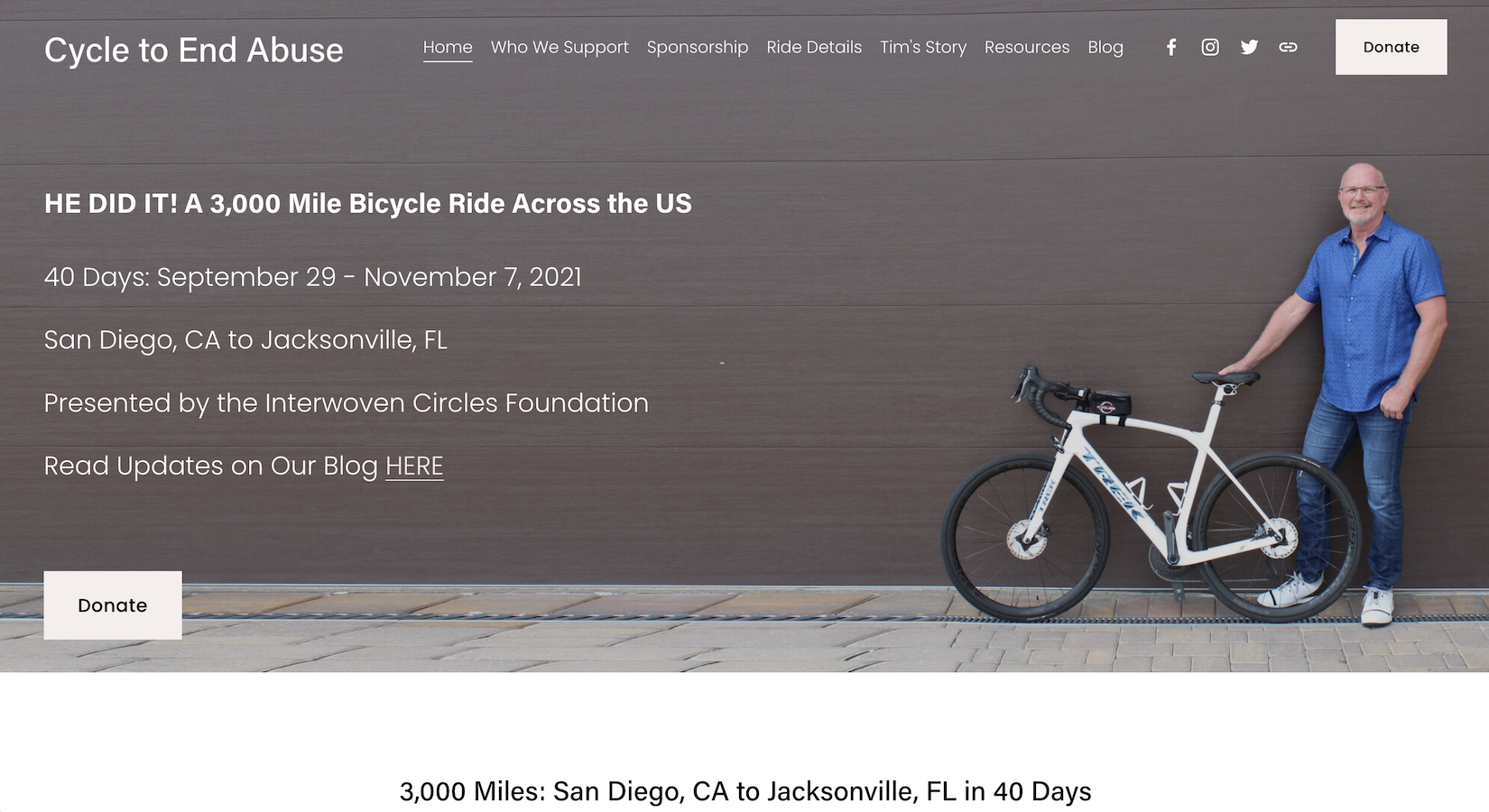
In 2021 Tim completed a 40 day Cycle to End Abuse from San Diego to Jacksonville Florida across the US to raise awareness about child sexual abuse. Click on this link or the image below to learn more. Every cent donated to the Cycle to End Abuse goes to a professionally vetted, non-profit organization dedicated to ending child abuse and/or aiding victims.
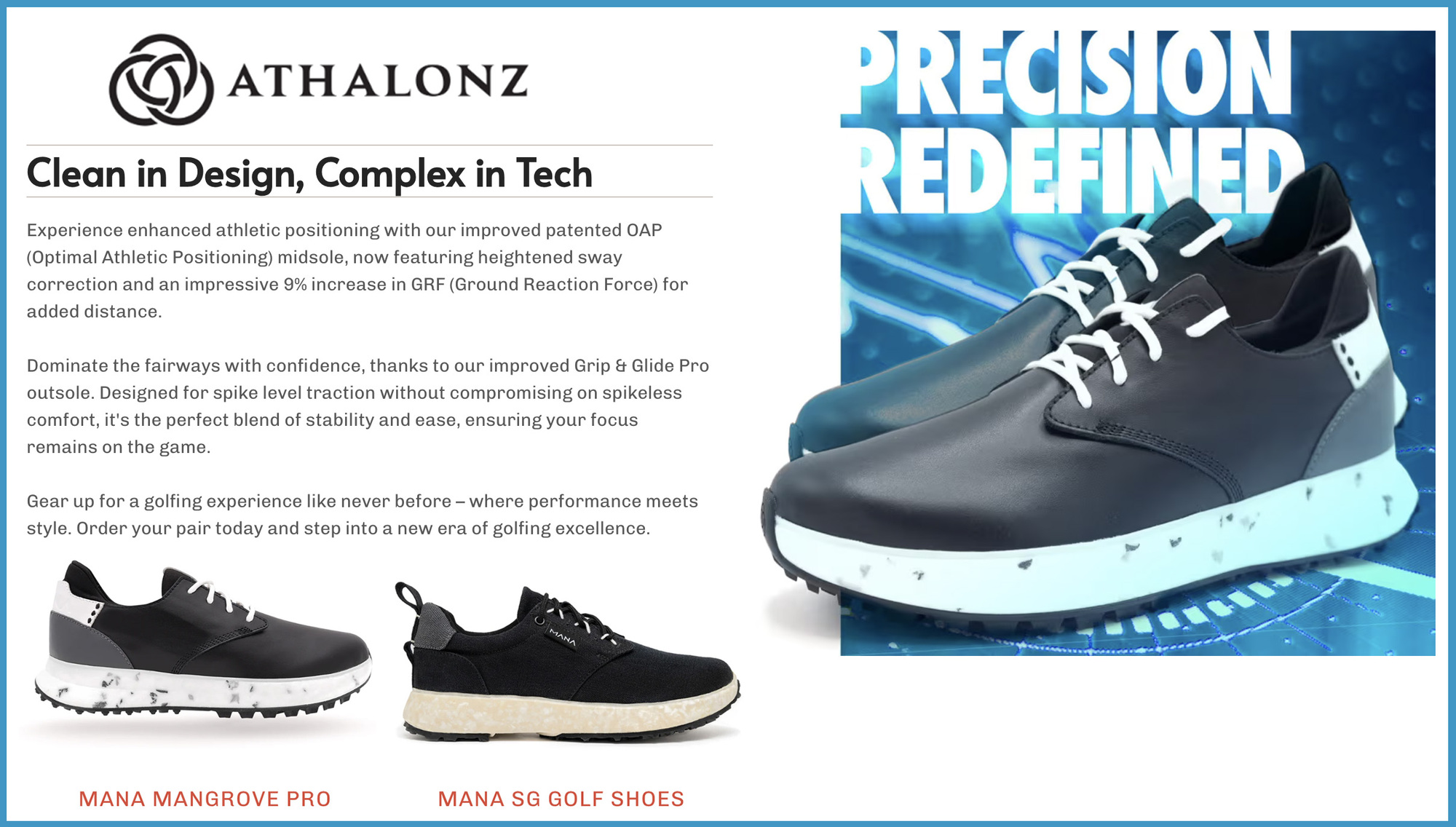
If you would like to connect with Tim, visit his bio page for contact information. To learn more about Athalonz click on the image below to visit their website and receive $30 USD off a pair of Mana Mangrove Pro shoes using Promo Code MODGOLF30. I don't get any commision, it's just our way of saying "Thanks for being a fan of The ModGolf Podcast!"
Sadly 1 in 4 women and 1 in 6 men in North America have been sexually abused as children and those statistics have not changed in 30 years. If you are a man suffering in silence and don't know where to turn to for confidential help, I encourage you to visit Heads Up Guys the world's leading Men's Mental Health resourse.
We want to thank our partner inrange® for presenting this episode of The ModGolf Podcast!
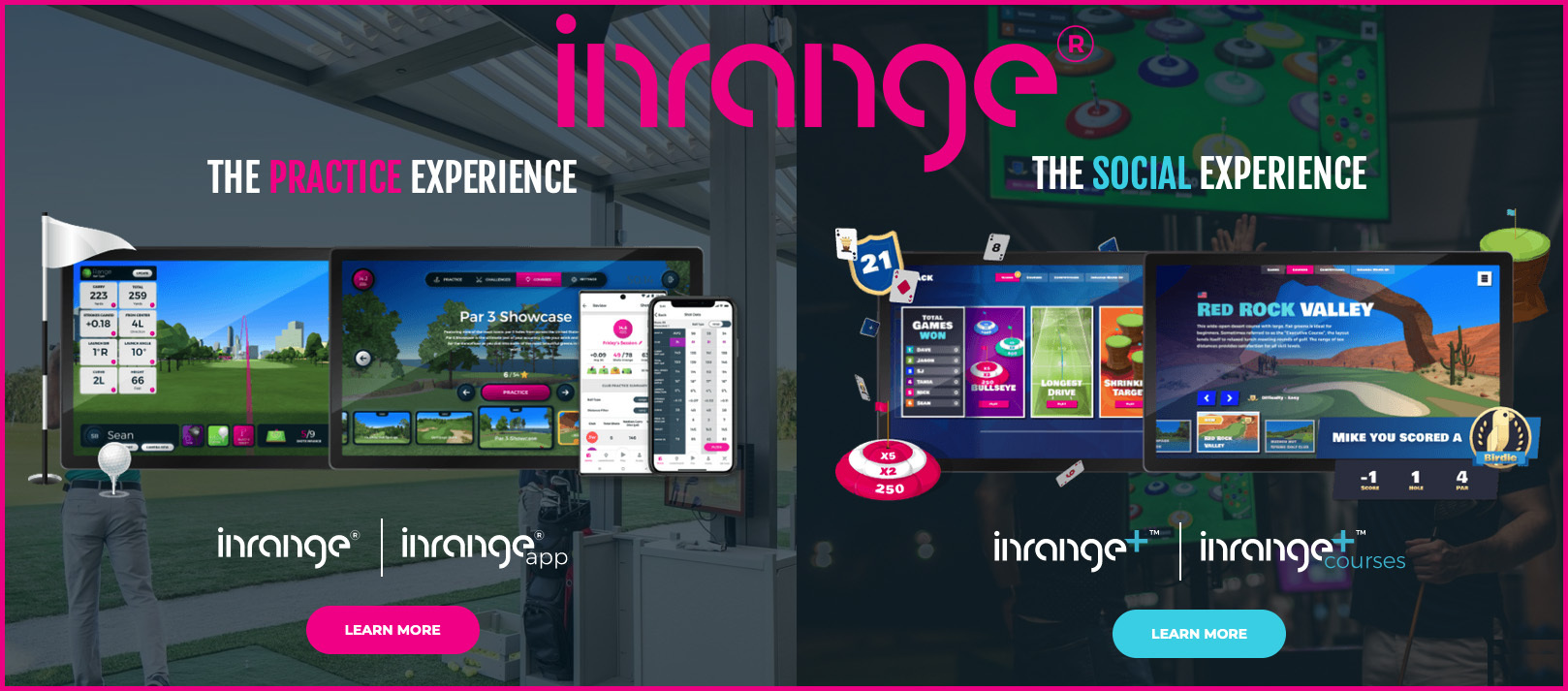
inrange® is a radar-based ball-tracking company that enhances the driving range experience by offering the most engaging gameplay and precise ball-tracking on the market. From private clubs and standalone commercial ranges, to multi-storey “Big Box” entertainment venues and limited-flight ‘compact’ ranges, Inrange® creates unparalleled experiences for every type of player - and unleashes your business’ growth potential. They are also the only software in the world offering a bay vs bay link up feature - allowing large groups to play against one another in teams across the entire venue. To learn more check out www.inrangegolf.com.
Join our mission to make golf more innovative, inclusive and fun... plus you can WIN some awesome golf gear!
As the creator and host of The ModGolf Podcast and YouTube channel I've been telling golf entrepreneurship and innovation stories since May 2017 and I love the community of ModGolfers that we are building.
I'm excited to announce that I just launched our ModGolf Patreon page to bring together our close-knit community of golf-loving people! As my Patron you will get access to exclusive live monthly interactive shows where you can participate, ask-me-anything video events, bonus content, golf product discounts and entry in members-only ModGolf Giveaway contests.
I'm offering two monthly membership tiers at $5 and $15 USD, but you can also join for free. Your subscription will ensure that The ModGolf Podcast continues to grow so that I can focus on creating unique and impactful stories that support and celebrate the future of golf.
Click to join >> https://patreon.com/Modgolf
I look forward to seeing you during an upcoming live show!... Colin

We want to thank our friends at Golf Genius Software who have supported The ModGolf Podcast since 2019!
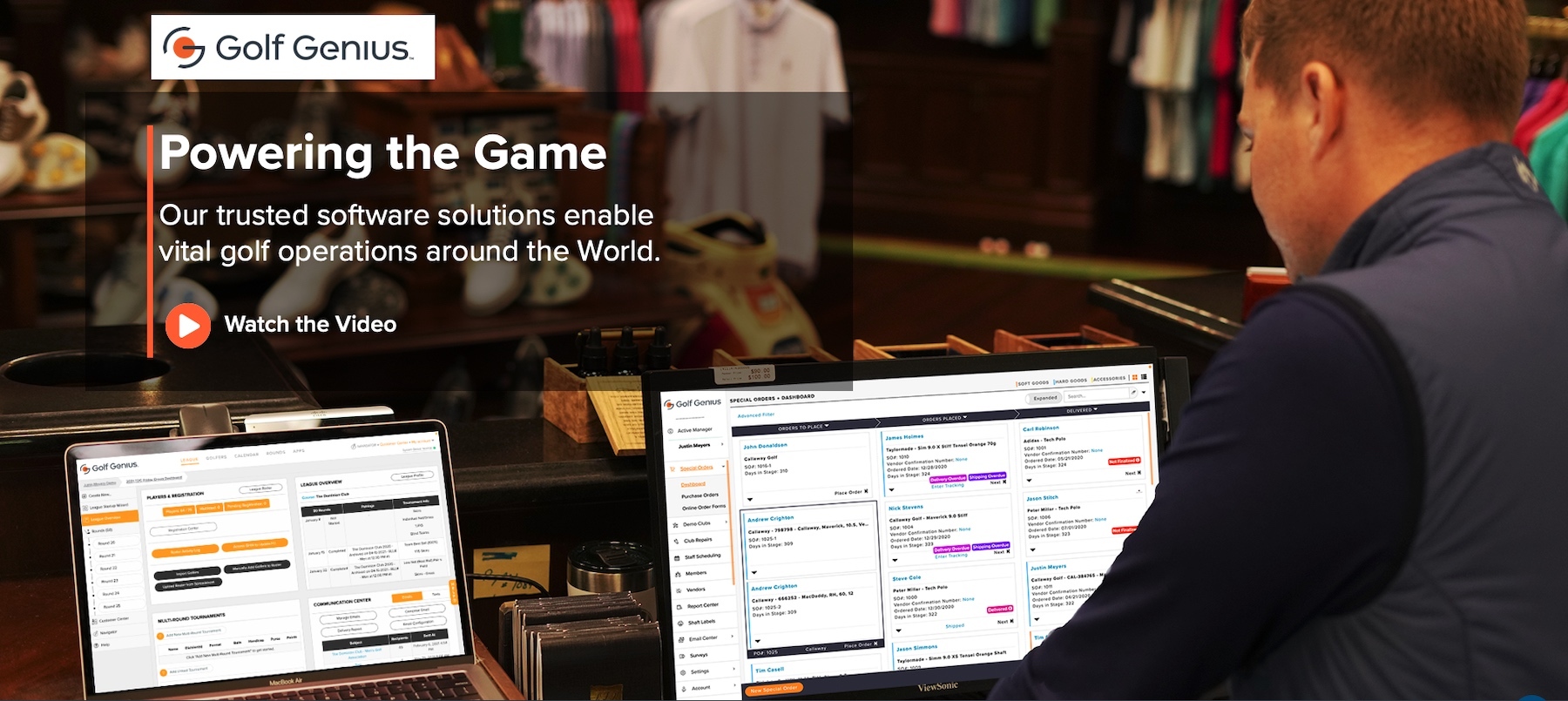
Golf Genius powers tournament management at over 10,000 private clubs, public courses, resorts, golf associations, and tours in over 60 countries. So if you’re a golf professional or course operator who wants to save time, deliver exceptional golfer experiences, and generate more revenue, check them out online at golfgenius.com.
Transcript
Colin Weston 00:04
Welcome to the ModGolf Podcast, where we speak with the entrepreneurs, the innovators, the disruptors, and the influencers who are shaping the future of golf. If you're joining us for the first time, thank you so much for listening. If you've been with us before, thanks for coming back and listening to ah yet another great, impactful, engaging story about innovation in the golf space. My name is Colin Weston. I am the host of the Mod Golf Podcast, and today I have a guest who probably wears maybe even all four of those hats that I mentioned there of ah being a disruptor, an influencer, an entrepreneur, and an innovator in the space here. And this gentleman is Tim Markison. And Tim is the founder and CEO of Athalonz.
Read Full Transcript Hide Full Transcript
Colin Weston
Athalonz is a golf technology footwear brand that enhances athletic performance. They are also in the baseball shoe space, and we'll talk about that too. Athalonz is disrupting the golf footwear industry with 16 patents that help produce more power and better shot production for not only professional golfers, they have ambassadors on the PGA Champions Tours, but also like myself here as the humble, very average 16 handicapper. So yeah, lots of great things we're going to talk about here as far as Tim's entrepreneurial journey and a lot of the charity work that he's doing and ah the backstory of his ah his life that's informed all the great things and the impactful and meaningful things that he's doing. And that Athalonz kind of fuels the fire to allow him to do that. So let me bring him on here and introduce him. Tim, welcome to the ModGolf Podcast.
Tim Markison 01:42
Colin, thanks very much. Appreciate the opportunity to chat with you.
Colin Weston 01:45
You are welcome. So Tim, I have seen what you've been doing. I've known Athalonz for a couple of years now, and I've wanted to get you on the podcast, and I really didn't know about the the deep, meaningful backstory, not into what you do in the golf space and as an entrepreneur, but also with your life. And we're going to get into that. But I do want to start here because I always like to ask this ice breaker question for our guests because we you and I haven't met before so I like to ask this and it's about golf and it's that power of invitation and your first golf experience. On the podcast I've had PGA pros to people that have never picked up a golf club before and everybody in between, so I want to ask you this Tim to get started. Can you tell us about your first ever golf experience and who was that person that invited you to ah to make that happen?
Tim Markison 02:37
Okay, so I was raised in a very poor family so we didn't have really any money and I'm left-handed. So my father had an old old right-handed set of golf clubs So that that was my first experience. I tried out for the high school golf team and it was not pretty. So I did not play pick up a golf club again for about 35 years. So into my early 50s, after I started Athalonz is when I started. And so my first real golf outing, I was with Mitch McDowell, who's a PGA teaching pro, long drive competitor with ah Justin James, who was number one in the world in long drive and Ryan Sternberg who was number two in world-long drive at the time. So this is like seven, eight years ago. And as a baseball player, I could hit the ball pretty far. 320 yards on a drive was pretty routine for me.
It was humbling with these long drivers. They're hitting the ball 420 yards straight down the fairway. And Mitch was always a great a great player. So not only is he hitting the ball 400 yards down the fairway, but we're 12 holes in and he's minus 10.
Colin Weston 04:01
Right.
Tim Markison 04:02
But it was it was a ton of fun because great, great guys and was a great experience.
Colin Weston 04:11
I don't know if I would have played after that. You talked about it being very humbling. You probably looked at that and think, oh, this is how the average golfer plays.
Tim Markison 04:15
Yeah.
Colin Weston 04:18
These guys are just like regular golfers rather than freaks of nature that are within the top 0.01 percentile of how far you hit the golf ball.
Tim Markison 04:27
Yeah, it but it was it was fun. Like I said, they were really, really great guys. I'd make a good shot and they treat that with respect and me with respect. So it really was a great experience to start playing more and more golf and realizing, hitting the ball close to 300 yards is okay.
Colin Weston 04:51
Yeah, I still aspire to hit it that far. I know as I get older here my swing speed slows down. I think you and I are about the same age. Maybe I have that in me. Well, that that's yet to be determined. But with World Long Drive, that brings my memory back to one of the first podcasts during season one, way back in 2017 when we started the ModGolf Podcast. The first on-location event that I went to was when I was invited to cover the World Long Drive Championship in in Oklahoma.
Back I think I was in 2017, 2018, and I got to meet Justin James and a few others there. And yeah, not only are they great athletes who put on a show, but they're wonderful people. They're so nice. And yeah, quite a spectacle to see them hit a golf ball. It's quite something.
Tim Markison 05:36
Yeah, it was it was a lot of fun. and And like I said, they're really, really good people. So I enjoyed that immensely. And that really whetted my appetite for golf.
Colin Weston 05:45
Nice, nice. Well, I understand a little bit of background and I did on you that ah your first love in sports was baseball and you played it at quite a competitive level. I believe you' you're in Mesa, Arizona, so I believe you grew up and in Arizona, so playing baseball down there. Very interesting interesting interesting trajectory as far as things you've done in your life, this kind of non-linear path from aspiring to be a pro baseball player and then ah going to school ah for engineering and then going back to become a lawyer. And we'll talk about what you've done as a patent lawyer. And how that i'm I'm sure one of your superpowers of how you are able to patent so many things yourself now. So, so let's actually rewind the tape here and let's go from childhood sports to engineering. So can you share with us how your early experiences as a ball player influenced your career choices and ultimately led you to the engineering and patent law part of your life?
Tim Markison 06:41
Yeah, so I grew i actually grew up in the suburbs of Chicago.
Colin Weston 06:45
Oh, you did?
Tim Markison 06:46
So yeah, I played ah played baseball there.
ModGolfPodcast 06:46
Okay. All right.
Tim Markison 06:49
And you know all throughout my childhood, baseball was all I all i cared about. In high school, I was a B, B minus student. If I couldn't get the homework done in class, I just i wouldn't do it. I didn't study for tests. So all I focused on was baseball. And at the end of my senior year of high school, I had a tryout with the White Sox. And that went very well, but they were like at 17. I looked like I was about 14. I was six foot, but I weighed like 155. They said, man, you're so much better off going to college than into the minors.
Colin Weston 07:22
Right.
Tim Markison 07:27
But I don't want to go to college.
Colin Weston 07:29
Right.
Tim Markison 07:29
But that was like, all right, I guess I'll go to college to play baseball. And then I was like, "well, if I'm in college, what am I going to study?" And I was working as a draftsman and drawing schematics of battery chargers for battery backup systems for nuclear power plants. I was like, all right, I'd kind of like to know how this stuff works.
Colin Weston 07:49
All right.
Tim Markison 07:51
So that's how I picked electrical engineering. Into my first my first year of playing baseball. I herniated three discs in my lower back and then the next year tweaked that again and then tweaked my shoulder. I was a left-handed pitcher and that was that was the end of baseball for me, but But I was pulling straight A's and in pre-engineering school at the time so it's like alright I'll stick this out.
Colin Weston 08:13
right nice
Tim Markison 08:23
And so that's how we ended up becoming an engineer. And then my wife and I, we were high school sweethearts and we got married at 18. So most of my college career was as a married student. So in my my fifth year of engineering school, so all senior level engineering classes, my last semester, our first daughter Amy was born. And she had a congenital heart defect. And this was 1984. And the type of surgery that she needed was a new technique that they had just developed.
Colin Weston 08:52
Okay.
Tim Markison 08:57
And they didn't have the instrumentation at the time to perform the surgery on a newborn. So we had to wait eight months to get her larger so so the equipment would fit her body. So she was in and out of the hospital a half a dozen times from the time she was born until she had the surgery. Thank God the surgery was a success. At the time Amy was born, I was 22 and my wife was 21. And still in engineering school, I was not making a lot of money. And so a couple of years after Amy's surgery, we get sued by the hospital for outstanding medical bills.
Colin Weston 09:44
Right.
Tim Markison 09:44
And so I was calling around to attorneys and they all wanted at least a $5,000 retainer. like but if had five thousand dollars I'd pay the hospital. I mean, we owed about 40 grand.
Colin Weston 09:55
ah Right.
Tim Markison 09:58
So one of the guys I was working with, he says, "you know you can can represent yourself".
Colin Weston 09:58
Right.
Tim Markison 10:05
And I said, well, now you've got to be smart to be an attorney. but I really didn't have a choice. um So i I went to downtown Chicago to the law library. Again, this was 1988. So before the 1986, before the internet was existed. So yeah, I should go look at some books. So I spent a month going down to the law library every night and studying and had that $40,000 bill reduced to $3,000. So on the way home from the court, I decided, you know what, I'm going to go to law school. So that's how I ended up becoming a a patent attorney. It is because of my daughter's surgery.
Colin Weston 10:53
Wow, wow. I find it very interesting how moments in life, these inflection points and these choices that we make. It's interesting that if your daughter, who I guess 40 years old now, and I understand you've got a grandchild, so i I'm assuming your daughter's very healthy now and doing just fine, that without that experience though, you probably would have never become a lawyer and never become an expert in filing patents. I believe over 3,000 that you have filed or drafted and over 400 for yourself, if my number is correct.
So you wouldn't have that skill or that experience if that didn't happen. I find that fascinating how life kind of throws things at you.
Tim Markison 11:33
Yeah. Yeah, so.
Colin Weston 11:37
We can't really dictate what happens to us in life, but we can decide how we respond and react to it. It sounds like that's what you did. And and here you are now.
Tim Markison 11:49
Yep, so true. I'm a big believer in destiny. We get we all get faced with life challenges and how we react to them. and So my my older daughter, Amy, she's she doesn't have any children. She actually just had her third open-heart surgery about a year and a half ago, but she's recovered well from that.
Colin Weston 12:08
Okay.
Tim Markison 12:09
It's my My younger daughter, Patty, she has two daughters. So one six and one three months old. So so that's been that's been a joy being a grandparent.
Colin Weston 12:21
I bet, I bet. Okay, so we're going to keep going here. So I want to ask about your transition to entrepreneurship. you so You started to kind of tease that out a little bit here with what you just mentioned with your last story here, but I'm curious to know like what inspired you to transition from your successful career as a patent attorney to starting your own company with, with Athalonz?
Tim Markison 12:44
So I still have my law practice I still do that but yeah, so how how Athalonz got started. We talked about how I played baseball so once my kids were in their teens I started playing adult baseball again. There's leagues men senior baseball league and others like that where we play hardball as an adult and
Colin Weston 12:47
I see you juggle a lot of balls there and spin lots of plates. Yeah.
Tim Markison 13:10
So i I got back into that. And in 2010, when we first moved to Arizona, my wife found this was called Pro Ball Camp. So it was four days of instructions for so adult players, but taught by major league coaches. So it wasn't like fantasy league, where you just go play and you hang out with it. This was actual instruction.
Colin Weston 13:30
Right.
Tim Markison 13:32
And so at this camp, the first time I went, we don't get many rainy days in Arizona, but at the first day of this camp, it was rainy. So we couldn't get outside right away. So coaches were asking, so where are you from? What do you do? I just moved here to Arizona from Maui, which was a fun story to share. And I'm a patent attorney. So I got known as the idea guy. At this camp, one of the coaches Rick Adair was the pitching coach for the Orioles at the time had this drill that he would use with pitchers. He put a rosin bag on the outside of the foot of the driveway and underneath the heel so he could tip that back knee inward just a little bit and he came up with that drill working with Hall of Fame caliber pitchers and studying their lower halves. What he found that they all had in common is when they got into that athletic stance, if you were to draw a line from the ankle to the groin, the knee would just be on the inside of that line.
And what he also noticed is most major league pitchers, and we're talking about you elite athletes, major league pitchers, but a majority of them didn't have that positioning.
Colin Weston 14:48
Yes. Yeah.
Tim Markison 14:54
And you know with with baseball, like in golf, when you load on that backside, if that backside isn't really stable, you get a little bit of sway. And that little bit of sway throws off the motion a bit, adds adds to the overall timing and complexity of swing, and and robs you of energy. And so that was what the drill was to to teach players how to do, is how to get into that position. So when Rick and I met, he says, do you think we can figure out how to put this into a shoe?
So that's that's how Athalonz got started in late 2010 with trying to implement that drill in a shoe.
Colin Weston 15:33
Got it. Got it. Okay. Well, I'm going to ask you about the engineering principles and the technology and all the patents behind it. We're going to dig down into that. But myself as as an entrepreneur, and I've started a few ventures in my time and I have some going right now.
Tim Markison 15:39
yeah
Colin Weston 15:44
And I know with naming products, branding them, whether it's ModGolf or the other things that we're working on. Founders can agonize over the name quite a bit. And sometimes people, they don't think about it at all. It just kind of happens. So I still don't know the connection with the name Athalonz. So where did that come from? So tell us about the brand and the name.
Tim Markison 16:03
Yeah, so we actually formed the company as Admark. So the AD from Adair and the MARK from Markison. So we combined that to Admark Athletic Ventures.
Colin Weston 16:13
Okay.
Tim Markison 16:17
And in 2014, we were big setting up to launch the the baseball shoe as well as we were making portable pitching mounts. So we hired a marketing firm and we spent a lot of money with the marketing firm and and they wanted to name the the shoe the Athalonz because it was athlete and decathlon that they combined because our technology can be really used in any athletic shoe. And we told them we like that name for a company name as opposed to a shoe name.
Colin Weston 16:46
Got it.
Tim Markison 16:51
So in 2014, we switched the company name to Athalonz from Admark, but it's Athlete plus Decathlon. So Athalonz.
Colin Weston 17:02
Now I know, there we go.
Tim Markison 17:03
yeah
Colin Weston 17:04
And I like it, good stuff. Okay, we talked about this before we started recording here just as far as entrepreneurship and developing products and ventures, whether they're experiences or physical goods or experiences, services, about identifying gaps in pain points. Now you touched on that in baseball and see that ported over into into golf and the stability aspect to generate more power and that ground force reaction that I've also heard from other conversations with people. I've started to learn this stuff just through conversations I've had on the ModGolf podcast. So let's talk about this, between the patented technology and the engineering principles. And I believe you've called the Envy en vee technology.
Tim Markison 17:48
yeah
Colin Weston 17:49
So let's get into this. Part of your superpower is your ability to file and register patents and also as an engineer to put the principles behind that. So how did it all come together to develop the ENVEE technology and and tell everybody what that is?
Tim Markison 18:07
yeah So it's pronounced E-N-V-E-E.
Colin Weston 18:11
That makes more sense, yes.
Tim Markison 18:13
And it's energy, it's the E-N from energy and the V-E from velocity.
Colin Weston 18:18
Nice.
Tim Markison 18:18
so it creates more energy and velocity so how the design concept for this the shoe originated is, i'm an electrical engineer so i'm trained in the physical sciences. I had physics classes i had mechanical engineering classes as part of my overall curriculum so i looked at this as a physics problem. And so, the basic components of physics is, when we stand on the ground, we push our weight into the ground and the ground pushes back. The ground pushing back is what you refer to as ground reaction force.
Colin Weston 19:00
Yes.
Tim Markison 19:00
So all all human movement is us pushing on the ground, the ground pushing back. So we have to overcome that weight force to actually move. But it's the ground pushing back that actually is the force that allows us to move. So now looking at that problem, in athletics, whether it's golf or baseball or tennis, soccer, football, our connection to the ground is through the shoe. So how does that force our weight force and then the reaction force, how does that traverse through the shoe and then what we did is we created a a three-dimensional model of what those forces look like. Then how do we direct them in three-dimensional space so you have more force going into your body through the shoe. And so that's how we came up with the original concept of putting these gradient slopes in the forefoot of the shoe so that you have more weight force concentrated in the forefoot of the shoe at the ball of the foot and big toe area.
Colin Weston 20:11
Interesting, interesting. Well, I haven't had a chance to slip on a pair of Athalonz quite yet, but hopefully I get a chance very soon. maybe Maybe I'll get a chance to do one of our ModGolf YouTube videos where I can put a pair on and give them a give you a review from the average golfer that I am.
Tim Markison 20:25
Yeah, that would be awesome. We'll get you a pair.
Colin Weston 20:29
Make that happen. Good stuff, good stuff.
Tim Markison 20:31
yeah
Colin Weston 20:32
Okay, so for people listening here, if they're aspiring entrepreneurs and they've got some ideas, we get a lot of listeners that are thinking about jumping into entrepreneurship or starting their own business. They've got some product ideas. You and I, we've been in the game for for a while here. We've had some successes, some things that haven't succeeded, the ups and downs. It is not a straight line. So can you share with us some of the obstacles that you've overcome and biggest challenges you faced with launching Athalonz and how did you overcome them? And maybe maybe share a story of
of something that you look back and kind of smile now that you thought would have succeeded and it's like, oh, that didn't work. Can you respond to that one for us?
Tim Markison 21:13
Yeah, there's there's a lot more stories like that than the success story.
Colin Weston 21:17
Absolutely.
Tim Markison 21:19
Looking back, as a patent attorney, I've had my own law practice since 1997. But there really isn't a lot of marketing and sales with that. All of our clients are word of mouth. And it's more of a business to business service. So Athalonz was my first real in-depth endeavour into business to consumer selling the consumers. Some of my legal, law firm clients, they made consumer products, but even most of them made commercial products that sold to other businesses. So it was a new market for me selling directly to consumers. And yeah I underestimated just how challenging that was.
Colin Weston 22:10
Right.
Tim Markison 22:11
So that took a long time to really get into better perspective of how how do we start to appeal to the consumer. And I know you've experienced this, but how much has changed in the last 10 to 12 years when it comes to marketing? 10 years ago, 15 years ago, digital marketing was essentially brand new. So social media, it's blowing up like like crazy. Today, everybody's doing it. I look at marketing like I'm in a 100,000 person stadium. And unless you have the money to buy time on the PA, you're only talking to the the people immediately around you.
Colin Weston 23:01
Right.
Tim Markison 23:01
And you have to get lucky in many ways that they'll propagate your message around. Once we really embraced that concept of marketing, we've had a lot more success. Being much more focused on who we want to talk to and and and introduce our shoe to to get them encouraged about buying it. So I think that's one of the things. From the law firm perspective as a lawyer, I have a lot of potential clients come to me and say, hey, I got this great idea. I want to get a patent. And the first thing is getting the patents is the easy part. You really have to see, is there a market for what you want to build?
How big is that market? How hard is it to penetrate that market? You're going to need to make product and sell it into that market to create market interest so the patents that you do get needs to have value. So all of those things have to be weighed in when you're looking at starting a new business. And I have much better insight into that now 14 years later than when I started Athalonz.
Colin Weston 24:22
Well, your last remarks, they're tied into but my next question. You must have read my mind there because I was going to ask you about that. I know myself as an entrepreneur and starting up adventures and the work that I've done across Canada and and the U S with, with startups and founders. Touching on what you had just mentioned there when people approach you is like, well, should I file for a patent? The fact you've drafted over 3,000 of them now, you certainly know that people get overwhelmed. And I have in the past too, between IP, intellectual property, whether it's, do I actually need a patent? A trademark registration, all these things that are swimming around. I'm sure there isn't a one size fits all concise response you can have to my question here. But when you get approached by someone that's just starting out or they've got an idea and think oh, I have to protect this. This is what I've heard. I know there's probably not a blanket generic answer for this, but what is your response building on what you already mentioned to us there, Tim?
Tim Markison 25:29
Yeah, so I'll go through that scenario with them. All the things you have to do to start a business for the the patents to become valuable. But then with respect to the patenting itself, in those earlier phases, the the patent office 15 years ago allowed for what's called a provisional patent application to be filed. So it it doesn't have all the requirements of a conventional utility patent, so it's cheaper and and easier to get on file. And what that gives the patent owner is a one-year window before they have to file the full-blown utility patent.
So in some situations, we we recommend that just to get that extra year. Now, the challenge with patents is that once you go public with your idea in the United States, you have a one year window, and a different one year window to actually file for patent protection.
Colin Weston 26:26
Right.
Tim Markison 26:27
So so if today I were to announce, hey, I've got this new product coming out and I'm offering it for sale, all the technology that's embedded in there, even if I don't specifically highlight it, is made publicly available today. So one year from today, I have to file for patent protection on all that innovation I put into that product where I've lost my rights. And that is the most common mistake I see with potential new clients is they've gone public with their idea. And now we're a year and a half, two years later and say, I think I should patent some of this stuff.
And most of their core technology has been donated to the public because they waited too long. So I think the biggest message is if you if you're going to do the business and you have something that you think is new, get that patent application on file before you go public.
Colin Weston 27:21
Well, I know we've made that misstep previously about 10 years ago when we were fledgling entrepreneurs, not really knowing what we were doing and not getting the sequencing right. And it's a bit of a tricky one too, because you've got to be able to put your ideas out there, even at that early stage, even if your technology isn't isn't ready for market yet, because you need partners and you need investment.
and an NDA is only as good as your ability to litigate against it and usually people you're talking to have deeper pockets than you do so it's a bit of a tricky one though isn't it?
Tim Markison 27:53
So well with respect to the non-disclosure agreement, NDA, that will protect you to a pretty good degree on public disclosure for your patent. So it's just as example, I've got I've got this new idea and i'm I'm talking to you as a potential investor under a non-disclosure agreement I share that with you and if you go off and hey Tim's got this idea does all these things um you know You're breaching the NDA, and I could have legal action against you, but because I have the NDA in place, it ah have I haven't gone public with my idea, so I'm still protected from a public disclosure.
Colin Weston 28:34
Got it, got it.
Tim Markison 28:35
So we always recommend getting a non-disclosure agreement in place if you're talking to people about investment or yeah like a third party to help design some of the things or some you know you need code written, somebody to to write the code for you. So if all that's done under contract with confidentiality, you're pretty well protected. It's when it gets to the point where you're looking to actually monetize the product and you've got something to monetize.
then it gets greater even with agreements in place when a public disclosure happens.
Colin Weston 29:13
Got it. Got it. So I wanted to ask you this, bringing it all home with Athalonz and your ENVY technology. First of all, is that patent good in perpetuity? Is there a finite timeline, is it five years, 10 years? Does that run out first to start with?
Tim Markison 29:30
So in the United States like pretty much every country in the world you get twenty years from the date of filing.
Colin Weston 29:37
Right.
Tim Markison 29:38
Our patents were filed in March of twenty eleven so our patents are good through March of twenty thirty one.
Colin Weston 29:47
Got it. Got it. So I wanted to ask you this. I'm really curious to dig down into this. So who is the patent police for you? Do you look at every new baseball and golf shoe that's out there and kind of reverse engineer them to see if someone is stealing your ENVY technology? And if so, then you have to take action? So without ah citing any specific cases, is that something that is part of your business that you need, that you actively do.
Tim Markison 30:11
yeah so we do look at competitor shoes.
Colin Weston 30:15
Hmm.
Tim Markison 30:16
And we actually are in the middle of patent litigation right now against Under Armour.
Colin Weston 30:23
ah okay all right
Tim Markison 30:23
He filed five patents against them that we believe they're infringing. Based on some of their marketing things that they were saying, and then we bought those shoes and and cut them apart and then did all the legal homework to say that yes, these shoes are infringing our our patents in our opinion. And so in April of 2023, we filed a patent infringement suit against Under Armour in the Eastern District of Texas.
Colin Weston 30:54
Ah, there you go.
Tim Markison 30:56
ah But there's
Colin Weston 30:56
The glamorous life of entrepreneurship, right?
Tim Markison 31:00
where the importance of having the patents, and not just having a patent, but having a series of patents and and patents that have been well drafted. Because otherwise, the big guy can just run all over you. And one patent is fairly easy to get around. Two is harder. By the time you get to four or five patents, it's really, really hard to design around those patents. So always like to have multiple patents regarding just one invention, because there's different ways to that things could be done. And you don't want to go, hey, that's a really good idea. If I make this one minor change, I can use your idea without infringing your patent. That's that's a bad scenario.
Colin Weston 31:44
Yeah. Right. Absolutely. Okay. I know I'm going down the patent rabbit hole here, but I'm going to ask one more patent related questions before we move on here. We've had this personally with some of our ventures that are technology-led and a lot of other people that I've talked to, they may not have something that is just one piece or element. Let's use the ENVY technology again as an example. But what we have is a system where we're taking elements of different things that already exist and putting the way in a ah way together in a way that creates a system and adds new value. Is that of the over 3,000 patents that you've helped to draft and file, is that something that you've seen also that you're able to put together a ah system and then that has ah protection against it?
Tim Markison 32:30
Yes, so almost every patent that I file, actually, I'm going to take that back. to Every patent I file is building on existing technology.
Colin Weston 32:39
Alright.
Tim Markison 32:39
Now, whether that existing technology in it itself is patented is is probably 95%. So every everything I work on, it's building on existing technology, and then some of it's going to be patented. So when we look to build a patent portfolio, it's like, all right, how much is new of what you're doing here? What's the market value? What do we need to do to really protect this? So it gives you the best leverage in your business as possible.
Colin Weston 33:14
Good stuff, good stuff. Well, you're probably going to start charging me 500 or $1,000 an hour for giving me legal advice here. So I'm going to stop asking those questions, because you're not charging me anything for this. I appreciate you providing all of our listeners here with those those nuggets of wisdom and insights of patent law 101.
Tim Markison 33:23
It's all good.
Colin Weston 33:31
But to move on, let's get back to entrepreneurship and as an entrepreneur, as a founder of multiple ventures and businesses, you cannot do it all yourself and you can't go alone. So let's talk about that power of partnerships and team building. Can you talk talk to me about kind of the culture you have at Athalonz and also the team you have, as a leader how you in empower other people on your team to get the best out of them. Can you tell us a bit about that?
Tim Markison 34:02
I think my best my best explanation comes from my first boss at Motorola. His management philosophy was, I give everybody enough rope. Some will make a suspension bridge, others others will hang themselves. So the environment at Athalonz is it's very much open. This is your job. It's up to you how you get it done as long as it's done right and on time. That's how you get it done. That's up to you. And for some people, that's an awful environment for others to excel in it. And the people that we have in Athalonz, they really excel in that kind of environment. Jeremiah Johnston, he's a director of research and development and new products. And then Lynn Mayo, she's in charge of shipping and receiving.
and they both ah thrive in that and then the other people, we have contractors that help support in various other areas as well.
Colin Weston 35:09
Nice. Nice. So we have a feel for it. So how big is your team then?
Tim Markison 35:15
Right now, we have three full-time employees and then we have about nine ah independent contractors that work with us as well.
Colin Weston 35:25
Gotcha, gotcha. And you are very proud of the fact that all of your shoes are designed and manufactured in the USA. Can you tell a little bit about this? Why did you choose to manufacture your shoes at home? And what impact has that had on your brand and your business model as you position that?
Tim Markison 35:44
So our first round of shoes were baseball shoes that we released in late 2015. We had those manufactured in China. And with all the pros and cons of of working with China, the tariffs on our shoes went up in like 2000 and late 2016. So we found a new manufacturer in South Korea for envy golf shoes. We had a pretty good relationship with that company and then COVID hit so we had so we had an order ready to ship from South Korea to the United States in June. We couldn't get on a ship until November. And the price went up 4X between June and November.
Colin Weston 36:45
Wow.
Tim Markison 36:47
So that really forced us to start looking at different options. And we found this great vendor in LA. That makes shoes in house here in the United States in LA so we started working with them and designing the new shoe and it's just so much easier. having the time zone be the same or an hour difference rather than like their a day apart. And no communication language issues, no tariffs. The only downside is the labor costs here in the United States are higher, but the quality is good. And then there's just that pride of Made in America, which we're really, really proud of.
Colin Weston 37:37
Yeah, I bet you are. I bet you are. Okay, I do want to switch gears here ah a little bit and talk about the the charity work that you do and your passion for ah philanthropy. And I know this ties into your childhood story also, which you've shared elsewhere over the years. So I know you're you're open to to sharing it with us here. So Tim can you tell us a bit about you know how did you become involved in the cause to help end child abuse and what motivates you to support it?
And then talk about the the Cycle To End Abuse that you went on from San Diego to Florida.
Tim Markison 38:18
Yeah, I was raised in a very abusive home. I was sexually and physically abused from the time I was five and ah until the sexual abuse ended when I was about 13. The physical abuse ended when I was about 16 once I became bigger than my father. The emotional damage from that is devastating. And for me, how I dealt with it growing up is I blanked it out. So to this day, I have fragments of memories from the time I was like four till I was 16. I've got years of memory just completely gone.
So when I got married at 18, I had basically no memory of my childhood. And so I didn't even remember the abuse. I just knew that I had very low self-esteem, very low confidence. And somehow this guy with no self-esteem and low confidence is pulling straight A's at engineering school. So that that started to mess with my head. It's like, well, obviously this stuff can't be that hard because it can't it can't be that I'm smart.
Colin Weston 39:39
Right.
Tim Markison 39:46
So yeah I struggled with that. And then um when my daughter, my eldest daughter turned five, the the memories flooded back of what happened to me when I was five. So in my second year of law school I'm married two kids working full-time at Motorola as a patent agent during the day and then going to law school at night. I started working with a counsellor locally and I had this one series of memories that terrified me. I literally could not close my eyes for more than like two seconds. I did not sleep for four weeks. I couldn't close my eyes. I was that afraid of what the memories coming back. So I ended up doing inpatient treatment for five weeks. And then over the next couple of years, I did it two more times.
just to deal with that heavy oppression and fear and self-loathing that comes from being abused, a survivor of childhood abuse. Got through that and finished law school. We we moved out of the Chicago area and we moved to Austin, Texas. My wife grew up in an alcoholic family, so she had her own childhood issues that she was dealing with at the same time. So moving was very refreshing. It was basically a new start for us in move to so Austin.
Colin Weston 41:44
Right.
Tim Markison 41:47
And then my wife went on and got a master's degree in in family counselling. So she started not only through helping herself, but then being able to do others. And then for a while, i I just wanted to keep it at a distance. It's still there today, but 25 years ago, the mental stigma of, oh my God, Tim was in the nut house, especially as a patent attorney where they're trusting me for my opinion.
Colin Weston 42:17
Yes.
Tim Markison 42:18
I had to keep that at bay. I didn't want people to know about it, especially as I was building my practice and my career. And then that was probably eight, nine years ago. I hadn't had a memory of the childhood abuse in probably 20 years. And then, boy, 2 a.m. woke up one night, just cold sweats, panic. And then for the next five nights, exactly at 2 a.m., same thing, woke up, panicked, cold sweats.
So the fifth night that happened I i went to my office at the house and it's just like what the heck is going on here and so as I was just processing the feelings. It's like the a whole new series of memories came back. So all of my memories of my childhood prior to this event when in my 50s was like I was watching a ah movie of somebody else. It's like, yeah, I could relate to it, but it wasn't like really happening to me.
And all of a sudden now, in my 50s, it's like, oh my God, this that is happening to me. I could feel the abuse. So give me just a sec.
Colin Weston 43:43
Of course.
Tim Markison 43:46
But that got me thinking again of my silence. is really acquiescing to that abusing kids is OK in my mind. And it's like, that is not OK to me. So that's why I decided to to start speaking out and sharing my story. And you can see that even today, it's difficult to talk about.
Colin Weston 44:15
Yes.
Tim Markison 44:15
But it's so important to talk about and that there is real pain, there is real damage that happens to people because of this. And the the numbers as I was getting more and more into this are staggering. One in four girls, it's estimated by the time they reach the age of 18 will have been sexually molested. One in six boys by the time they reach the age of 18 will have been sexually molested. That's 20% of our population is' going to get that has been or will be sexually molested, and the damages run deep. That's why there's so much suicide, so much drug abuse, because a victim of child abuse, it all gets reflected inward. So we view ourselves as less than human.
So that's why to me it's so important to start breaking down the the stigma of seeking help for mental issues. I've used the analogy because I had a counsellor recently and I stopped working with them because they were of the philosophy that, if you just repeat enough times in your head that you're okay. And you're good, all that negative stuff will go away.
Colin Weston 45:45
Mm hmm.
Tim Markison 45:45
Well, it never worked for me. I view it as like a physical injury. If I have a minor fractured wrist, that's going to heal and my wrist is going to be 100% normal.
TIm Markison 45:59
But if I'm in a car accident, and I break 50 bones and my hip has to be reconstructed, I'm never going to be physically normal. I may be able to get around and move pretty good, but I'm never going to be like I would have been had I didn't have that injury. And to me, that's kind of the same thing with the the physical, sexual, and emotional trauma that I suffered. It was so much for so long that's so deep that, yes, I can have a good life, but those scars are never going to completely go away.
Colin Weston 46:37
Thank you so much, Tim, for for sharing that story. I just can hear it and in your voice there that I feel like it's all welling up and coming back during the conversation and you sharing that, even though it's not the first time you shared that publicly. Can you tell us a bit about your motivation in 2021 of putting the campaign forward to raise awareness with Cycle to End Abuse? My understanding is that you I collaborated with an organization called the Interwoven Circles Foundation.
So can you can tell us a bit about that experience of what you did from September to November, over 40 days in 2021.
Tim Markison 47:20
Yeah, yeah. So Interwoven Circles is a charity foundation that I formed with a couple other of my colleagues, Ron Cates and Jim Dugan.
Colin Weston 47:32
Okay.
Tim Markison 47:32
So Cycle of Abuse was an event that Interwoven Circles hosted. So in order to raise awareness of child abuse, I rode my bicycle from San Diego, California to Jacksonville, Florida. And that was three years ago. So started end of September, three years ago and finished early November. And we we raised $105,000. And what I realized with this charity work is we didn't need another charity organization to bring in money and try to do its own thing. So what we did, our charity organization, is we just want to raise awareness. And then we bring in money, and then we give that out to charity organizations that are already established helping kids.
Working with adults that have that were survivors of child abuse. There's already so many great organizations out there. We're trying to bridge the gap between them because there's only so much charity dollars that can go around. And the challenge with all these organizations is how do you get the word out? So that's one of our charters at Interwoven Circles is to get the word out for the umbrella of of organizations that are dealing with but kids that are currently going through child abuse, as well as helping adult survivors of child abuse.
Colin Weston 49:03
Okay. All right. On that note, if there's anyone out there that's listening that sadly and unfortunately has been a victim of child abuse and has never known where to turn or take that first step, can you point to one organization that they can reach out to for a confidential conversation?
Tim Markison 49:25
There are numerous organizations like that. I can't think of the hotline numbers. So you could just Google hotline for suicidal thoughts, survivors of child abuse, and they'll give you the 1-800 numbers to call. I'm sorry, I don't have those numbers at the top of my head.
Colin Weston 49:45
No problem. And we talked before the show also, just as far as my work and involvement with Men's Mental Health and Youth Mental Health. And I will include in the show notes also to two organizations with resources. One's called Heads Up Guys. So if you're you're a guy out there that is struggling with mental health, whether it's because due to you know sexual abuse as as a child or other issues that that ah that you may have. They're a great resource. And the other one also for kids that we've been involved with is called Jack dot.org. And that organization is wonderful across North America that has the the young people themselves being the advocates and ambassadors and the voice ah to spread the message that it's okay not to be okay sometimes. So I'll make sure I include both of those in the show notes too.
Tim Markison 50:37
Yeah, that's great. And the true organizations that we have directly worked with is Safe at Home. that's That's programs to help kids recognize when something's off in in their life and to get help for that. we Arizona CASA. And then one in six, so that's a men's adult, a men's organization for men to deal with the trauma of being a sexual abuse survivor.
Colin Weston 51:08
Right, right. Alright, thanks for that. Well, I'll make sure we include that and in the show notes also. So okay, to to finish up here, I just wanted to ask you, as far as people out there, once again, that with the entrepreneurship piece of all this, of any advice you can give for aspiring entrepreneurs out there, They're looking to combine their passions with entrepreneurship, especially in markets, whether it's athletic footwear or a product service, an experience that they're creating, as they're starting out with an idea, what are the first steps that you would recommend, looking back as a younger entrepreneur yourself, and what advice you would give yourself, advice that you give to our listeners also.
Tim Markison 51:56
So one of the pieces of advice I adopted for myself is I don't want to look back on my life and say, what if? Starting Athalonz, I was very passionate about the concept, but then I i did my homework. Is there a real market here? Do we have something unique? And doing that homework, did the passion for doing it stay, did it grow or did it disappear? And for Athalonz, it grew. So I felt compelled I had to do that. So running a business is 24-7.
A never-ending series of challenges. There's a lot of rewards to it, and there's a lot of pitfalls. But to me, there's nothing more satisfying than then building my own concept and seeing it turn into reality. There's just not much better feelings from a professional standpoint than that.
Colin Weston 53:03
Love that. Love that. Well, Hey, why don't we finish up there, Tim? So I want to thank you again for kind of sharing your personal story and and professional story with us here today on the ModGolf podcast. We went, we went pretty deep and it took a lot of courage for you, even though, as I mentioned, you have told the story before, but every time takes a lot of courage for you to do that. So I just want to deeply thank you for sharing your journey with us today on the ModGolf podcast.
Tim Markison 53:30
You're welcome. And you know if you want to do a Patent 101 class for your listeners, I'd be happy to host that with you.
Colin Weston 54:08
Listeners can go over to the ModGolf YouTube channel and watch that once we post that. Hopefully you've got some time available in the next couple of weeks, that Tim to make that happen.
Tim Markison 54:16
Yeah, we'll make it happen.
Colin Weston 54:18
Awesome, good stuff. Okay, and hey, also if you managed to get a pair or two of of your shoes ah in my hands and on my feet, I'd be happy to to to shoot a video, a fun video that we always do as a Mod Golf product review too, if you're up for that.
Tim Markison 54:32
Yeah. All right. That sounds great, Colin.
Colin Weston 54:34
Good stuff. So Tim Markison, CEO and founder of Athalonz and also so much more that, that he does with his business as a lawyer, with patents and all the other good things. Tim, thanks so much for joining us today on the ModGolf podcast.
Tim Markison 54:54
Alright. You have a great rest of your day. Bye.
Colin Weston 54:56
You too. Bye for now.
 Colin Weston, Founder and Owner of ModSport Media
 Tim Markison - Founder/CEO of Athalonz