
Creating a unique lesson path for every golfer - Alex Prasad, CEO at V1 Sports
In this episode of The ModGolf Podcast host Colin Weston sits down with Alex Prasad, the CEO of V1 Sports, a company that has been a cornerstone of golf technology for over three decades. Alex shares the journey of V1 Sports from its origins in pioneering video analysis to its current position as an innovator leveraging AI and ground force sensors.
We dive deep into the pivotal "come-to-Jesus" moment that forced the company to re-evaluate its path, the cultural shift to a data-driven mindset, and how they are now using their new AI tool, "V1CTOR," to solve the biggest pain points for golf instructors - time and student engagement. This is a masterclass in business transformation, product-market fit, and building a platform that creates a true win-win-win for the company, the coach, and the golfer.
During this episode you will discover these inspiring takeaways:
Embrace the "Why" Behind the Data
Learn how V1 Sports moved beyond assumptions by relentlessly asking "how do we know?" This shift to a data-validated culture gave them the courage to innovate confidently and build products based on proven user needs, not just gut feelings.
Solve the Real Problem, Not the Stated One
Discover how Alex and his team decoded the common complaint from pros that they "don't have enough time." They uncovered the deeper issue of seasonality and student re-engagement, leading to AI-driven solutions that automate relationship-building.
Trust is Built by Providing Value First
Hear how V1 Sports flipped the script on traditional coaching models. By using AI to facilitate a "Quick Fix"—a free, personalized piece of feedback—they create a gateway to trust between a golfer and a pro, proving value before a transaction ever occurs.

Episode Chapters:
(00:00) Introduction
(01:29) The Power of Invitation: Alex's First Golf Experience
(04:02) The Origin Story of V1 Sports
(06:55) The Innovator's Dilemma: The Inflection Point for V1
(12:18) The Hard Work of Product Validation: Talking to Customers
(16:11) The V1 Product Suite and the Introduction of "V1CTOR" AI
(22:14) Building Trust in a Digital World
(27:40) The V1 Business Model: A Two-Sided, Curated Marketplace
(31:51) The Hardware Game: Ground Pressure Sensors and the Unseeable Data
(34:33) Expanding to Other Sports? The Power of Focus
(38:44) The Entrepreneurial Marathon: Lessons from Endurance Sports
(43:30) How to Connect with Alex Prasad and V1 Sports
Book referenced during our converation: The Innovator's Dilemma by Clayton M. Christensen
Quotable Moments from Alex:
On Challenging Assumptions:
"Intuition can tell you where to look, but the data is going to validate or invalidate that's the right place to press."
On Understanding Customer Needs:
"What you learn is, customers can tell you their pain points, they can tell you their aspirations, but what they can't tell you is the solution... It's not their job. That's ours."
On the Core Philosophy of V1's AI companion, V1CTOR:
"The best way to build trust between a random person on the internet and a golf instructor is to show some value first."
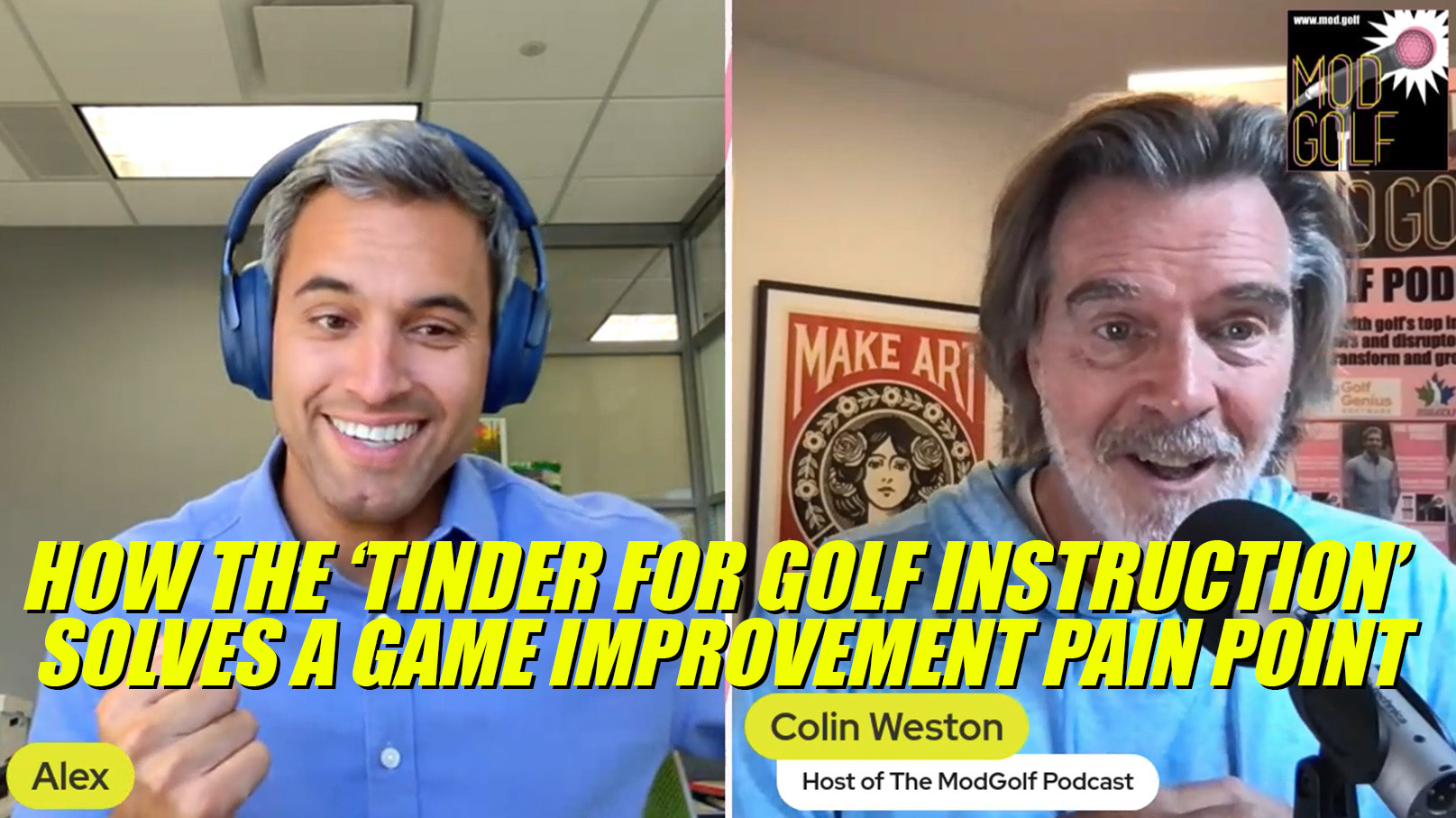
Are you more of a watcher than a listener? Then enjoy our video with Alex on The ModGolf YouTube channel. Click on this link or the image below.
Want to connect with Alex? Check out his bio page to make that happen!
Alex Prasad's bio page >> https://modgolf.fireside.fm/guests/alex-prasad
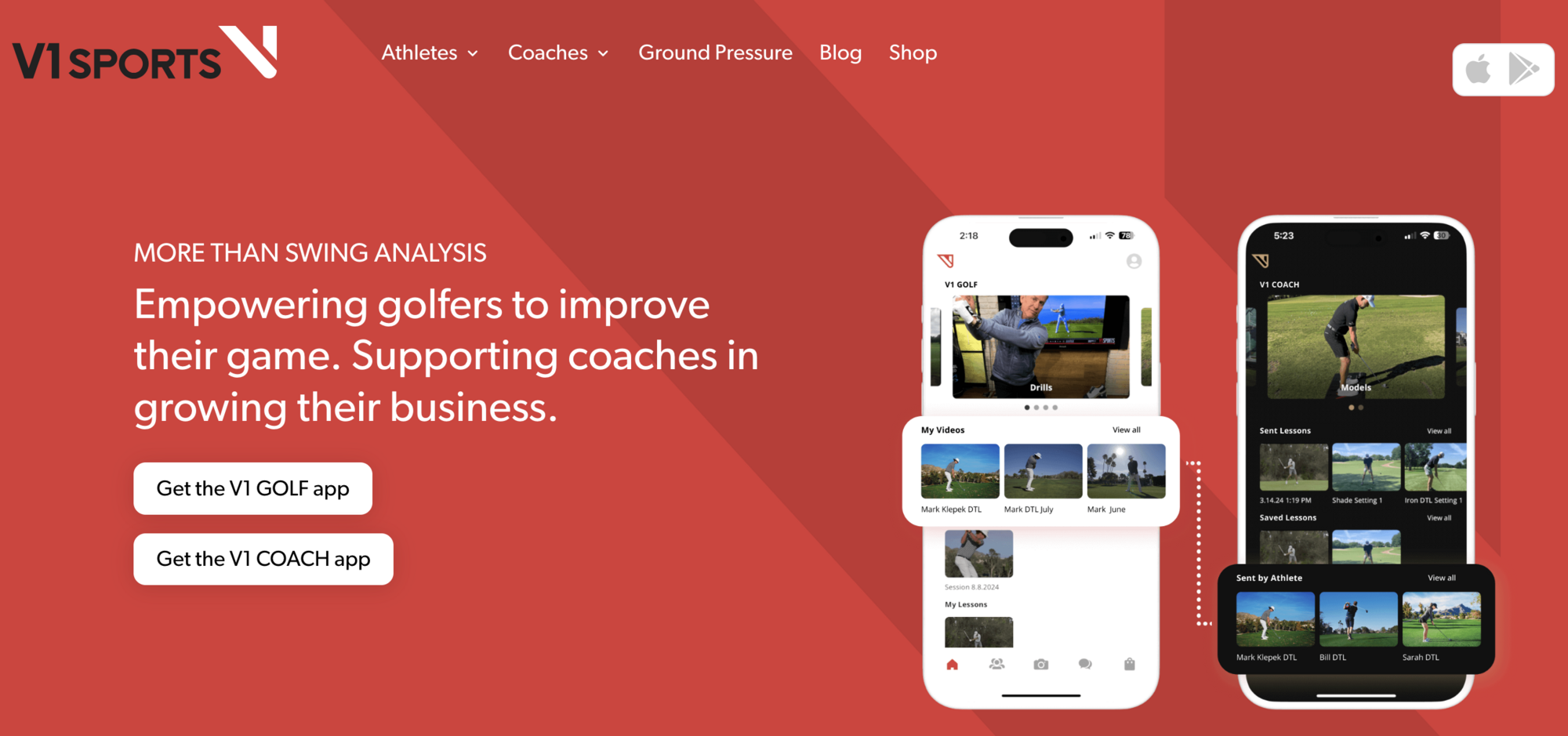
Visit the V1 Sports website to learn more and to download the V1 Golf App in the Apple App Store or Google Play Store.
Join our mission to make golf more innovative, inclusive and fun... and WIN some awesome golf gear!
As the creator and host of The ModGolf Podcast and YouTube channel I've been telling golf entrepreneurship and innovation stories since May 2017 and I love the community of ModGolfers that we are building.
I'm excited to announce that I just launched our ModGolf Patreon page to bring together our close-knit community of golf-loving people! As my Patron you will get access to exclusive live monthly interactive shows where you can participate, ask-me-anything video events, bonus content, golf product discounts and entry in members-only ModGolf Giveaway contests.
I'm offering two monthly membership tiers at $5 and $15 USD, but you can also join for free. Your subscription will ensure that The ModGolf Podcast continues to grow so that I can focus on creating unique and impactful stories that support and celebrate the future of golf.
Click to join >> https://patreon.com/Modgolf
I look forward to seeing you during an upcoming live show!... Colin

Transcript
The ModGolf Podcast 00:00
Welcome to the ModGolf podcast, where we speak with the entrepreneurs, the innovators, the disruptors, and the influencers who are shaping the future of golf. I'm your host, Colin Weston, and today on the show, we have a true pioneer in the digital golf space. For over three decades, his company has been at the forefront of video analysis and coaching technology, and they are now pushing the boundaries with AI.
Also with ground force sensors and a suite of products that connect coaches and athletes like never before. So with that, please welcome to the ModGolf podcast, Alex Prasad, CEO of V1 Sports. Alex, hey, thanks for joining me today.
Read Full Transcript Hide Full Transcript
Alex 00:49
Thanks for having me, Colin.
The ModGolf Podcast 00:50
Absolutely, absolutely. Okay, so there's so much that I want to ask you here. The evolution of V1 Sports, where you started 30 years ago, how you guys had a bit of an epiphany, come to Jesus moments a couple of years ago where you had to reflect and say, "where are we as a company and the products we're producing and the need to innovate", to dig into that.
Alex 01:03
Yeah.
The ModGolf Podcast 01:11
But I always like to start with this icebreaker question because I understand you're an endurance athlete, a marathoner. I don't know what your connection to golf is. So I always like to ask, what was that first golf experience you ever had at whatever age and that power of invitation? Who invited you to have that first awesome golf experience?
Alex 01:29
I love that phrase, power of invitation. I'm going to use that. I'm going to put that and pretend like it's mine because it's an interesting phrase.
The ModGolf Podcast 01:34
There we go. I stole it from someone else too. So I can't take credit either.
Alex 01:36
Okay, great. Yeah.
The ModGolf Podcast 01:37
So you're welcome.
Alex 01:37
Recycled it, perhaps.
The ModGolf Podcast 01:40
Yeah. Very sustainable.
Alex 01:40
Yeah.I laugh at the question mostly because in this journey – One of the knocks on Alex, if you will, is you know he's not a golf guy.
The ModGolf Podcast 01:52
Yeah.
Alex 01:52
Any of our internal folks will laugh when they hear me say that and recant it. That's a literal quote from a particular individual, but also just the theme. I think that's provided me some superpowers in not bringing as many untested opinions to the equation. But to answer your question, he was my dad, for sure. I'm second-generation American. And yeah, my dad, for whatever reason, his parents from India originally, I don't know how he got attached to golf. That's an interesting question, because it certainly wasn't his father.
The ModGolf Podcast 02:26
Right, right.
Alex 02:26
But that's who I grew up golfing with. And my dad passed away nine or so years ago. So yeah have there's some fond memories there, for sure. But one specific memory, not so much with my dad, but he's definitely the one that got me into it. I have to note also that I've golfed almost nil since my two boys have been born in the last four years because that's one the things that falls off the the table pretty quickly, a lot of leisure time.
The ModGolf Podcast 02:51
Yep. yep
Alex 02:52
But I was in this golf league in middle school, and every boy that went high school with me was in this golf league, it seems. And golf is a great time suck for parents. Now I see it from that perspective to drop my kids off at a golf course and be like, see it you in a thousand hours in the summer when it's daylight, all day in Michigan.
The ModGolf Podcast 03:07
Right.
Alex 03:10
But there was a hole at this course called Braeburn. It's in the middle of nowhere in between Ann Arbor and Metro Detroit, basically. There was this par five and we're 11 years old, that was like 750 yards. It's like this obscene hole. It was like, "can you get under 20 on this hole? What's the goal"? You're a young kid playing like the longest hole in Michigan. The total silly cliche thing. So anyway, yeah, lots of fond memories.
Golfing with my dad. That's that was who invited me in the first place.
The ModGolf Podcast 03:46
There we go. There we go. Well, you'll get back out there soon enough, especially with all the products and AI now that you're using to make a golf swing better.
Alex 03:50
Yeah.
The ModGolf Podcast 03:57
I'm sure you're going to get there. You're going back on the golf course sooner rather than later.
Alex 03:59
yeah
The ModGolf Podcast 04:02
okay. So our listeners that are not familiar with V1 Sports, let's start way back. Of course, I can see you right now as we're recording this. and by your age, you were definitely not around as the founder 30 years ago because you would have been quite young.
Alex 04:14
Correct.
The ModGolf Podcast 04:16
So why don't you start there? We'll get into this the suite of products and all the good things you're doing in that innovation culture that you have baked into V1 Sports. But V1 Sports, it really is synonymous with golf tech. But every great company has an origin story. So can you take us back? I'm sure you're going to be telling that through what you've learned through the founders, but take us back to that beginning, that initial spark and the problem that V1 Sports was solving for golfers and coaches back in the day before we bring it up to what you're doing now.
Alex 04:46
Yeah, and that's it's a good framing of the problem. That's definitely the way that we approach things today. I know the original founder, Chris and got to know him kind of personally over the years. More recently, not 30 years ago or so.
The ModGolf Podcast 05:00
Right, right.
Alex 05:00
Yes, I would have been a single-digit age anyhow if people are doing math at home.
The ModGolf Podcast 05:00
Yes.
Alex 05:03
And it was actually founded in my hometown completely ironically. I didn't even know this company existed in my hometown. There's a weird synergy there. But it was video over the internet as the starting point. So we can record a swing. And I've seen the pictures, and they exist in our office on VCRs, capturing video. So doing video analysis, I guess intuitively everyone understands you look at the swing and you could improve it, right? That's kind of like very basic fundamental.
The ModGolf Podcast 05:28
yes
Alex 05:31
Next, be can I capture and watch it again? That's your just recording. But then, so A, the ability to send video over the internet. At the time, it was a bespoke process, a day that sounds hilarious as you're, walking on a trail streaming four college football games in a quad in 4K, on your phone. But video over the internet was a thing that was innovative and interesting 20, 30 years ago. And then telestration on that video. Those were the two groundbreaking technologies that were, use this metaphor today, the hamburger or the fries. are The fries or the hamburger at the time, that's the hamburger, right?
I mean, that is the main event for sure.
The ModGolf Podcast 06:05
Right, right. Right.
Alex 06:07
That's been displaced over time by launch data. And video has become the fries, but still elementary, maybe a better word is foundational, to a golf improvement journey.
The ModGolf Podcast 06:16
right
Alex 06:19
And so that was that was the origin. And then, Colin, as you preface this a little bit, not as a knock, that wave was ridden for, 10 plus years or so. And eventually it became somewhat stale. The market started to shift.
The ModGolf Podcast 06:39
Yes. There's a book I read many years ago when I was on my first entrepreneurial venture called The Innovator's Dilemma. it was written in the 1990s.
Alex 06:46
Yes, Clayton Christensen.
The ModGolf Podcast 06:48
There you go. So you're familiar with this. So I see where you are with V1 Sports or perhaps a couple years ago, you were at that stage.
Alex 06:50
Yes.
The ModGolf Podcast 06:55
If you don't innovate, you will get overtaken by new technologies, new techniques, or competitors. So whether it's the power of computer processing speeds with chips or think of examples of steam shovels or even with electric vehicles now, as far as the performance and the price point and meeting, and then eventually whatever the old technology was, it will be overtaken. And sometimes it can happen the over months. It can happen over decades, but it sounds like you've seen this also.
So as innovators at V1 Sports and your dilemma. Why don't we get right into this? Why don't you tell us about that inflection point in 2022, 2023, when all of you sat down, had to have a hard look in the mirror, have some difficult conversations and say, "you know what, if we continue on the road we are with the technologies that have been very successful for us, we're going end up becoming obsolete. So we have to reinvent ourselves".
So let's start there. Tell us about that.
Alex 08:19
Yeah, we had a fairly large fundraise that occurred, so that raised expectations, right? And so they always start with, "what's the point, what's the goal?", and work backwards from that.
The ModGolf Podcast 08:27
Right.
Alex 08:31
And so the goals changed. So that was step number one. And then step number two was, Yeah, what do you do if those new expectations are higher, greater, more aggressive? And yeah, you could see the lack of a growth curve for a particularly long time. And so, to Clayton Christensen, I love that we speak that same language. A person doesn't want a three-inch drill bit. They want a three-inch hole, right?
The ModGolf Podcast 08:57
Right.
Alex 08:57
That is the result. They don't care if it's a drill bit. They don't care if it's a hammer. They don't care if it's whatever the tool is that gets them that result. They're agnostic to that. You mentioned earlier who invited you to golf, your phrasing, right? And not having, that was a part of my mix growing up, but not who I was as a professional, other professional experiences. We just started asking a lot of questions. And so the impetus was there through the fundraise and different expectations, to begin to innovate.
And then there was a culture change, and I want to say this in a way that that resonates and makes sense and isn't derogatory in any way, but you know vision and opinions Lots of people have opinions, and lots of people can say, oh you know what? We need more drivers, and we need more cars, right?
The ModGolf Podcast 09:49
Right.
Alex 09:50
And somehow we got to get the drivers, the people who want to ride and the drivers together. I'm mentioning Uber, right? But the execution is a yawning gap between that idea that like wouldn't it be great if everyone could pick up anybody and you know getting down to the nitty-gritty of executing.
The ModGolf Podcast 09:58
yes yes
Alex 10:04
And so it started with culture change that – All of us approaching these problems and this dilemma from the perspective, what do we really know? Put got a presentation recently on this. The answer was, zooming forward three years, is off the bat, 80-plus percent of where we are today was already there. We all had these opinions. And our ability to collect the data to support them was completely lacking. And so we really had to go into the salt mines and build the right infrastructure and rewrite some software applications, just to get to the point where we could execute on the strategy.
The ModGolf Podcast 10:35
Right.
Alex 10:45
And just as a too fine of a point on top, others may be smarter, maybe less conservative, the listening audience come up with their own adjectives, could have, aggressively pursued exactly where we ended up without all the steps in between and maybe beaten us, parallel universe to that. But they wouldn't, and maybe they would have because they're not data driven, but they wouldn't have the same courage or their convictions as we have today. And this route that we're going, we can talk about that, having built it brick by brick, watch the data, challenge ourselves repeatedly, our assumptions,
The ModGolf Podcast 11:12
Right.
Alex 11:19
And then to prove it not correct or incorrect, that's beside the point, but the direction being validated maybe is a better phrase. And so, there was a culture change. There was the epiphany moment for sure, which was as much an external force as an internal force. don't want to take credit there. But I do give credit to our team. We called it my company. It's not. There's lots of stakeholders and lots of employees here. to lean into it all the time. We have arguments. I say that in quotes, you can't, listeners can't see me but you know that?
The argument's not about the substance, but how do you know this thing that you have asserted? A lot of times, we were not 100% sure. Let's double check, or can we run an experiment to prove or disprove that assumption that's fuelling a lot of energy in a direction? And if that's proven wrong, we try to put egos aside and say, "well, the data's the data, and we're going to act on that, not on gut feel or intuition solely".
The ModGolf Podcast 12:18
Right.
Alex 12:18
Intuition can tell you where to look, but the data is going to validate or invalidate that's the right place to press.
The ModGolf Podcast 12:25
Right. So couple years ago, when you were having these conversations, you're making assumptions of what professional golf teachers want what they need, what players like myself as mid handicaps or even elite players, what they want, what they need. Yes, we can all make assumptions and I've done this. And sometimes you go down this rabbit hole and make this mistake of then not reaching out and actually doing the simple thing, which is asking the people, your users, your buyers,
What they need. So that product market fit and that product validation.
Alex 12:53
Yeah.
The ModGolf Podcast 12:58
So during those early days after you could had the whiteboard and the vision, did you do the hard work? Did you reach out and then ask people what they liked and even more so that would maybe even hurt what they did not like about the products that you already had offered so you could move forward?
Alex 13:09
Yeah. I got a great piece of advice from one of our board members who's become a very close friend, though there are decades that separate us. And he said, Alex, in my experience, sometimes I've been running businesses where you can't keep the customers away from you, and sometimes you have to go find them.
The ModGolf Podcast 13:30
Yes.
Alex 13:30
And we were definitely in the latter category, not that we didn't have customers. Is there a line out your door every day, you know or do you have to go engage them? And so I did. It was very methodical and tried to have as many conversations as possible with golf instructors. Not just because it was not my world, right? We have former golf instructors on our staff. Again, but they carried opinions. But, you dig deeper, right?
The ModGolf Podcast 13:53
yes
Alex 13:55
With the people in the field today. And yeah, we heard some themes. And again, Colin, you and I have like consumed the same library of some of these business books. But what you learn is, that customers can tell you their pain points, they can tell you their aspirations, but what they can't tell you is the solution, right? That is an amalgamation and an optimization and a mishmash of all what they're telling you. It's not their job, right? Their job is experience their life and report to you what they experience every day, not to tell you where the button should be or what colour it should be or you know what experience needs to occur.
but so one of the most interesting things to me I always heard pros say they don't have enough time. And I understand that in July, assuming North America, and I don't understand it in January.
The ModGolf Podcast 14:22
Yes. Right.
Alex 14:24
And so, the more conversations that you have, you start to understand, oh, the real issue here is, put it into business terms. Seasonality is severe in this industry. There's not enough time in the day when the seasonality is at its peak, and there's too much time in the day when seasonality is at its ebb, right? The ModGolf Podcast right And what can we do to smooth that out? And again, digging, digging, digging, starts to come to the conclusion that, a pro, not to demean them in any way, but couldn't articulate this point, but this is what they were basically saying, is i don't have time but on the time. i don't have the training. And I don't have the inclination, this is an eat your vegetables thing, to do some of these best practices to stay in touch with my students, in software, you call it customer success team, right? But manage these existing relationships in the summer, because I'm too stinking busy, right?
And then therefore i am suffering in the off season. How can I smooth this out or, raise the ebbs and maybe not even smooth the peaks because peaks are great, right? Everyone likes the bonanza times, but do the things that I know intellectually I need to do, but i'm just never going to actually do. And so that time changes. Oh, I'm just too busy would be the you know statement from the customer, right?
The ModGolf Podcast Right. It's like, well, that's not quite true because I know that you're not busy on January 15th. I could probably book 12 lessons with you on that day, right? Just to pick a random date out of the hat. So yeah, it's an example of having those conversations to your point, Colin, get it out in the wild, but then translating it or refining it into something that was actionable for us.
And, we do take at that conversation, you'd reframe it, and then you would tell that story to another pro. Say, does that resonate with you? Or what spin do you have on it? And over and over and over again. but there's really no substitute for having those conversations and getting to this pain point. So time became the touchstone, what problem are we solving? Time, a pro would tell you.
The ModGolf Podcast 15:46
Right.
Alex 15:48
But it was really... customer re-engagement or intimacy with their customer, that's the theme that we're trying to solve.
The ModGolf Podcast 15:56
Right. It sounds like a lot of the teaching professionals could not articulate that, what they really needed. I think Steve Jobs, I'm going to misquote him here, but in essence, he firmly believed that people don't know what they really want. So you look at the iPhone, that didn't exist, even the idea of that. They had to take that leap and it wasn't based on sitting down with a room full of people and surveys to then create an iPhone. They certainly had other insights that took that technological and innovation leap. So, okay I want to sequence this here because you guys have a lot of moving parts here, but I know you haven't put it all out there at once and you've had to, I'm sure with your strategy over the last couple of years when you reinvented yourself,
The ModGolf Podcast with your products. So my understanding is you first reinvigorated the V1 golf app before then moving forward for the everyday player and the coach, of course, bring them together. Alex Yeah. And then you've got other products we're going about as far as the V1 Pro Studio for the Serious Coach, the V1 Coach platform for managing their business. Alex Mm-hmm. The ModGolf Podcast And what you've recently released is one of the things we've talked about previously. And what I'm excited about is with Victor.
The ModGolf Podcast love the name of the V1 instead of an I, you've got the one in there. So Victor, as far as how you are harnessing the power of AI here to break down all the things that you're doing. So, I'm finding now i get so many companies, people reaching out, it's like they're whatever they're doing with AI. AI is, how can I put this politely? The ModGolf Podcast AI is a tool, right? It's not a solution.
Alex Yeah. The ModGolf Podcast It's not a business. But I've had a look at what you're doing here with Victor. Alex Right. The ModGolf Podcast And it seems like you've looked at what the pain points are, what people want, the conversations you're having, and how then you can hyper-focus people AI with Victor to then add even more value to what you're doing. The ModGolf Podcast So why don't we actually start where you are now and move backwards the other products.
Alex Yeah. The ModGolf Podcast I know you're excited to talk about Victor, so go for it. Alex yeah
Alex 16:55
Yeah. but So I'll answer your question in a circuitous way, right? So we do golf pros in three stages. One is you are completely in person, right? And this is the person who feels that seasonality and time, pain point the most, right? The ModGolf Podcast Yes. Alex 100% in person. Again, to put it into Clayton Christensen terms or Colin, Alex, you know read a lot of business books terms. you know There's no leverage to your business, right? You need to exert a unit of effort for a dollar of reward every single time. That's stage one. Stage two is you have an introduced some asynchronous revenue to your mix. So this is having students, which they're doing anyway.
We just find pros aren't monetizing. Students sending swings in between in-person lessons, asking for advice in between in-person lessons. The ModGolf Podcast Right. They're hooking it all of a sudden. Hey, pro, what's going on? All those kind of activities. That's step two. And step three is I like to refer to it as random people on the internet. So you go to a pro and say, like, wouldn't it be great if you had some leverage in your business? Said differently for the pro audience, right?
They go, yeah, I'd love to random people on the internet. You go hold on, we got to start at the beginning. Where are you on this three-tier journey? So Victor, AI chat, the feature, to your point, it is a tool, it is a communication tool that we train to personify golf pro and do some of this outreach in the voice of the pro in an authentic way to automatically follow up with students in an authentic way.
Things that the pro knows and believes, right, are important jobs to be done, if you will, again, like Christensen, but don't have the time to do in July. And then, When you chase them in January, that's not when the iron is hot, right? The iron is hot when you just had an interaction with the customer. Alex So we deployed that in the V1 Coach app, which is our mobile app. It'll come to the desktop version here soon as well. And what we're finding, we started with just doing simple stuff, like when the pro sends a lesson, let's follow up and remind the student if they haven't opened the lesson to review it, right? The lesson recap.
The ModGolf Podcast Yes. Right. those Fundamental basic things, jobs at the pro, which they should have been doing, that's not fair, right? Didn't have the time to do that we're now doing automatically for them. And this isn't a done with you or do it yourself system. we know the time is not there for the pro to do things. The ModGolf Podcast right We're going to try to it in the best way possible or the most scalable way possible for the pro and for us. And so the highest and best a manifestation of Victor is the random people on the internet, but we have a pretty neat mousetrap Which is we have these hundreds of new users a day coming into the V1 Golf app. Seasonality, definitely, we experienced that as well, but still hundreds, even this time of year in the fall, early winter, right? And what we learned through the data, and let's spare the details of how we wired up the right databases, that was the hell that we got to live through, was a lot of them want introduction to an instructor.
The ModGolf Podcast 19:54
Right.
Alex 19:59
And skipping steps of evolution and learnings and micro learnings to lead to that conclusion. So what we have is now a system that pros can qualify for as they move up our value chain and we certify them to interact with maybe not quite random people on the internet, but these very well-qualified, avid golfers who are looking for instructors. And Victor will do the selling for the pro. So in one of our first iterations, I'll just give you the real life example that was all in the cloud, right?
Colin, you sign up for the V1 golf app as a golfer, and you do want to send a swing for an instructor for feedback. Alex, myself, I am an instructor in the V1 coach platform, and I'm in this program that introduces me to the Colins of the world. So our stage one was great. Colin sends swing to Alex and go for it. Well, guess what? Alex is on the driving range working with you know students all day in July. He doesn't get back to Colin and then he's hard to speed. Colin's gone. He deletes the app. He's like, oh, I submitted a swing and never got feedback. It's been five hours.
I'm out of here, right?
The ModGolf Podcast 20:08
Right.
Alex 21:09
But what Victor has done now is take those early relationship building block communications and interact with Colin. So I might be on the range with a student, and Victor, as me, in quotes, right personifying me, will begin the conversation. Hey, Colin, thanks for submitting a swing. She came back with you the next day is there anything in particular that you're working on right now? Colin says, oh, I've got this nasty slice. I'm trying to rectify it. Okay, great. Thanks for that feedback. right This conversation happens asynchronously on behalf of the pro.
without the pro having to do anything besides, you know, be a V1 member. um And so I think we've taken, yes, to your point, the new sexy tool everyone says AI, everything, whatever, but like a real practical application. know, we didn't say we need to do an AI thing. We said, what are the pain points that we have and we've already been working on to try to serve the pro? And how can we use AI to expedite, progress there?
The ModGolf Podcast 22:04
Right, right. Okay, let's dig a little deeper with myself as the persona of um the golfer side. Myself as a struggling 16 handicapper. Don't seem to be getting any better. And yes, I still off the tee. I do hit a fade/slice that I can't seem to relieve myself from. But I want to talk about trust as far as myself having that relationship obviously this isn't the the high touch one-on-one, that's something completely different, meeting in person, that old school way.
How do you go about making sure that you don't have that churn, that then the lifetime value of myself, is not just a one and done that then I want to double down.
Alex 22:49
Yeah. Yeah.
The ModGolf Podcast 22:52
So how do you continue to cultivate that trust so that I will stay longer, i will spend more, get through deeper and deeper into that funnel that then even perhaps I become an advocate, an ambassador, and then I'm actually recommending all my friends to get on the V1 platform also. So tell us about trust. How do you guys build trust into what you do with AI?
Alex 23:15
Yeah I'm laughing because The answer is obvious to us today, but was not has not always been obvious. So the lowest trust ah relationship is between you and an app.
The ModGolf Podcast 23:24
Okay. Yes.
Alex 23:29
An app's not a person. doesn't have a beating heart.
The ModGolf Podcast 23:30
yes
Alex 23:32
And so we have this unique relationship. situation where we're on kind of both sides of the fence here, right? The golfer side and the pro side. And so one of our early learnings was that golfers who are interacting with a real life human over the platform are a lot more engaged than those that aren't. So it's a baseline, which surprises no one, but it was profound to see that data and understand. We call it affiliated or unaffiliated users. do you have a relationship with a pro, affiliated, or do you not?
So was the first foundational understanding learning is people trust people more than they trust apps right like your relationship your lifetime will be longer if the two of us in our you know silly scenario are interacting as opposed to colin you just working by yourself the next step is we learned that when someone comes to an app from this jobs to be done and what tool you know perspective um if colin comes into the app and your your job be done as golf improvement And if my app says to you, hey, Colin, do you want to meet a pro and get to know the pro and learn about his family and form relationship?
You go, eww, gross. I downloaded an app. Leave me alone.
The ModGolf Podcast 24:36
Right.
Alex 24:37
Like weird, right? It's just like the wrong context. Some people say, yeah, that's exactly what I want, but a small percentage. And so then we were flummoxed for a while at that dynamic. the most highly engaged users are interacting with a person. But then when people come into the app and we say, would you like to interact with a person? They're like, leave me alone. That's a quiet yeah paradox, right? But what we learned as the bridge, and I'll get to the trust thing you know in a moment, is that everyone wants personalized feedback. And by everyone, I say 80 plus percent of people.
The ModGolf Podcast Right. Alex So Colin comes into the app. And we no longer say, hey, do you want this touchy-feely relationship with ah with a golf instructor? We say, "do you want some personalized feedback?" Different phrasing, right? But the concept on your swing. Do you want a real person to look at your swing that's qualified, that V1 has said you know has some chops, isn't just a random guy on the internet? And you apply the silly videos you watch on YouTube, the ones that aren't any good to your swing, personalized, right?
Alex And almost everyone says yes. We all are narcissists. We all want to know more about ourselves, whatever, right? And that becomes a gateway to a relationship because what we will do is take your swing and give it to a real life pro. Again, that we have not made crawl over broken glass, but we have you know taken them through a journey to make sure they're going to give it, deliver a good experience. We're monitoring that quality.
And the program was called Quick Fix. And so in this, our scenario, again, Alex, the fake golf pro gives Colin a quick fix. It's not a full lesson. It is not the entire experience. This is a free experience for Colin to build trust. And Alex says, "hey, great. I understand that you're working on this fade slice". Here's one drill I recommend. I'll attach it to this. Here's a tip or two. I'd love to work with you more. We can take that relationship, and grow it. But, there's your quick personalized feedback. And what we've learned from the pros perspective and the best way for a golf instructor to build trust with, at this point of our relationship, a random person on the internet, I think more qualified than someone on YouTube or Instagram because they've come through our funnel and gone through this process to get to and Instructor Alex in our scenario.
But still, is to show some value first. And that is counterintuitive to, what most golf pros, and we hear it at these PGA boot camps we go to and whatnot. So if your time is valuable, never give away your time. And those are all true statements. These are opinion statements to the listener for the first time, but I'm telling you, there's data to back this up. We've learned this. We formed this opinion based on data.
is that the best way to build trust between a random person on the internet and a golf instructor is to show some value. Paradoxically, do the opposite of what that in-person, I'm not advocating that in-person instructors, right? Like, oh yeah, come on, I'll give you a free lesson, no big deal. and then we'll figure out the money later. Like, no, no, no. Colin is skeptical and wary because it's online, even if I have all the credentials in the world, he doesn't really know what he's getting himself into.
And that fairly low effort interaction from Alex, pro Alex to Colin can build trust between the two people. And that's the happiest part of this entire strategy, Colin, is that there's alignment. The more interaction there are between golfers and pros, the more the pros want to say, the more the golfers want to say, the more valuable my business is because people are transacting over the platform. It's a win all the way around. And that's how you're onto something, what's good for the goose is good for the gander, whatever that phrase means, who the heck knows. so a win, a pro with a more engaged student is better for everybody.
The student who starts to form a real personal relationship with the instructor is good for everybody. They're happier too. So yeah, we've put ourselves in a position where it's not win-lose or heads I win, tails you lose. It's you know we all win no matter heads or tails.
The ModGolf Podcast 27:26
It is a win-win-win. So my understanding then from what you just articulated is what you've created here is a two-sided marketplace. So monetizing both the player side, myself, and also the instructor side. So tell us a little bit about that as far as the business model. Obviously, you're not going to get into ah the P&L and all that. But I'm curious as far as the overarching business model. So how does the platform make money for you?
Alex 27:56
Yeah. Great question. Yeah, some other lessons that we've learned, is an online marketplace is not a place where most golf pros are going to thrive. I think that's generically true. What's going to happen is there's going to be an 80-20 rule, 90-10 rule. There's going to be very few people that win. And then a lot of quote-unquote losers, right, are people who the marketplace is not going to work for.
The ModGolf Podcast 28:18
Right.
Alex 28:18
It's a complicated thing. just talked about not having the time to follow up with students. Managing that is going to be hard. And that's why and won't name names, but you know we've talked to a lot of people on competitor platforms that are online marketplaces, and 10% of them are kicking butt, and everyone wants to be them. But 9 out of 10, it just doesn't work for at all, right? And that's, I think, true of Airbnbs. Three houses on the same street, and one kicks butt, and the other two don't. It's a numbers game, basically. So, yes, it's a two-sided marketplace in quotes.
The ModGolf Podcast 28:43
right
Alex 28:46
But this transaction between Colin and Alex is a curated transaction. Colin does not see a thousand golf pros and gets to pick and choose.
The ModGolf Podcast 28:55
Right.
Alex 28:56
That's that marketplace dynamic doesn't really work in our opinion. And then further, we are not charging like a transaction fee. Because I believe that introduces the Rover incentive. And it's not quite the same, but we talk about the Rover problem a lot, which is once you meet your dog walker, how many are going to keep paying Rover its fee before you decide to defect and go somewhere else?
The ModGolf Podcast 29:16
right
Alex 29:18
And there's reasons why it's not spot on, but that's the concept. So we don't want to create disincentives. for people to do their business right and interact. So we don't gate it in that manner. I'll get to the answer. i'm telling what we're not. It's a starting point. um And also when we have pros that join and add their students to the platform, A, they're in an exclusive relationship with that instructor. The whole Colin-Alex experience is not exposed.
When Alex brings Colin in, that'd be unfair. And two, That relationship can be facilitated completely for free. So this point I've said that basically we make no money. How in the world do we make money? And we do it by you directly monetizing each side. So Pro Alex is paying V1 a subscription, right? To be in this platform and have these tools. And if either affiliated Colin or unaffiliated going to have to back we eat at the source or not at the source, an index of all these phrases that I'm using to find terms, right?
But If Colin came into this universe because Alex brought him into this universe, if Colin goes on his own independent learning journey and starts to utilize some of our premium features, V1 can monetize that version of Colin and V1 is going to try to push that for unaffiliated Colin, right? Who comes in without a relationship with an instructor, put them in this relationship with an instructor potentially, and also convince Colin that, you know, looking at your swing matters at swing banking matters.
And that there's a path improvement here by using our models and drills. So separate direct monetization of each side of the fence. And no gate in between would be the quick summary there.
The ModGolf Podcast 31:02
There we go. Tied it all up in a tight little bow there for me at the end. So you're not just sitting still or focusing purely on digital platforms. You're also, I understand now, in the hardware game and the technology side with what you're doing with ground pressure sensors. So I'm quite curious to learn when everything you're doing, my understanding, maybe you have in the past done the done physical products, but the fact now you're saying, okay, we're going to get more into the hardware game also to create something physical.
with ground pressure sensors. So why don't you tell us what you've developed there? i know the pain points, I know with my weight transfer and everything, where for me, I watch videos of myself and it's horrendously embarrassing ah of not being able to transfer that weight forward.
Alex 31:49
Yeah.
The ModGolf Podcast 31:51
So tell us a little bit about that, of what you have developed here with V1 Sports, with your ground pressure sensors. And then we're gonna expand after that because you're not just sticking to golf. You're also using that to inform what you're doing in baseball. So I'd love to hear how both of those sports and what you're developing, and what you're learning, how they inform each other. But let's step back and talk about the ground pressure sensors first.
Alex 32:12
Yeah, so the business, hardware was the biggest source of revenue back in the day. So it's not been a new evolution.
The ModGolf Podcast 32:17
Yeah.
Alex 32:19
It's been not a back and forth, a forth and back maybe.
The ModGolf Podcast 32:23
Right, right.
Alex 32:25
I think ground pressure is where launch data was 10 years ago. But yes, we're on the cutting edge there and we've tried it with you know fits and starts maybe over the years. We have great partner and sensor edge now that making these ground pressure sensors and yes very simply all power is generated by interaction with the ground and you said something really interesting Colin, said i've watched myself and then you said weight transfer and i can't transfer my weight but one of the critical insights with ground pressure is you cannot see the ground pressure. You may believe you watch a video of yourself and you see how your weight is distributed between your feet and the timing of such. That is just fundamentally wrong. Sorry, Colin.
Incorrect. You need a device to measure that.
The ModGolf Podcast 32:30
Yes.
Alex 32:31
And so when you know we start to see tour players you know hopping off the ground, right it's based on this kinesiology insight, that dynamic vertical force. And I'm going to start to butcher it if I go too much further because I'm not the kinesiology expert by any stretch. But that matters. That's generating power. It's kind of a newer fundamental tenant of kinesiology and athletic movement in general. In baseball and pitching, and we kind of minor in baseball. It's it been de-emphasized over the years, but it is there.
But baseball has been there even sooner than golf, especially when it comes to pitching. Like where is the power being generated by a pitcher? And it's from the legs. It is from the ground. It is not so much, to some extent, upper her body strength, The ModGolf Podcast yes Alex your legs are bigger, your center of mass, all those things. So we think ground pressure is in its early days in terms of adoption, and certainly an understanding because we're having these conversations. What does this data really mean? And working with some pretty bright people to come to those conclusions.
Alex But again, a newer but fundamental understanding of the movement. And there's all sorts of applications that are not nearly as complicated, even in putting to understand, do you have the right pressure on your lead and ah trailing foot, when you're putting and what are the expected averages? Alex So just like no one knew what smash factor was or whether club head speed mattered all these things 10, 15 years ago partially due to an inability to be able to measure it in the first place and then to have some best practices around it. I think ground pressure, and we don't have to wait 10 years for it to be a big thing, but is in its early days of under both understanding and adoption, right? But we have lots of pros that use these devices um and they make a real impact.
Interestingly, it seems more impact sooner with, more amateur players or younger players, younger and less experienced, perhaps because they're more impressionable in terms of what their form is when they're swinging and so on. The ModGolf Podcast Right. So yeah, we're excited to be in that that business as well. The ModGolf Podcast Interesting. Interesting. I do want to mention to all of our listeners here that Alex and I, after we finish up this conversation, we'll be jumping over to the ModGolf YouTube channel.
The ModGolf Podcast We're going to shoot a brief 10 minute or so video over there. And we'll be able to see all the things we're talking about rather than Alex and I just waving our hands in the air as we ah we use our best words here. So you'll be able to see some visuals there, all the apps and the platforms they have, what we just talked about here with what they're doing with the ground pressure sensors and and so much more. So I really encourage all of you listeners to come over and be viewers there too. So it'll be a slightly different conversation to be able to see what the heck we're talking about.
The ModGolf Podcast 34:15
I will include the link to that in the show notes to make it nice and easy for you. So that's what we're going to be doing. So To finish up here, to continue, so I want to dig deeper deeper into baseball. so So what is the mix right now with you, with with what you're offering in in the baseball space? Because you are V1 Sports, not just V1 Golf. So is this something that you're applying? and You've talked about with your Indian roots, perhaps, because cricket is the second most popular sport in the world next to soccer, football.
So is this something in the future? What can you reveal? Are you looking to maybe break into cricket later on or other sports that will have the same Or tennis, perhaps, where you've got that weight transfer and similar motions to a golf swing.
Alex 34:58
Yeah, I think um think one of the biggest lessons that we learned over the past few years is that focus is one of your most precious resources.
The ModGolf Podcast 35:06
Oh, yeah.
Alex 35:07
And you have to be definitive about knocking down the first bowling pin before you get to the second. So um we've we've kind of de-emphasized baseball over the years, not to put the air out take the air out of the balloon that you are um inflating there, but we do see other applications.
The ModGolf Podcast 35:20
Right, right.
Alex 35:22
The real question for us is whether some of these learnings around the interaction between you know athlete and instructor are universal or are industry specific. Then getting back to the data driven stuff, you can have opinions that it's the same. But the demographics are different in a lot of the sports that you mentioned. won't pretend to be the expert at all in cricket, despite my heritage. But just to take baseball, a team sport. There's not lots of 70-year-olds playing baseball every day or is even softball, beer league, softball, right?
The ModGolf Podcast 35:54
Nope. Right, right.
Alex 35:57
The team dynamic is really interesting. The who pays dynamic is interesting. It's often parents paying on behalf of you know a junior or a kid. So from a pure business perspective, It's a tougher nut, a different nut to crack, and we're very cognizant of that. But to your point, on the other hand, the technologies are similar, right? and that those That use case is very similar. stationary Relatively stationary sport with a s swing.
Does video matter? matter Yes, absolutely. Does your form matter in doing that athletic movement? Absolutely. Does ground pressure matter? you know Also, absolutely. So there is overlap there. always like to joke that you know we're always trying to run at least three businesses at the same time here, a consumer business direct to the pro business and a hardware business. And so another vertical within each of those businesses, you know starts to get complicated fast.
But yeah, there is absolutely application in other sports. But most of our effort for sure is focused on the golfer and the golf instructor right now. And I think there are still years of learnings there before you feel like you know you've completely uncovered all the user dynamics.
The ModGolf Podcast 37:08
I'm happy to hear that is your response to my question there, because I know myself on a much smaller scale as an entrepreneur, myself just spreading myself way too thin, looking at other opportunities, see some bright, shiny thing moving around and then putting energy into that. So all of a sudden I'm working on four or five things tricking myself into believing that I'm moving them all forward. And then the one, the one that hits them will just quadruple down on that one. But you only have so much bandwidth as an individual and also as a company, no matter how, how big you are.
So the fact that you are hyper-focused on golf, I think that's great. And Like I said, you could trick yourself into thinking, well, with the technology stack we have here, it's like 80, 90% there to transfer that over to Cricket as an example here. But there's so many other factors to a business like you talked about with that Uber model. The 99% is then how do you how do you then attract the customers, the acquisition, the market, all those other things.
you can trick yourself very quickly into thinking, well, we're pretty much there already, but you're you're not. You don't have the bandwidth or the resources to do both of them at once. So I think you're doing a very smart thing here by being patient. That opportunity is not going to not going to disappear because that sport is expanding. Golf is expanding. And I think, once again, the win-win-win that you talked to about here, you're ah you're on the right track here.
Alex 38:31
Thanks. I'm just laughing at a characterization of patience and focus, because I think if you talk to the internal team, they would describe me in the opposite in both directions. But at least I'm trying. Aspirationally, we try to be focused, and aspirationally, we try to be patient.
The ModGolf Podcast 38:44
There we go.
Alex 38:44
But always trying to move quickly and iterate.
The ModGolf Podcast 38:46
Okay. Well, i'm going to finish this up more of a ah personal. note We talked about your first golf experience, but the fact you're a marathoner and endurance athlete, what have you, what do you take away from obviously your love, those sports looking endurance athlete? I think, you the only thing I like doing for more than four hours at once, maybe as golf, but the other thing is sleeping. So to do something that long, you and I are not cut from the same cloth on that one, sir.
Alex 39:06
Yeah.
The ModGolf Podcast 39:11
I just love to hear what you take away from what you do, your recreational hobbies as an athlete, what that what how you fold that into what you do as CEO and an entrepreneur.
Alex 44:24
Yeah, my wife is the same. So weekends can be challenging when we're both training for a marathon at the same time because one morning is one long run and the other person's trapped with our boys and and vice versa for a long period of time.
The ModGolf Podcast 39:32
Right, right.
Alex 39:40
I think the most powerful thing from running as as it pertains to business is is that I don't know if I attribute this this this vein comes from three places, from being a Midwesterner maybe as one of them, from being an endurance athlete. They also like to say from being a Michigan football fan, but it doesn't apply anymore because you did win a national championship recently. But it's this idea that you can't shortcut – there aren't tricks – to reaching success.
And here's my example. In running, the other runners aren't all going to fall down. like There's no fumble that just happens and saves you. There's a team dynamic, but there's not the team dynamic to such that like you have a horrible performance. And your teammate has a great performance and it, you know, the score is that you guys won by a lot and it doesn't matter. Like if you feel that weight, not that a teammate feels it, but you see where i'm going.
The ModGolf Podcast 40:37
yes
Alex 40:38
So when you're running and there's a pace that you need to achieve or 26 miles and you miss it by 10 seconds in a mile, the 10 second gap does not change. get magically gifted to you in some way, you must make it up, which means you need to not hit, right? Perform on the other 25 miles. You need to do 10 seconds better on the next 25 miles.
The ModGolf Podcast 40:57
Right, right.
Alex 40:59
You to do that math in your head. You're like well, you know, 10 seconds in a mile, like that's, you know, that's okay. go a little faster for one mile, or does it need to be one second for each of the remaining miles?
The ModGolf Podcast 41:06
right right
Alex 41:07
Either way, there's no trick. There's no loophole. um And I think that's been a lesson that died my soul or whatever, changed who I am. And I'm grateful for that experience every day, run almost every day. um And that it applies here too. and and also um yeah Maybe the other side of that coin is that you can't make it up all at once anyway. right You miss a split. it's baked in. And B, you know the most efficient way to call yourself out of the hole will not be to make it all up in the next 400 meters. That'd be great.
The ModGolf Podcast 41:40
Yeah, right.
Alex 41:40
I start sprinting for 400 meters to make up for the 10 seconds you know that you drop for whatever reason. So like that kind of David Sherman, Viewpoint, i think lower ceilings and it does inhibit some level of creative thought because it's only so many ways to you know like crack the nut, but also I think doesn't. David Sherman, Prens you from going down a lot of blind alleys or or believing that it'll all work out, you're kind of hyper vigilant that, hey, if we miss this number or this goal.
Like we got to look that right in the eyes, right? That's the way um to see it through, not to, you know, obfuscate or ignore or hope that, again, the other team fumbles and it goes out of bounds in the back of the end zone and we get the ball back or something, right? It just doesn't happen.
The ModGolf Podcast 42:20
So you say, hope is not a strategy.
Alex 42:22
Anytime I say I begin, I hope I go, oh, all right, what am going to say next? Because hope, it's not a strategy. Correct.
The ModGolf Podcast 42:29
Well, from what you told us earlier in our conversation with three or four years ago, when you guys sat down and re-imagined the company and had some hard conversations, it sounds like you do the same with ah what you do in sport yourself personally, that you don't sugarcoat it, you ah you face reality and and then make some decisions based on what you know and where you want to go. So, hey, you know what? Why don't we do a little mic drop there? the way you you kind of frame that of how you personally, let me do that one more time, the way that in your professional life and the culture that you and everybody else creates at V1 Sports here, how that embodies what you do on a personal level too. And definitely with sports, with your crazy lunatic endurance personality,
athlete life there that I will not be replicating anytime soon. So, ah so Hey, before we go here, Alex, and we jump over to the YouTube channel for ModGolf, why don't you let us know how people can find out more about V1 Sports.
Alex 43:22
Yeah.
The ModGolf Podcast 43:30
I just downloaded your V1 golf app and I'm going play around with that, but yeah, tell us about how people can get more involved and learn more about what you're doing with V1 sports.
Alex 43:39
Yeah, yeah. Find us in either app store. and Search V1 Golf, you'll find us. um Our website is v1sports.com. So whether an instructor um or a golfer, you'll find information that's going to suit your needs. And feel free to reach out to me at any time you've got any ah feedback or interesting ideas. I'm just [email protected].
The ModGolf Podcast 44:00
There we go. And as I always do in the show notes for this episode with Alex, I will include all those links to make it nice and easy. I'll set up a bio page for Alex too. Okay, so with that, I will also include on Alex's bio page there the way that you can connect with him as he has just put that gracious offer out there to you, all your listeners. So, hey, Alex, want to thank you again for joining me on the ModGolf podcast. Looking forward to our other conversation on the YouTube channel. This has been amazing. This has been great. Really love what you are doing personally and what's going on, the evolution and ah the next level for, you know what?
So yes, as Alex mentioned, you can reach out to him directly. i do set up a bio page for him so you can also connect with him there. So with that, Alex Prasad, CEO of V1 Sports. I love the conversation we've had here. I love your energy. It is infectious and I can't wait to jump over to the ModGolf YouTube channel. So again, Alex, thanks so much for joining me today on the ModGolf podcast.
Alex 46:10
Thanks for having me, Colin. I appreciate it.
 Colin Weston, Founder and Owner of ModSport Media
 Alex Prasad - CEO at V1 Sports