
Scaling Success: How Golf Genius Grew into a Global Powerhouse - Chris Kallmeyer, Golf Genius CEO
What does it take to build a golf technology empire that not only survives but thrives through explosive growth, multiple acquisitions, and rapid industry change? In this power-packed episode, Colin Weston sits down with Chris Kallmeyer, the CEO of Golf Genius, for a masterclass in scaling a business while preserving its core soul. Four years after his first appearance, Chris returns to pull back the curtain on how Golf Genius grew from a tournament software leader into a comprehensive ecosystem serving every facet of the golf professional’s world. We dive deep into the "glue" that holds it all together - a winning company culture - and explore the cutting-edge integrations of AI, the strategic expansion into sim golf, and the mission to create golfers for life.
If you're in the golf industry, a business leader, or simply fascinated by how to build a beloved and enduring company, press play now. This conversation is packed with actionable insights you won't want to miss.
Listen to this full episode with Chris to discover:
Culture is Your #1 Competitive Advantage:
Discover why Golf Genius prioritizes cultural fit above all else, even in acquisitions, and how this focus has resulted in a world-class employee turnover rate of just 4%. Learn how a foundation of over 70 PGA professionals on staff creates an authentic, service-driven brand.
Serving the PGA Professional is the North Star:
Unpack the strategy of viewing the golf professional as the "center of the universe." See how this philosophy naturally led to a portfolio that solves pain points in tournament management, golf shop operations (Golf Shop), handicapping (via the USGA’s GHIN system), and coaching (Operation 36 & CoachNow).
The Practical & Profitable Application of AI:
Move beyond the hype. Chris details exactly how Golf Genius is implementing AI in two key buckets: to boost internal productivity (in development, support, and marketing) and to build powerful, time-saving features for customers, like automated inventory processing and intelligent coaching tools.
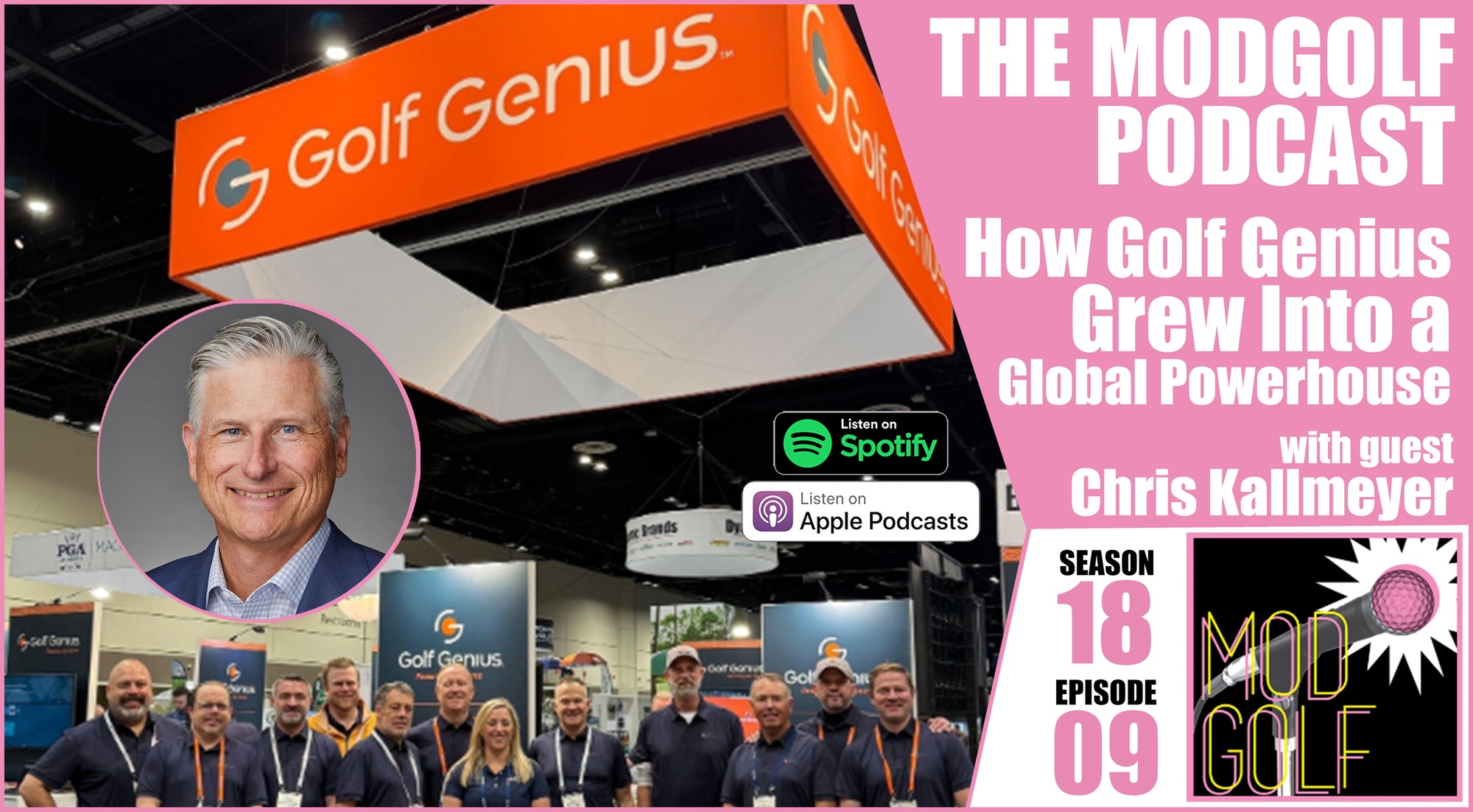
Episode Chapters:
(00:04) Introduction: The Return of Chris Kallmeyer
(02:18) The Foundation: Golf Genius as a Tournament Management Powerhouse
(05:53) The Secret Sauce: Building and Maintaining Company Culture
(08:21) Acquisition Strategy: Why Cultural Fit is Non-Negotiable
(19:02) Defining the Brand: Vision, Values, and Serving the Pro
(13:18) Inside the Ecosystem: Powering the USGA’s Handicap System
(16:36) Solving Pain Points: The Growth of Golf Shop
(19:52) AI in Action: Making Golf Genius and Its Customers More Productiv
(24:52) Growing the Game: The Coaching Portfolio (Operation 36 & CoachNow)
(30:23) The Future is Hybrid: Expanding into Simulator & Indoor Golf
(36:10) Global Growth: Key International Markets
(39:53) Leadership Lessons: Strategic Bets and Saying "No"
(41:51) How to Connect with Golf Genius
Compelling Quotes from Chris
On Culture & Growth: "We have a blended turnover with 300 people worldwide of something like 4% a year. That's world-class. It illustrates that we have a great culture that people enjoy working for. But beyond luck, we do take it very seriously and we work hard to maintain that culture, which gets harder and harder as you get bigger."*
On Their Core Mission: "Our goal is to make the hard things easy while also making the easy things easy. We serve PGA professionals. They're the center of our universe. Whether they're running tournaments, managing golf shops, or coaching, we have products that help them do all those things, and we're here to serve them."
On AI Strategy: "We look at AI in two primary buckets: How can we use AI to make ourselves more productive? And the second bucket is, how can we use AI to deliver AI-powered features that make our customers more productive or deliver capabilities that they don't already have."
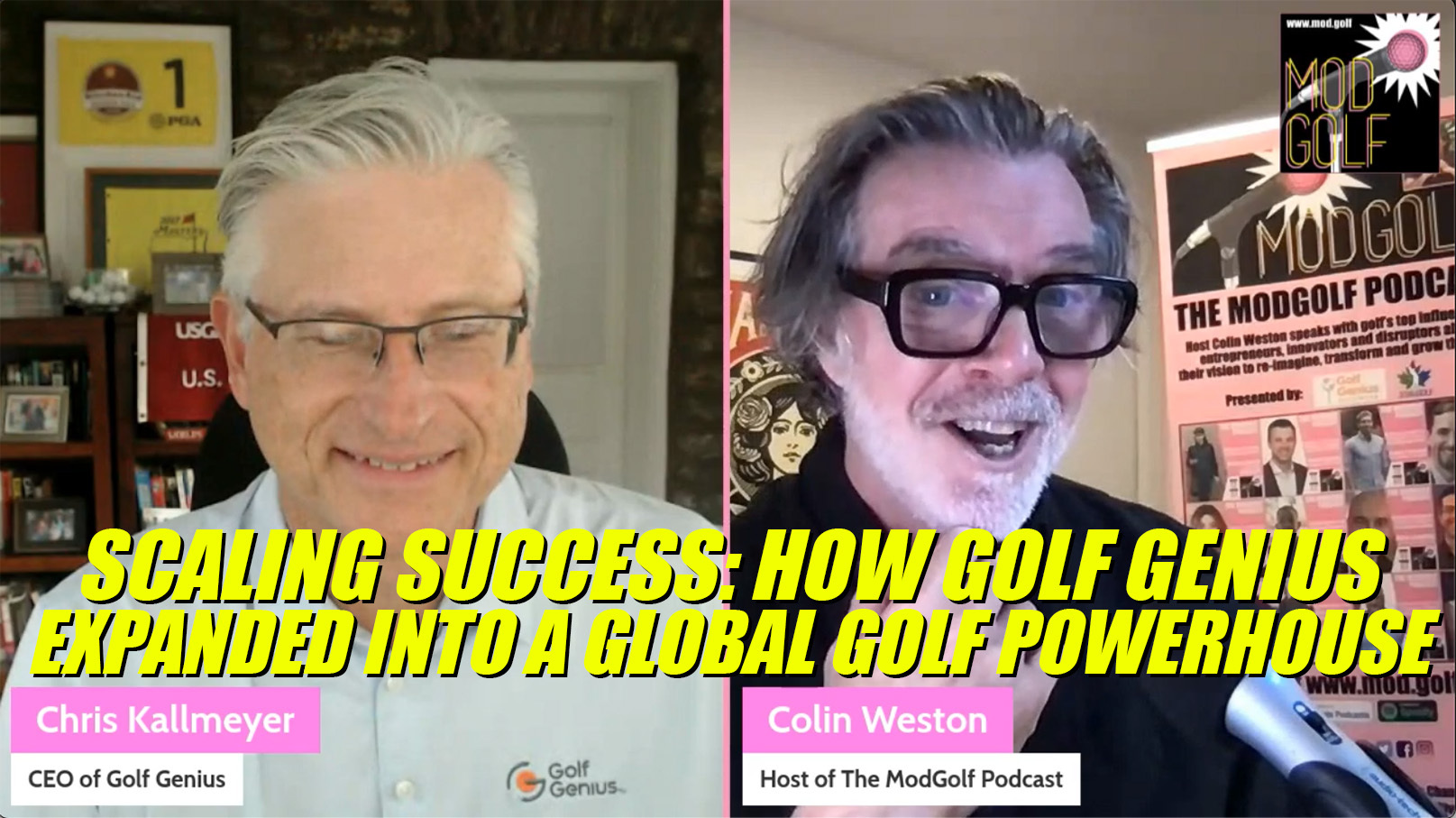
Are you more of a watcher than a listener? Then enjoy our video with Chris on The ModGolf YouTube channel. Click on this link or the image below to see visual insights and dive deeper with Chris.
Chris Kallmeyer's bio page >> https://modgolf.fireside.fm/guests/chris-kallmeyer
Chris Kallmeyer is the CEO of Golf Genius, a global leader in golf technology solutions that power the sport's ecosystem. With a career deeply rooted in both technology and a passion for the game, Chris has guided the company through a period of remarkable expansion, transforming it from a premier tournament management platform into a comprehensive suite of tools serving golf professionals at every level. Under his leadership, Golf Genius has successfully integrated ten strategic acquisitions—including Operation 36, CoachNow, and GolfShot—while maintaining an unwavering focus on a customer-centric culture and brand integrity. His philosophy centers on serving PGA professionals as the core of the business, a principle that has driven the development and success of products across tournament operations, golf shop management, handicapping, and player development.
Are you a golf course owner, manager or operator looking to increase both your profit margins and on-course experience?
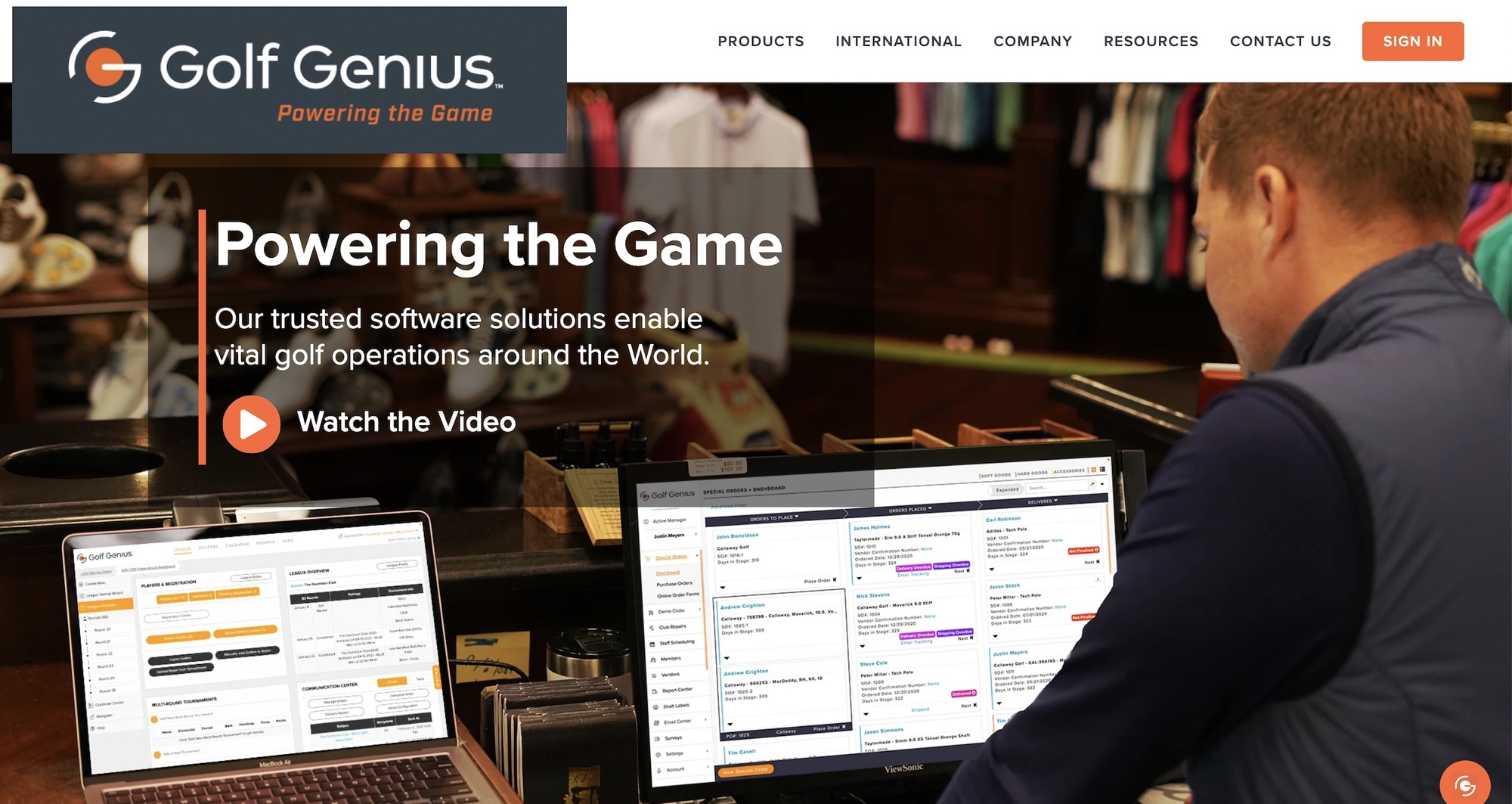
Today's golf professionals do way more than run tournaments - and so does Golf Genius. They help you manage tournaments, leagues, and outings, streamline pro shop operations, and elevate your coaching and player development. That's why over 10,000 clubs, courses, resorts, associations, and tours in more than 60 countries trust Golf Genius. Find out what Golf Genius can do for your facility at golfgenius.com.
Join our mission to make golf more innovative, inclusive and fun... and WIN some awesome golf gear!
As the creator and host of The ModGolf Podcast and YouTube channel I've been telling golf entrepreneurship and innovation stories since May 2017 and I love the community of ModGolfers that we are building.
I'm excited to announce that I just launched our ModGolf Patreon page to bring together our close-knit community of golf-loving people! As my Patron you will get access to exclusive live monthly interactive shows where you can participate, ask-me-anything video events, bonus content, golf product discounts and entry in members-only ModGolf Giveaway contests.
I'm offering two monthly membership tiers at $5 and $15 USD, but you can also join for free. Your subscription will ensure that The ModGolf Podcast continues to grow so that I can focus on creating unique and impactful stories that support and celebrate the future of golf.
Click to join >> https://patreon.com/Modgolf
I look forward to seeing you during an upcoming live show!... Colin

Transcript
The ModGolf Podcast 00:04
Welcome to the ModGolf podcast where we speak with the entrepreneurs, the innovators, the disruptors, and the influencers who are shaping the future of golf. I am your host, Colin Weston, and today i have a return guest, someone I had on almost four years ago. Had such a great conversation there. They've done so much in the golf industry space since then. It's time to get you back on because Yeah, they're doing way more now than they were back then. So the conversation is going to be deep. It's going to be informative.
And you, our listener, if you're in the golf industry, you're going to learn so much lessons in leadership here today. And if you're not in the golf industry, you're still going to learn a ton about culture, how to grow a business, take it from startup to early growth and beyond. And that's exactly what our guest is doing today. And that is Mr. Chris Kallmeyer, CEO of Golf Genius, who, as I mentioned, joined us four years ago. And I reached out to Chris and said, come on, you got to come back on. You guys are doing so much. You got to let us know.
Read Full Transcript Hide Full Transcript
The ModGolf Podcast
not only the good things you're doing and your acquisitions and what you've developed internally, but also how there's the glue, the culture and how you manage to keep that together and expand that because that is not an easy thing to do. So with that, Chris, welcome back to ModGolf!
Chris Kallmeyer 01:20
Hey, Colin. Yeah, great to be here, Colin.
The ModGolf Podcast 01:53
So over over seven years ago, almost to the day that I released a podcast episode with Mike Zisman, who is the founder and was the original CEO of Golf Genius. And yeah, the explosive growth they've had is no accident. And yeah, like I said, I want to dig in this today with Chris so all of you, our listeners, can learn of this pathway of how they've managed to pull this off. Because as we've said,
This is the exception to the rule. Most companies, whether they're in golf or not, they trip upon themselves or they kind of lose their way. But Golf Genius has not lost their way at all. So, hey, we're going to run through all these great things, the new assets that you've acquired or developed. But let's start at the beginning here, Chris. Why don't you tell us about the OG, the original foundation and that was tournament management. So why don't you quickly talk about that and then we'll get into some of the new things you're doing.
Chris Kallmeyer 02:49
Sure. Thanks, Colin. Again, great to be on the show. Appreciate the opportunity. I'll start by saying most people see Golf Genius. as tournament management. They see Golf Genius everywhere, whether it's at public facilities or private clubs, all the way up to state and regional championships, run by all kinds of organizations, all the way up to the USGA, Golf Canada, PGA of America, and other national associations around the world.
So in that capacity, Golf Genius is used by over 10,000 private clubs, public courses, resorts, golf associations and tours in over 60 countries. So, yeah, the tournament management product is the core of the business. You can think of it as a sophisticated toolbox that's used by golf professionals to run organized golf competitions from start to finish. Every tool they need in the toolbox, from promoting events to getting people registered, to getting them organized on the golf course, live scoring, all the materials they need to run a highly professional event.
And of course, the leaderboards and everything that happens after an event. including season points and other things that might be applicable at the at the club level and a bunch of other things. Our goal is to make the hard things easy while also making the easy things easy. So that's the core of what we do from a tournament management standpoint. That's the core of the business. But since 2018, grown into variety other products and spaces.
The ModGolf Podcast 04:10
You certainly have, and we're going to start to dig into those. And I will say that my home golf course, the university golf course here in Vancouver, they onboarded the last couple of months with Golf Genius. So I have the opportunity to be one of your users, and they're one of your clients.
Chris Kallmeyer 04:29
That's great.
The ModGolf Podcast 04:30
And I will already say, compared to what we had before, It is easier. It is so much easier to book a tee time with our weekend men's group. I've seen that in real life and real time here. And yeah, you're making our lives easier and the the golf better. That's for sure. Absolutely.
Chris Kallmeyer 04:54
That's great. Voice of the customer is a very powerful thing, Colin. So i appreciate that. And i think you'll find and the folks there will find that we take customer success very, very seriously to make sure that you have everything you need to be successful. And that's one of the things that's core to our brand. So I'm sure you'll experience a really highly professional customer onboarding, customer success and support experience.
The ModGolf Podcast 05:18
Thank you. Well, I'm looking forward to this. So last time we spoke, we did dig deep into some of the acquisitions you had at the time. And then you introduced me to the founder of both Twilight Golf and Operation 36, which you've acquired. And we did a separate podcast episodes on those two. so we're not going to dig too deeply into those today. But before we start getting into some of the other um products and services and assets that you have here,
I want to ask this overarching question here. I want to frame it this way. And this is about company culture, because when I was in Belfast at a golf business conference, I had the pleasure of meeting a couple of Golf Genius guys there.
Chris Kallmeyer 05:53
Thank
The ModGolf Podcast 06:00
And just this' the attitude and the energy, and I can just tell it they loved being part of this company. They could do anything in golf and they're with you and everybody I've talked to with golf genius. That seems to be the way it is. So obviously you're doing something right with culture that first Mike and then you coming on together, you've managed to craft and then maintain. So I'd love to hear your thoughts on the company culture. And to start that, I've got this quote that I'm sure you've heard. And that is culture eats strategy for breakfast.
I want you to either agree, somewhat agree or strongly disagree with that. And then tell us why you feel that way and how it applies to what you do with Golf Genius.
Chris Kallmeyer 06:48
Well, of course, they're both critically important. You know one can certainly feed the other. And I don't think you can have long term growth and success without both. But it does start and end with people. And if you don't have a strong culture, you're not going to get very far. In our particular case, we have 300 full time staff. We've done 10 acquisitions, which has brought us some great products and great people as well.
But again, culture is really important. So it starts in acquisitions, it starts with understanding the culture of a company that you may be looking at to acquire. There has to be a cultural fit in terms of the way they operate, the way they think, their passion for success, and whether they're going to fit into our organization. And we wouldn't do an acquisition if there wasn't a cultural fit. In terms of the teams that we have that we've built over the years, We employ over 70 full-time PGA professionals. They are very much at the root of our culture. We believe that we are PGA professionals or golf professionals serving golf professionals at the core of what we do.
And those folks, as a group of people, are incredibly professional, well-spoken, mature, great representatives of our brand. And that goes a long way to establishing our culture. That extends into our development organization. We're a software company. We have over 130 software developers working across our product portfolio. And they also have a very, very strong culture. When you put all this together,
our blended turnover with 300 people worldwide is something like 4% a year. So if you put that into the context of any software business, that's world-class. And it illustrates that we have a great culture that people enjoy working for Golf Genius, enjoy representing our brand and everything that we stand for, and enjoy having the Golf Genius, on a button on their chest or a hat on their head. So we're really we're really lucky that we have that culture.
The ModGolf Podcast 08:48
Right, right.
Chris Kallmeyer 08:51
But beyond luck, we do take it very seriously um and we work hard to maintain that culture, which gets harder and harder as you get bigger and bigger. So we have to work at it all the time.
The ModGolf Podcast 09:00
Well, I can only imagine, i want to talk to you about this, when you do acquire other companies and even if they're just startups, they have their own culture that they have as their foundation. So it must be a bit of a nuanced dance to make sure that you bring in companies that are already aligned as far as that.
Chris Kallmeyer 09:21
Yeah.
The ModGolf Podcast 09:21
So let me ask the question this way.
Chris Kallmeyer 09:21
Absolutely.
The ModGolf Podcast 09:22
So is part of your vetting process to make sure that... The culture of that company you're looking to acquire already aligns with what golf genius represents. So you're not fighting or have to retrain them. So is so is that one of the key components along with the bottom line?
Chris Kallmeyer 09:39
Yeah, absolutely. Again, reiterating something I said earlier, culture is incredibly important in acquisitions. And yes, we have to assess that during an acquisition process. As an example, we acquired a product called GolfShot about 18 months ago. It's one of the leading consumer golf apps in the marketplace, not just in the US, but they're very nicely established in leading golf markets around the world. Their team was a really great cultural fit with us, really experienced software engineers who are really passionate about what they do, both in the technology side, but also on the golf side.
The folks in the product organization and the sales organization, marketing teams and so forth. Perfect cultural fit and bringing us together. We've you know since combined forces in a way that's you know one plus one equals three. And that all starts with a good cultural fit.
The ModGolf Podcast 10:39
Now, can you expand on that before we start digging into some of the newer products that you have here and the vision of the future? when we talk about culture, workplace culture, it can be a bit of a vague or squishy thing. So what do you consider the vision and values or that North Star that embodies or defines Golf Genius? And I'm assuming that was, once again, since the very beginning. So yeah, elaborate on that a little bit for us, please.
Chris Kallmeyer 11:10
Well, I think you're touching a little bit more on brand, right? So culture and brand also have to align. So if we think of what we represent as a brand, we represent high quality, exceptional service, world-class user satisfaction.
The ModGolf Podcast 11:16
Yes.
Chris Kallmeyer 11:25
We pride ourselves on continuing to listen to our customers and understand how we can improve and then constantly reinvest in innovation. to deliver an ongoing, continuous improvement. So when you map that back to culture, what that means is everyone has to be aligned with those objectives, you know trying to climb the same hill, so to speak, and really believing fundamentally in their being that we're all here ah to to achieve the same objectives, again, of incredible customer satisfaction,
The ModGolf Podcast 11:47
Yes.
Chris Kallmeyer 12:00
service, exceptional service, ongoing innovation, putting the customer first. I mentioned earlier that we serve PGA professionals. They're the center of our universe. Whether they're running tournaments, managing golf shops, or coaching, we have products that help them do all those things, and we're here to serve them. That's a big part of our brand, and it overlaps with our culture.
The ModGolf Podcast 12:22
Got it. Got it. Looking at some other acquisitions that have happened over over the last few years in the golf space, of course, with Callaway acquiring Topgolf, and we've seen what's happened there the last couple of years and last week that but that's been been sold off, that obviously didn't work, whether it was a cultural fit, a a business fit, or a combination thereof. It sounds like they were not perhaps doing the, i don't know, I'm just going to speculate here that maybe they weren't doing the the type of vetting that you do when looking at a potential acquisition in that case there. So getting back to you mentioning that golf professionals are the center of your universe. I'd love to hear that how that applies to something I didn't even know that you were doing with Golf Genius and that is handicap management. So can you run through that in the whole ecosystem in the US and other countries and give us the overview of how you're getting involved with handicap management.
Chris Kallmeyer 13:18
Sure. So we were the development and hosting provider for the USGA in providing central handicapping and gin in the United States and 20 other countries that the USGA works with. Most folks don't give this a lot of thought, but the here's how the ecosystem works for handicaps in the United States. The USGA is at the center of that ecosystem. They distribute handicaps through 57 allied golf associations, referred to, in short, as AGAs.
The ModGolf Podcast 13:43
Hmm.
Chris Kallmeyer 13:46
Those AGA's in turn act as the last mile and their role is to distribute handicaps along with other valuable services like course ratings and running amateur championships in the region and a bunch of other valuable services. But in this context, they're the last mile to distribute handicaps to the public courses, private clubs and local or smaller golf associations in their region. In the U.S., there's about 3.6 million golfers who have a handicap. That's out of about 15 million golfers in the U.S. who play golf on a green grass golf course eight or more times a year.
The ModGolf Podcast 14:21
Mm-hmm.
Chris Kallmeyer 14:21
And, there's so 3.6 million golfers registered in the central handicapping system. It is increasing. The USGA and the AGAs are investing and promoting the importance of a handicap and how it and improves a golfer's experience, allows them to track their performance, achieve a level playing field with others, whether it's recreationally or competitively. And along with a lot of benefits that most folks don't realize that AGA provides. In addition, things like opportunities to play competitions locally and other valuable benefits.
So we're the development and hosting provider for that solution. That includes the GHIN mobile app that many people have in their pocket and use all the time to post scores and check their handicap index or check someone else's handicap index when you're getting ready to to play
The ModGolf Podcast 15:07
Right.
Chris Kallmeyer 15:09
to play against someone in a match, making the appropriate adjustments, seeing where the dots fall on you know across the holes. It also includes ghin.com and a ghin kiosk that can sit on a computer at the club that allows folks to post their scores quickly after a round if they choose to do that. And there's also an administrative portal that most folks don't see, but the clubs, the the folks, the golf professionals that you just asked me about, ah long as well as the AGA's have an administrative backend that allows them to manage handicaps across these communities.
You might imagine there's quite a bit that goes on behind the scenes from an from an administrative standpoint. So this administrative portal has a ton of functionality that allows these folks to manage those communities. and We also provide the data services or the APIs that allow the universe of software applications over 150 providers to access handicaps to post scores and retrieve handicap indexes for golfers.
The ModGolf Podcast 16:07
Got it.
Chris Kallmeyer 16:07
I will stress that in this role, this is a USGA branded product.
The ModGolf Podcast 16:07
Got it. So I'm going to ask this. So if I understand, is this a golf genius product or is this a USGA branded branded product? Are you white labeling this? As we talk about that, it's you're developing it, but it's not under your brand. So, so tell us about, about that.
Chris Kallmeyer 16:56
Yeah, great question. It is important to stress that this is a USGA branded product, not Golf Genius branded. It's not on our website, but we play an incredibly important role as the technology and hosting provider to make sure that that we're building it, we're and innovating, and that that it's reliable, and that continues to get better. And we do that by working closely with the USGA, who handles all product planning and all engagement with the AGAs and clubs across the United States and those other 20 countries I mentioned earlier.
The ModGolf Podcast 17:26
Got it. Got it. So one last question regarding handicap management. I'm curious to learn this as far as this relationship with the USGA that you've had for many years. So did your marketing and sales and strategy teams that saw this as an opportunity and you approached the USGA or to the USGA approach you to see if you can come up with a solution for them?
Chris Kallmeyer 17:46
Yeah, sure. Great. Another great question. So there's a there's a little bit of a back history. Back in 2016, we started working with the USGA in the tournament management space. We had a very productive relationship with them around tournament management and providing a solution to clubs and AGAs around the country. And based on the strength of that relationship, about three years later, the USGA approached us to engage on building or rebuilding the handicap system in the US.
They approached us in 2019. We launched it together in January of 2020. And it's been very, very successful.
The ModGolf Podcast 18:22
Nice. Good stuff. So last time we spoke almost four years ago, i believe GolfShop was something you were just about to launch or just it was in its infancy. So i I've had a look on your website and see what you're up to there.
Chris Kallmeyer 18:33
Yeah.
The ModGolf Podcast 18:36
So I'd love to hear more about, tell us about GolfShop because that seems, and I'd also love to hear about how that weaves in and amplifies and has some synergy with all the other pieces and assets that you have with Golf Genius.
Chris Kallmeyer 18:48
Sure. So we serve PGA professionals and oftentimes PGA professionals, because of the success in our relationship and the trust that we've built, will raise pain points to us and say, "boy, it would be great if Golf Genius could do X, Y or Z".
The ModGolf Podcast 19:03
Right.
Chris Kallmeyer 19:03
That's how this started with our Golf Shop product back in 2018. We built the product, we launched it in 2019. Every year we've grown the user base of that. That product has very high customer satisfaction, very high retention. We're continuing to expand the footprint of that product across all different types of clubs, not just in the US, but in and other markets around the world. So at a high level, It's meeting it's designed to meet unmet needs for golf professionals in their golf shop operations.
They have other tools that they use in the golf shop, but there are several things that were never met or met at all or met well. So what we've been able to do is provide efficient workflows for things like special orders, demo club tracking, online sales when a Let's say a private club wants to offer some special set of features or merchandise to their members and make it easy to order them online.
Staff scheduling, just having good tools that make it possible to organize the schedule of coverage across the pro shop or outside services or the practice facility or whatever the various operations are for a course. along with club repair management and a bunch of other things. So again, efficient workflows across all of those unmet needs, along with helping them deliver an exceptional member experience by having member surveys, producing member profiles, basically understanding the members and the golfers better so that they can then deliver a better experience along with club branded communication so that they're really raising the whole experience under the brand of the club.
The ModGolf Podcast 20:39
Got it. Got it. So a lot of the pain points you're relieving were time efficiencies, redundancies and losses.
Chris Kallmeyer 20:41
Yeah,
The ModGolf Podcast 20:46
I think you mentioned last time that the amount the average club would lose, just the value of rental clubs or demo clubs not being returned was this astronomical number. So I'm sure even the return of those clubs probably pays for their monthly subscription for your software.
Chris Kallmeyer 21:00
yeah higher than most people realize. That is a very important and accurate insight. Yeah, that based on our research, the average private club that does demo club lending can lose anywhere from two, three, $4,000 or more a year in merchandise that's lent out and never comes back. So so yeah, the cost of this product is less than that. So it more than pays for itself just on the demo club and club tracking feature.
The ModGolf Podcast 21:52
All right, Chris, I was going to wait for later in the show, but I'm going jump in right now here. As far as AI, i know it's a tool. lots of people think that is it a business and it's not, but I'd love to hear with all of the assets, all the companies, all the the products that you have, how is AI starting to make you more efficient? How is it helping the business overall? And what's your take on AI and your strategy moving forward with Golf Genius?
Chris Kallmeyer 22:23
Great question, Colin. AI is a big topic all by itself and AI is not new, but it is real and it is here to stay. AI has been around for 30 plus years and it's been it's been leveraged in a variety of ways. Of course, we've reached a real inflection point here in the last few years, in particular with generative AI and the the power, the sort of amazing capabilities that we see, whether it's ChatGPT or Google Gemini or are these other AI tools that are propagating everywhere. So it's real. We do already have several AI powered features. For example, in our Golf Shot product, which is the consumer based mobile app, we have automatic shot detection through an Apple watch integration that knows when you hit a shot or even hit a putt, and therefore can track every shot that you hit and determine the distance from one shot to the other to automatically produce strokes gain to give you insights into your game and where you need to focus to get better.
That's a classic example of machine learning, which is one form of AI. and We have other capabilities. in our Golf Shop product, we have an image reader that is built on generative AI capabilities that can take PDFs or photos of stock orders and automatically translate that into structured information that can be input into our product and and prevent or avoid the need for the operator to manually key all that in, which is saving them in any given instance, saving them 30 minutes to an hour and in total saving them hours and hours a month or a year.
Those are two examples. But more broadly speaking, here's how we look at AI in two primary buckets. How can we use AI to make ourselves more productive? We're a software company. How can we use AI to make everyone in our organization more productive? And the second bucket is how can we use AI to deliver AI powered features that make our customers more productive or deliver capabilities that they don't already have. So we sort of look at it in both buckets.
On the first bucket of how do we make ourselves more productive? That includes things like how can we leverage AI in our support organization and tie it together with our knowledge base and all the information that we have about our product? and make it easier for our teams to answer questions from our users and continue to to provide superb customer service, but do it in a more efficient way because you've got AI there to help you and put your finger on the right answer and deliver the right answer at the right time in a highly efficient way to our users and do it at scale.
So we can use it in the support organization, we can use it in our development organization, where AI has proven to be a very effective tool, in particular with things like requirements gathering and generating mock-ups based on requirements and potentially generating code, for example, at the early stages of developing features or using it to enforce coding standards or identify vulnerabilities in a product. These are all things that are very real, are already happening, and they're all examples of how we can use AI to make ourselves more productive as a software firm. In the other bucket, again, it's how do we understand how to bring AI to bear and build it into our products and deliver it to our customers in a way that makes them more productive? Again, I mentioned a couple of examples. We're working on some other things.
One example is exposing a co-pilot feature in our products that make it really easy for our customers to you know ask the assistant, ask the co-pilot to help them with certain tasks or identify things that they may have overlooked, for example, by looking at their past use of the product and understanding the pattern of usage, and then recommending to the operator of, hey, I noticed you haven't done this task yet. Would you like me to do it for you?
Those sorts of things, which we've certainly seen in other products, other software products around you know sort of in different spaces. So those are some examples that that we have in mind. But I would stress that it's still early days. you know we're investing a lot of time and effort into understanding the capabilities and keeping up with it because it's constantly shifting. It's evolving at a very rapid pace. So we we're spending time and energy keeping up with the changes and trying to draw some conclusions about, again, how can we make ourselves more productive and how can we deliver AI-powered features that make our customers more productive?
The ModGolf Podcast 27:01
Love this. So as far as making golf genius more productive, not just as you talk about whether it's actually been using AI to write code at that that basic level and certain automations there. I'm curious because I know other companies are starting to do this. I'm starting to use it myself a little bit also for competitive analysis, for marketing strategies, for marketing.
Chris Kallmeyer 27:21
Yep.
The ModGolf Podcast 27:24
Even looking where the trends are, perhaps if you're thinking, well, where's that next space or gap that the opportunity for that next acquisition? What sector should that be in? Is that something you're starting to use AI for or something you're even considering?
Chris Kallmeyer 27:37
Yep. Research in general, it certainly has proven that it's very good at research, deep research, and doing it much more efficiently than a human being can do. And it often acts as a great launching point, right? So an initial set of research that can then be used to dive deeper where a human being really does is required to understand the nuances that maybe the machine can't quite understand yet.
And then in marketing, you mentioned marketing, but yes, we use it very heavily in marketing. for things like taking a webinar, a 45 minute webinar, and automatically chunking it down into relevant excerpts and chapters that are topically oriented without having to do it yourself. That's something that can be done with a machine where it would used to take a few hours to manually do that.
The ModGolf Podcast 28:26
Oh, I know.
Chris Kallmeyer 28:26
That's just one example, but yes, use we're using it in marketing, we're using it in support, we're using it in development, we're using it to do research. And there's, again, we're still learning, like all, like everyone, we're learning. We're just trying to learn as quick as we can and apply what we've learned.
The ModGolf Podcast 29:32
Got it. Got it. I was going to hold off and ask you about the future and how AI is going to inform Golf Genius and your products. But I'm going to jump right in here. It seems to me with Golf Shop to have an AI assistant to help with a lot of the kind of the repetitive or mundane aspects or scheduling. Is this something you're already doing or is this you're starting to workshop right now? So how AI will will help increase the value of what you're doing, not only for Golf Genius, but even more so for all the golf professionals that you are serving?
Chris Kallmeyer 30:07
Yeah, that's a big question and it touches on all of our different products um in the context of Golf Shop because we're just talking about Golf Shop. That is one of the there's a feature in Golf Shop that is one of the first AI powered features that we've released. So just briefly to illustrate what are the kinds of things that can be useful for golf professionals and saving them time. Imagine you're a golf professional or you're working in the shop and you receive a box full of merchandise from one of your vendors. You open the box. It's got a lot of shirts, shorts, or pants, or hats or whatever it is.
And you get a packing slip that's associated with it It's got all kinds of information on it. So what we've done is we've built a feature that you where you can take a picture of that PDF or a picture of that piece of paper or several pages of an order form. or packing slip, and it automatically reads it and brings it into the golf shop product, thereby avoiding the need to manually key it in. that would include things like what are the items, how many, what's the quantity, what are the the different SKUs, sizes, you know, the all the details that are necessary to sort of bring bring the new merchandise into the operation.
So those stock orders and that manual process, which could take 30 minutes, an hour or longer, depending on how much they're dealing with, turns into a few seconds.
The ModGolf Podcast 31:30
And being able to increase the efficiencies on that type of work, that low level work. From my understanding in the golf industry, just like the hospitality industry, filling those positions still even after COVID is very difficult. They're having a really difficult time staffing for those type of roles. So it sounds like lot of people fear with AI or you're going to be eliminating jobs. But in a lot of ways, you're actually helping with jobs that aren't being able to get filled in the first place.
Chris Kallmeyer 31:53
Yeah.
The ModGolf Podcast 31:56
But where one person can then do that rather than a whole team.
Chris Kallmeyer 31:56
Now, the way we would always the way we'd always position this is we're trying to save operators time that they can then use to reinvest into other revenue generating activities or member facing activities, which in in either case are higher value add.
The ModGolf Podcast 32:17
Okay, so I want to continue with this AI thread and some of the other things that you're offering. And this is, again, you are so you are having the PGA professional, or should say, let me do that one again. And as you mentioned earlier, golf professionals are the center of your universe. And part of that universe, that ecosystem, are teaching pros. So on that coaching side, I believe you've got two products.
Operation 36 and Coach Now, those two businesses here in your portfolio. So tell us a little bit about those. And also, are you starting to sprinkle some AI and in there also to help amplify the experience for the the people like me, the struggling 16 handicappers that are desperately trying to get better?
Chris Kallmeyer 32:52
Sure. So those are both important topics. The last time, Colin, I was on the show, we were just getting started with coaching. As I mentioned, the core of what we do is serving PGA professionals.
The ModGolf Podcast 33:08
Right. Right.
Chris Kallmeyer 33:11
We know they run tournaments, they manage shop operations, and we also know that they teach and coach. but With that recognition, we started a few years back looking at coaching and saying, okay, is there room for products? Are there unmet needs here? Can we bring a product into this space that makes the lives of coaches easier, saves them time, delivers a better golfer experience? So we started with that thesis and then as a result of that we've done a couple of acquisitions. We've also built out some of our own stuff. So the first acquisition we did was operation 36. We later acquired Coach Now, and these are sort of two very complementary pieces. Operation 36 is the number one beginner program in golf for both kids and adults.
It's based on the premise of learning from the hole backwards and getting beginners on the golf course right away, right away, meaning within the first day or two of their first ever golf experience.
The ModGolf Podcast 33:57
Yes.
Chris Kallmeyer 34:03
rather than standing on a mat, scraping one ball after the next, whiffing it, topping it, not getting any shot euphoria. So we want to replace that with teach them from the hole backwards, learn how to chip and putt and get on the golf course as fast as possible where the real magic happens. And by magic of golf in this context, I mean things like being in a beautiful setting on the golf course itself is part of the magic of golf. Being with other people just like you who are learning.
Being able to drive past the first tee where a lot of anxiety might live about making making a fool of yourself in front of friends and strangers um and moving right up to the green where you can start 25 yards from the center of the green, chip onto the green, putt until you get it into the hole, write your score down, watch the putt curve left to right or right to left, or maybe make a 20-footer, which is also part of the magic of golf.
Move on to the next hole, do that nine times, and now you've got your first round of golf and you just start it. You had a great experience. You come back a week later. Your score is almost guaranteed to be better the second time because you were already learning the first time. So now you're a week into your experience. You've had two rounds of golf. You've been in a beautiful setting with other people just like yourself. And you've had an incredible very positive first experience with golf, which as we all know, golf can be a very frustrating game and it's very, it can very easily drive people away when they get frustrated and they feel like golf isn't for them or it's just too hard.
The ModGolf Podcast 35:30
I wish over 40 years ago, that's the way that I started. So I had the classic situation. The first club in my hand was a driver that was put in there and I didn't know how to swing a golf club, played a lot of baseball. So had more of a baseball swing, which was a banana ball, but having operation 36 on the podcast, and I will include the link in the show notes for that episode. Because that was a great one. It's this, the premise is so obvious,
And then simple, that it makes sense that I think we use the analogy or a of martial arts, of starting with a white belt.
Chris Kallmeyer 36:03
Yeah.
The ModGolf Podcast 36:04
And my son was in Taekwondo. And you don't start with practicing to be a black belt, which is from the back tees from the full tees and playing of course, that's a black belt golf situation here. And I just love this, that you're starting with a white and the equivalent of getting these badges and the rewards and you've gamified this.
Chris Kallmeyer 36:16
Yep.
The ModGolf Podcast 36:21
So before we move on to Coach Now, I wanted to ask you, because when you started, it was really focused on kids. What are you finding now as far as the ratio of kids to adults and especially how many women are getting involved as participants in Operation 36?
Chris Kallmeyer 36:37
Those are all terrific questions. We can have a podcast all about it. So first off, I'll go back to one of your earlier questions about culture and fit.
The ModGolf Podcast 36:42
Right. Hmm.
Chris Kallmeyer 36:48
So Operation 36 was an acquisition and the founders of Operation 36, Ryan Daly and Matt Reagan, absolutely terrific PGA professionals who are incredibly passionate about not just golf, but great experiences for beginners in golf, both kids and adults. Now, to your point, they started out work focusing on kids. And after they started to have some success, some of the adults who were observing this said, Hey, this sounds great. Can we do this?
That was a few years ago at this point, about half of the participants in OP36 are kids and about half are adults. And two thirds of those adults are women. To tie your tie, the question you're asking about them.
The ModGolf Podcast 37:28
two thirds. All right.
Chris Kallmeyer 37:29
So again, what the bottom line is this enables golf professionals by providing a toolbox for them and a curriculum to deliver high quality programming for beginners that help them create golfers for life, it creates just that very, very positive first impression and first experience. So even if you're not someone, this is the way I like to think about it, because not everybody's going to be able to hit the ball 200 yards plus after practicing golf for some time. But everybody can have a really positive first experience in golf.
And if you deliver a positive first experience to adult men and women, even if they don't go on to feel like they turn into great golfers, they're always going remember that positive experience in golf. They're going more likely to recommend it to other people. You'll be more likely to bring their children into the game because of that positive experience that they always have in the back of their mind.
And therefore, the whole boat rises that for the game of golf, the whole boat rises. And that is in contrast to the frustrating experience that I think most people can recognize of trying to learn to hit a golf ball with a full swing and consistently get it on the face where you can experience what's sometimes called shot euphoria. Shot euphoria is great if you can get it onto the face consistently.
The ModGolf Podcast 37:43
Yeah.
Chris Kallmeyer 37:48
If you can't, then there's a lot of frustration. And when you try to transition that onto a green grass golf course, the frustration goes way, way up. So there's a better way the OP36 guys, Matt and Ryan, have figured that out. And we're just really excited to be to be part of that and to support that. So that's part one of our coaching portfolio. Part two is Coach Now. So the flip side of that beginner experience is running a coaching operation because, yeah, you're going coach beginners, but you also want to have one on one coaching clinics for more advanced users, other forms of instruction.
The ModGolf Podcast 38:09
Right.
Chris Kallmeyer 38:22
If you're a coach or a team of coaches, you're running a business. Oftentimes it is a separate business inside a facility, or it's just a single coach running their own their own sort of small business, one man show. In any event, those folks need a toolbox. And what CoachNow is a comprehensive toolbox for coaches in the same way that our tournament management product is a comprehensive toolbox for tournament managers or tournament directors.
CoachNow seeks to provide that same comprehensive toolbox for coaches that includes things like managing your schedule, allowing people to book into your schedule in a really seamless way. Video and video telestration, a mobile app that allows both the coaches and the golfers to engage each other, not just on the lesson tee, but between lessons so that there's strong collaboration. It's not just trading time for money when you happen to show up and you're paying, you know, whatever the rate is per hour, then you walk away.
And you try to remember, what did they tell me? What was it he was asking me to practice? So it gives the coach all the tools they need to run their business and deliver a great experience for their coach for their players, their students. And it allows those coaches and students to stay engaged in between lessons and really achieve that next level of a coaching experience where your coach is sort of available at all times.
The ModGolf Podcast 39:42
So with that, I know I'm kind of banging the drum here of AI, are you already starting to infuse AI in there so that some of the notifications that are being pushed out to the players? I know with myself, I always had this with physiotherapy. I go to physiotherapy for something and then I go back two weeks later and the physiotherapist said, "so did you do all those little exercises that were really boring and mundane that you didn't want to do?" And of course, most times it's like, no, I didn't. It's like, "well, you're not really helping yourself". And I've heard stories quite often that students, they go away and they haven't picked up a golf club until their next lesson, which there's only so much the coach can do. So I guess I want to frame it this way.
Are you helping to facilitate that process, to take that off the coach's table? Does that manual need to send out and they don't have time to actually make sure that they're doing things? So are you, let me put it this way. Are you starting to automate through AI? the ability to push that out on behalf of the the coaches as the toolbox. So that that will remind me and nag me to make sure that I am practicing and gamifying that a little bit to make sure that I put in my work without the coaches having to incessantly nag me through email all the time.
Chris Kallmeyer 41:00
Yeah, so i have I would answer this in a more general way. So the product is all about making coaches more efficient while delivering great experiences for their players, their students.
The ModGolf Podcast 41:06
Okay.
Chris Kallmeyer 41:11
And ultimately, what that means is maximizing the revenue generation for that coach or that team of coaches while, again, maximizing the players' experiences. AI can be part of that. AI is a little bit of an overused term these days, right?
The ModGolf Podcast 41:25
It is.
Chris Kallmeyer 41:25
Any sort of automation or efficiency or optimization, you slap AI on it and you sort of, you hear that a lot. we are We are researching AI in every possible way. We've brought it to bear in our products already. And we feel like we're sort of just at the beginning of that wave. We've also, a whole different discussion, are using it to make ourselves more productive in a variety of ways.
The ModGolf Podcast 41:46
Yes.
Chris Kallmeyer 41:47
So yeah, AI is a topic all by itself. Happy to and unpack that with you. But yeah, it's got to be part of all of our products.
The ModGolf Podcast 41:55
Well, that we're going to have you back on again and maybe we'll just talk about AI. Maybe that's the a full episode right there. I did want to talk about another area as far as a theme or things that are emerging. And that is the popularity and the massive growth of indoor and simulator golf. Not just the entertainment venues that are popping up, but even more the interconnected leagues that are starting up.
I'm assuming it's a natural progression for Golf Genius with everything that you've built upon your tournament software to get involved in that space. So let us know what's going on in simulator golf with the Golf Genius.
Chris Kallmeyer 42:35
Yeah, at a high level, we think of golf as there's green grass facilities, public courses and private clubs.
The ModGolf Podcast 42:41
Mm-hmm.
Chris Kallmeyer 42:42
We mentioned earlier that we serve golf associations all the way up through state and regional, all the way up to national associations and federations like the USGA and the PGA of America and so forth. OK, well, there's an adjacency next to that green grass market. that's growing and we can call it sim golf and called indoor golf and called entertainment golf technology enabled golf like rain the technology enabled ranges there's all kinds of different and interesting things going on. So yes we are involved in that market it started out with those operators coming to us saying hey we need a solution to manage our leads we need a solution to help us deliver good coaching we need a solution for you know the the golf shop that we have on site. Tell us about your products. And we have several hundred facilities who have SIM, let's call them s SIM facilities or facilities that have green grass and SIM.
We have several hundred of those facilities using our products already. So we're continuing to understand and explore that market, develop relationships, organize our marketing and sales activities, take a close look at our products to make sure there's good product market fit and making adjustments there as needed to best serve and maximize the opportunities in that space.
The ModGolf Podcast 43:53
Right.
Chris Kallmeyer 44:02
But again, yes, it's definitely a trend. I would say it's here to stay. The one thing that I would point out and that we think about is in the macro. If you listen to the National Golf Foundation in the United States, they would tell us that the supply of green grass courses is basically flat, right? I mean, it goes up a little bit or down a little bit every year. It's been essentially flat for the last several years.
there's a lot of good reasons for that. It's expensive to build golf courses, especially in metro areas where the land is worth so much.
The ModGolf Podcast 44:30
Yes.
Chris Kallmeyer 44:32
And there are some new courses being built like destination resort courses and so forth. But for the most part, the supply of green grass facilities is flat. Meanwhile, the number of golfers is increasing as a result of COVID initially. and a lot of other things that may be going on. It's fun. the tent is getting bigger in a variety of ways. So there's more people, there's more supply chasing limited demand.
Now add in SimGolf, simulated golf is is an opportunity to continue to meet the demand of this growing body of golfers, which we think is going to continue. So there are, by our estimation, three to four thousand facilities sim facilities in the United States if you go around the world it's a lot more and in South Korea alone they're crazy about their indoor golf and they have over 10 000 facilities there believe it not in a small country in any event in the us call it three or four thousand facilities it seems to be continuing to expand there's a lot of investment going on into to these experiences so we expect that to continue to increase.
And again, we think there's a lot of opportunity because there's such a demand in terms of the number of golfers and the growing number of golfers that we think it's going to continue to grow and we're going to part of it.
The ModGolf Podcast 45:55
Now, speaking about the international side, looking at your website, I believe it's a in English. And is it Japanese or is it Korean right now?
Chris Kallmeyer 46:10
So again, in our terms of our different products, in our core product, the tournament product. We're in 60 plus countries. But we have teams, sales and support and teams on the ground in the UK, in Europe.
The ModGolf Podcast 46:18
Yes.
Chris Kallmeyer 46:26
in Australia, New Zealand and in Japan, as well as Canada, we're talking about outside the US. So yeah, all those markets are really important outside of the US.
The ModGolf Podcast 46:33
Yes. Yes.
Chris Kallmeyer 46:37
The next biggest markets in golf are Canada, the UK, Australia, if you add New Zealand, Australia, New Zealand is is is over 2000 facilities and Japan, which is over certainly over 2000, 2000 facilities, perhaps 2500 facilities or more.
The ModGolf Podcast 46:46
yes
Chris Kallmeyer 46:51
So all those markets are very important if we think about golf globally. And we have we have teams who are on the ground trying to understand those markets, determine how we can best fit the needs of the operators in those markets and deliver our products.
The ModGolf Podcast 47:09
So as we finish up here, I just want to pick your brain as a leader in the golf space for many, many years now and a lover of playing golf. I know that you started off, you shared your story of how you was sneaking on the golf course as a little kid and getting kicked off. And once again, go back and listen to that episode. I highly recommend you, the listener joining us here today, because that's a great episode with Chris that we had back then.
But I'm curious to learn as we finish up as far as the process internally, as far as how you then vet companies or look at the strategy of things that are emerging. I'm sure you say no more than you say yes. So can you provide an example. Maybe you're going to throw a company under the bus. you don't need to name them, but for people that are looking to expand. So they don't make the mistake that Callaway made with Topgolf.
Some of the lessons learned of the do's and don'ts of acquiring a company and bringing that in under your brand and your banner that aligns with your culture and your business model.
Chris Kallmeyer 48:19
Yeah, you come back to the point you made saying no more than you say yes. And that's true across any successful business, especially you know more mature business. And that's true not just for acquisitions. It's also true for decisions about our existing products or new products to get into. There's always the build versus buy type of assessment. So broadly speaking, if we're looking at a new space, i mentioned SimGolf as an example. We're also looking at the racket space as a natural adjacency to what we do in many of these country clubs. And there's a demand for several of the things that we do.
So whether it's those examples or others, you know we need to look at every one of them. And decide what makes the most sense for us at the end of the day, you can't do them all. You have to pick your bets. you have to place your bets and and make the best educated decision you can to align your unique assets, your unique capabilities, your standing in the market. Right. So in other words, how the world sees you and whether you have brand permission to do certain things. You've got to assess all those things and decide, yeah, this is either a good idea or it's not, or possibly it's a good idea, but not now.
So that's true whether it's organic growth in building our own products or inorganic growth in terms of evaluating possible acquisitions.
The ModGolf Podcast 49:40
All right. Well, to finish up here, and thank you for spending the time with me here and bringing me a up to speed on what's been going on the last couple of years here with Golf Genius, Chris. I do appreciate it. And our audience appreciates it too. So think most people in the golf industry know who Golf Genius is, but if they don't, why don't you let us know as we finish up the best way to connect with Golf Genius and to then find out more about all of the the great offerings that you have?
Chris Kallmeyer 50:05
Yeah, sure. Well, thanks for the opportunity, Colin. It's always a pleasure to catch up with you. Love the show. You do a great job of bringing all kinds of different perspectives to your audience, and we appreciate being part of that. Yeah, folks can just go to our website, golfgenius.com, can learn about what we do and dive deeper into anything they might find interesting. And of course, there's ways for folks to get in touch with us, depending on which product or capability they might want to explore further.
The ModGolf Podcast 50:35
Love that. Love that. Well, as I always do in the show notes, I will include a link to golfgenius.com to make it nice and easy for our listeners to find that rather than having to write that down when they're doing something while they're listening here. And also as a bonus, Chris and I are going to jump over for a video recording session for the ModGolf YouTube channel. So we're going to dig a little bit deeper, show some visuals over there. So I encourage all of you listeners to also become viewers on the ModGolf YouTube channel as Chris and I go over there.
So with that, Chris Kallmeyer, CEO of Golf Genius. Thank you for joining me again. And I look forward to seeing you at the PGA show in Orlando. Once again, we're talking about doing some fun collaborations there. Still, the ideas are in the infancy stage, but I'm excited about that. That's going to be fun.
Chris Kallmeyer 51:25
Great to be on the show. Thanks, Colin.
The ModGolf Podcast 51:27
You're welcome, Chris. All right. Take care. Bye for now.
 Colin Weston, Founder and Owner of ModSport Media
 Chris Kallmeyer, CEO at Golf Genius Software